







































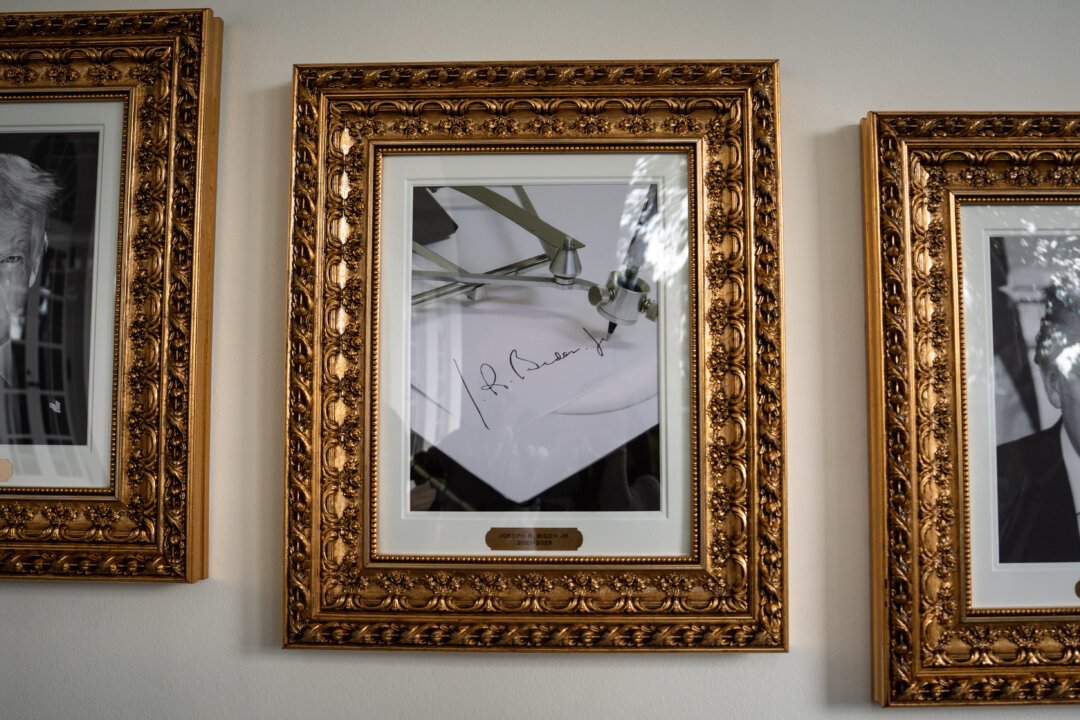
In a sweeping declaration that could reshape numerous federal policies, President Donald Trump announced Friday his intention to cancel all executive orders signed during the Biden administration using an automated signing device known as an autopen.

The dramatic move, announced via Trump’s Truth Social platform, challenges the legitimacy of executive actions taken when the former president was not physically present to sign documents himself. “The Autopen is not allowed to be used if approval is not specifically given by the President of the United States,” Trump declared in his post.
Trump went further in his criticism, stating that “The people who operated the Autopen did so illegally,” suggesting potential criminal implications for Biden administration officials who authorized the device’s use.
The autopen controversy represents an unprecedented challenge to presidential authority and the administrative processes that have governed executive branch operations for decades. The mechanical signing device has been used by previous administrations to handle routine document signing when presidents are traveling or otherwise unavailable.
However, Trump’s announcement raises significant questions about which specific executive orders might be affected and the legal grounds for such sweeping cancellations. The scope of Biden-era policies that could potentially be invalidated remains unclear, though the implications could be far-reaching across multiple government agencies and policy areas.
Legal experts are likely to scrutinize the constitutional and procedural questions surrounding autopen usage, as this marks the first time a sitting president has challenged the legitimacy of a predecessor’s executive orders based solely on the signing method employed.
The announcement adds another layer of complexity to Trump’s broader efforts to reverse Biden administration policies, extending beyond typical policy disagreements to question the fundamental validity of how those policies were enacted.
As the Trump administration begins implementing this directive, federal agencies will need to determine which executive orders fall under this new mandate and how to proceed with unwinding potentially affected policies and regulations.
The move sets up what could become a significant legal battle over presidential powers, administrative procedures, and the extent to which signing methods can invalidate otherwise properly authorized executive actions.