





































In the dusty archives of American history lies the work of a photographer whose lens captured some of the nation’s most pivotal moments, yet whose name remains largely unknown to the public. Timothy H. O’Sullivan (1840–1882) wielded his camera during an era when photography was still in its infancy, documenting both the brutal realities of the Civil War and the untamed beauty of the American West with an artistic vision that was decades ahead of its time.

While household names like Mathew Brady (1823–1896) and Alexander Gardner (1821–1882) dominated the photography world of the 19th century, O’Sullivan quietly revolutionized how Americans saw their own country. His haunting images of battlefields littered with casualties brought the harsh truths of war into Victorian parlors, while his breathtaking Western landscapes revealed a frontier that existed only in the imagination of most Americans.
The tragic irony of O’Sullivan’s career lies in the very studio practices that allowed his work to flourish. During the 1800s, it was common practice for photographs to be published under the names of studio owners or prominent photographers, regardless of who actually took the shot. This system of attribution meant that many of O’Sullivan’s most powerful images were credited to others, burying his contributions beneath layers of historical oversight.
O’Sullivan’s journey into photography began during one of America’s darkest chapters. As a young man barely out of his teens, he found himself documenting the Civil War, capturing scenes that would become some of the most important visual records of the conflict. His camera didn’t shy away from the gruesome aftermath of battles, presenting Americans with unvarnished images of war’s true cost – a stark departure from the romanticized paintings and illustrations that had previously shaped public perception of military conflicts.
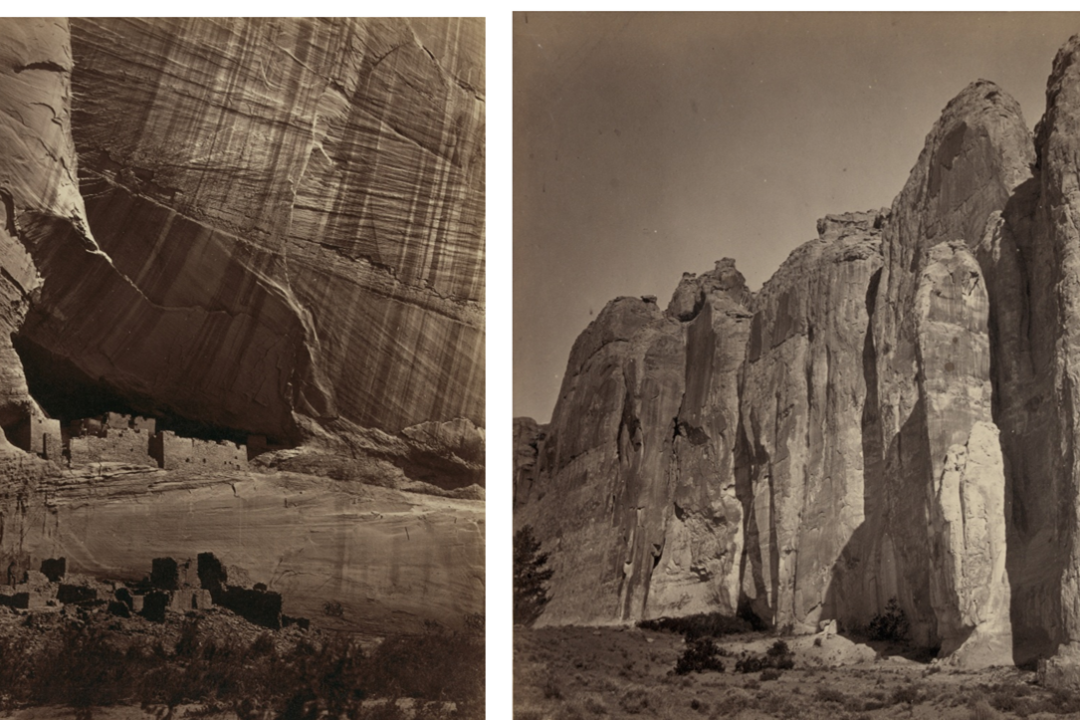
But perhaps O’Sullivan’s most enduring legacy lies in his Western expedition photography. Long before the frontier became a symbol of American mythology, O’Sullivan was there with his bulky equipment and glass plates, navigating treacherous terrain to document landscapes that few Americans had ever seen. His photographs of places like Canyon de Chelly in Arizona and El Morro in New Mexico didn’t just record geographical features – they revealed the sublime beauty and overwhelming scale of the American West.
The technical challenges O’Sullivan faced were immense. Working with large-format cameras and the wet-plate collodion process, he had to transport a portable darkroom wherever he went. In the field, he needed to coat glass plates with light-sensitive chemicals, expose them while still wet, and develop them immediately – all while dealing with extreme weather, difficult terrain, and the constant threat of equipment failure.
What sets O’Sullivan apart from his contemporaries isn’t just his technical skill, but his artistic eye. His compositions demonstrate an intuitive understanding of light, shadow, and perspective that transformed documentary photography into art. Whether capturing the geometric patterns of ancient ruins or the stark beauty of desert landscapes, O’Sullivan’s images possess a timeless quality that transcends their historical context.
Modern scholars and photography historians are finally giving O’Sullivan the recognition he deserves. Recent research has helped identify many previously misattributed photographs, revealing the true scope of his contributions to American visual culture. Museums and galleries now showcase his work as essential documents of 19th-century America, recognizing that his images shaped how generations of Americans understood their own history and landscape.
The rediscovery of O’Sullivan’s work also highlights broader questions about historical attribution and the importance of preserving accurate records of artistic achievement. His story serves as a reminder that some of history’s most significant contributors may be hidden in plain sight, their accomplishments obscured by the practices and prejudices of their time.
Today, as we live in an age of ubiquitous digital photography, O’Sullivan’s painstaking dedication to his craft offers a compelling contrast to our instant-image culture. Each of his photographs required careful planning, physical endurance, and technical expertise – qualities that imbued his work with a weight and significance that casual snapshots can rarely achieve.
Timothy O’Sullivan may have died in relative obscurity in 1882, but his visual legacy continues to influence how we see and understand America. His forgotten eye captured not just images, but the very essence of a nation in transformation – from a country torn apart by civil war to one beginning to grasp the vast possibilities of its Western frontier. In recognizing his contributions, we gain not only a fuller picture of 19th-century photography but a deeper appreciation for the power of images to shape our understanding of history itself.