







































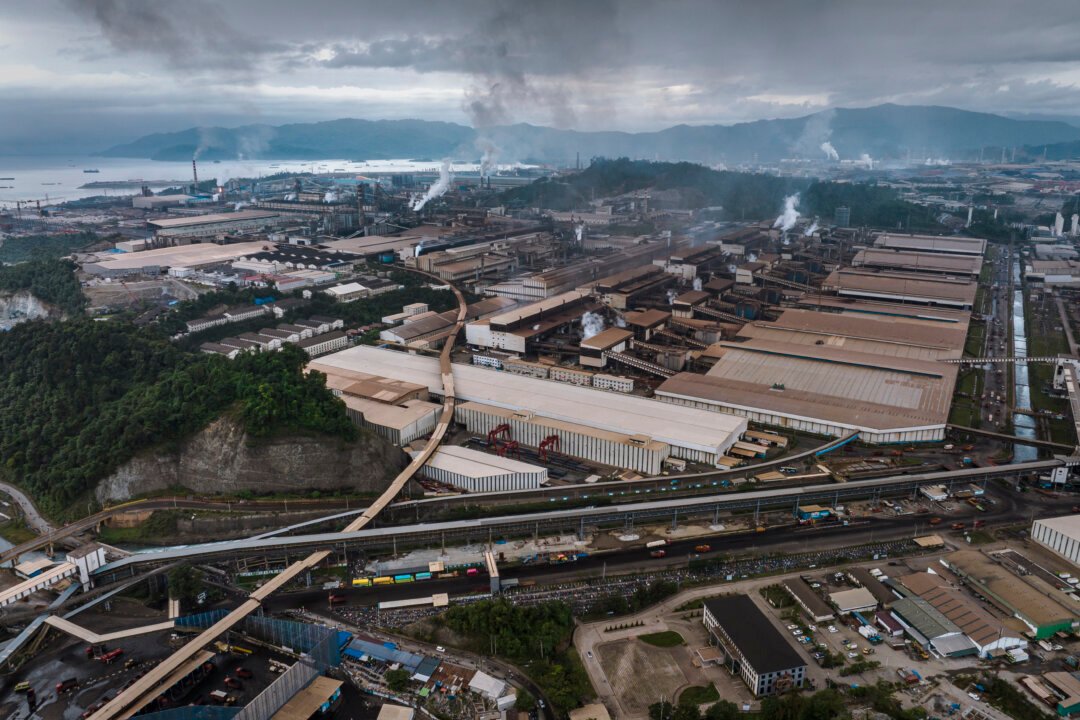
Indonesia’s defense minister has issued a stark warning about sovereignty risks posed by a Chinese-controlled airport operating without government oversight in the nation’s strategic nickel-processing heartland of Morowali.

Defense Minister Sjafrie Sjamsoeddin delivered the pointed criticism during the Indonesian Armed Forces (TNI) Integrated Exercise on November 20, expressing alarm that the privately-owned airport was “operating without any state apparatus” present to monitor its activities.
The controversial aviation facility sits adjacent to the Chinese-backed Indonesian Morowali Industrial Park (IMIP), which has emerged as the epicenter of Indonesia’s booming nickel processing industry. The industrial complex employs approximately 77,000 local workers alongside 6,000 Chinese personnel, making it one of the largest foreign-operated industrial zones in Southeast Asia.
Sjamsoeddin’s concerns reflect growing unease among Indonesian officials about the extent of Chinese influence in critical infrastructure projects across the archipelago nation. The defense minister’s characterization of the situation as potentially creating a “state within a state” underscores fears that inadequate oversight could compromise Indonesia’s territorial control and economic sovereignty.
The timing of these warnings is particularly significant, coming as Indonesia seeks to balance its relationship with China—a crucial economic partner—while maintaining strategic autonomy. China has invested billions of dollars in Indonesian infrastructure and industrial projects as part of its Belt and Road Initiative, with nickel processing facilities representing a key component of Beijing’s strategy to secure critical mineral supplies for electric vehicle batteries and other technologies.
The Morowali region has become a focal point for this economic cooperation, hosting numerous Chinese-backed smelting operations that process Indonesia’s vast nickel reserves. However, the rapid expansion of Chinese-controlled facilities has raised questions about regulatory compliance and national security implications.
The defense minister’s public criticism suggests mounting pressure within Indonesian government circles to establish more robust oversight mechanisms for foreign-operated infrastructure, particularly in strategically sensitive sectors. The airport’s operations without direct state supervision represents a potential gap in Indonesia’s ability to monitor and control activities within its own borders.
This development comes amid broader regional tensions over Chinese influence in critical infrastructure across Southeast Asia, with several nations reassessing the terms and oversight of major Chinese investment projects. Indonesia’s concerns about the Morowali airport may signal a shift toward more stringent supervision of foreign-operated facilities, especially those with potential dual-use capabilities.
The industrial park and its associated airport represent significant economic opportunities for Indonesia, generating substantial employment and export revenues. However, Sjamsoeddin’s warnings highlight the delicate balance the government must strike between welcoming foreign investment and maintaining adequate sovereign control over critical infrastructure within its territory.