




































In what could mark a pivotal shift in the global race for critical minerals, President Joe Biden’s final international voyage led him to the bustling port city of Lobito, Angola, in December 2024. There, against the backdrop of Atlantic waves and industrial cranes, the outgoing president unveiled an ambitious infrastructure project he boldly labeled a “game changer” – one designed to loosen China’s stranglehold on the world’s rare earth supply chains.

The centerpiece of this strategic initiative is the Lobito Corridor, an expansive railroad network that promises to revolutionize how Africa’s mineral wealth reaches global markets. This transportation lifeline stretches from Angola’s Atlantic coastline deep into the continent’s resource-rich heartland, connecting the port of Lobito to two of Africa’s most significant mining centers: Kolwezi in the southern Democratic Republic of Congo and Ndola in Zambia’s renowned copper belt.
The timing of Biden’s announcement carries particular weight as the United States seeks alternatives to China’s dominance in critical mineral supply chains. For years, Beijing has maintained an iron grip on rare earth elements essential for everything from smartphones and electric vehicles to advanced military systems. The Lobito Corridor represents America’s most ambitious attempt to establish a viable alternative route for these crucial materials.
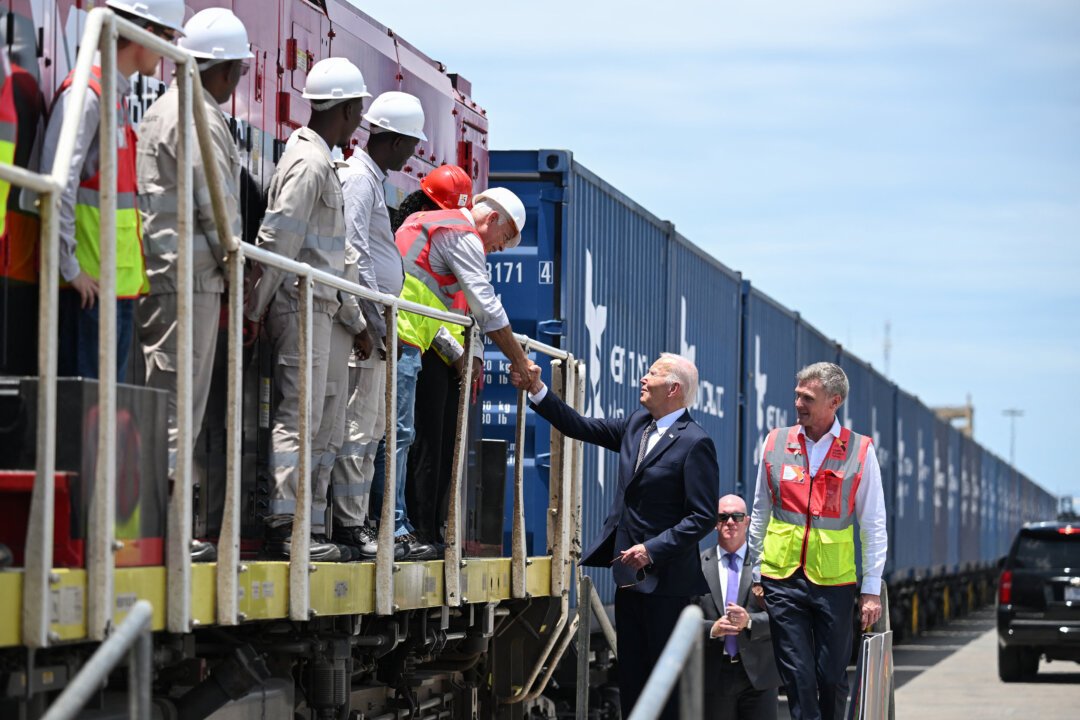
During his visit, Biden met with employees of Lobito Atlantic Railway (LAR), accompanied by the company’s Director of Operations, Nicolas Gregoir. The gathering underscored the collaborative international effort behind this transformative project, which involves not just the United States and Angola, but multiple African nations rich in untapped mineral resources.
However, industry experts suggest that simply unlocking access to raw materials may not be enough to truly challenge China’s market position. Technology consulting specialists argue that the next critical phase must focus on developing manufacturing capabilities within Africa itself. This approach could provide the United States with a more comprehensive competitive advantage against Chinese dominance in the critical minerals sector.
The Democratic Republic of Congo alone holds approximately 60% of the world’s cobalt reserves, an essential component in lithium-ion batteries that power everything from electric cars to renewable energy storage systems. Zambia’s copper deposits are equally significant, as copper demand continues to surge with the global transition toward electrification and renewable energy infrastructure.
The Lobito Corridor project represents more than just a railroad – it symbolizes a broader geopolitical strategy to diversify critical mineral supply chains away from single-country dependence. By creating efficient transportation links between Africa’s mineral-rich interior and international shipping routes, the initiative could reshape global trade patterns for decades to come.
As Biden’s presidency draws to a close, this African infrastructure investment stands as a testament to his administration’s recognition that securing America’s technological future requires bold international partnerships and strategic thinking about supply chain resilience. The success of the Lobito Corridor could well determine whether the United States can effectively compete with China in the critical minerals arena that will define the next generation of technological advancement.