





































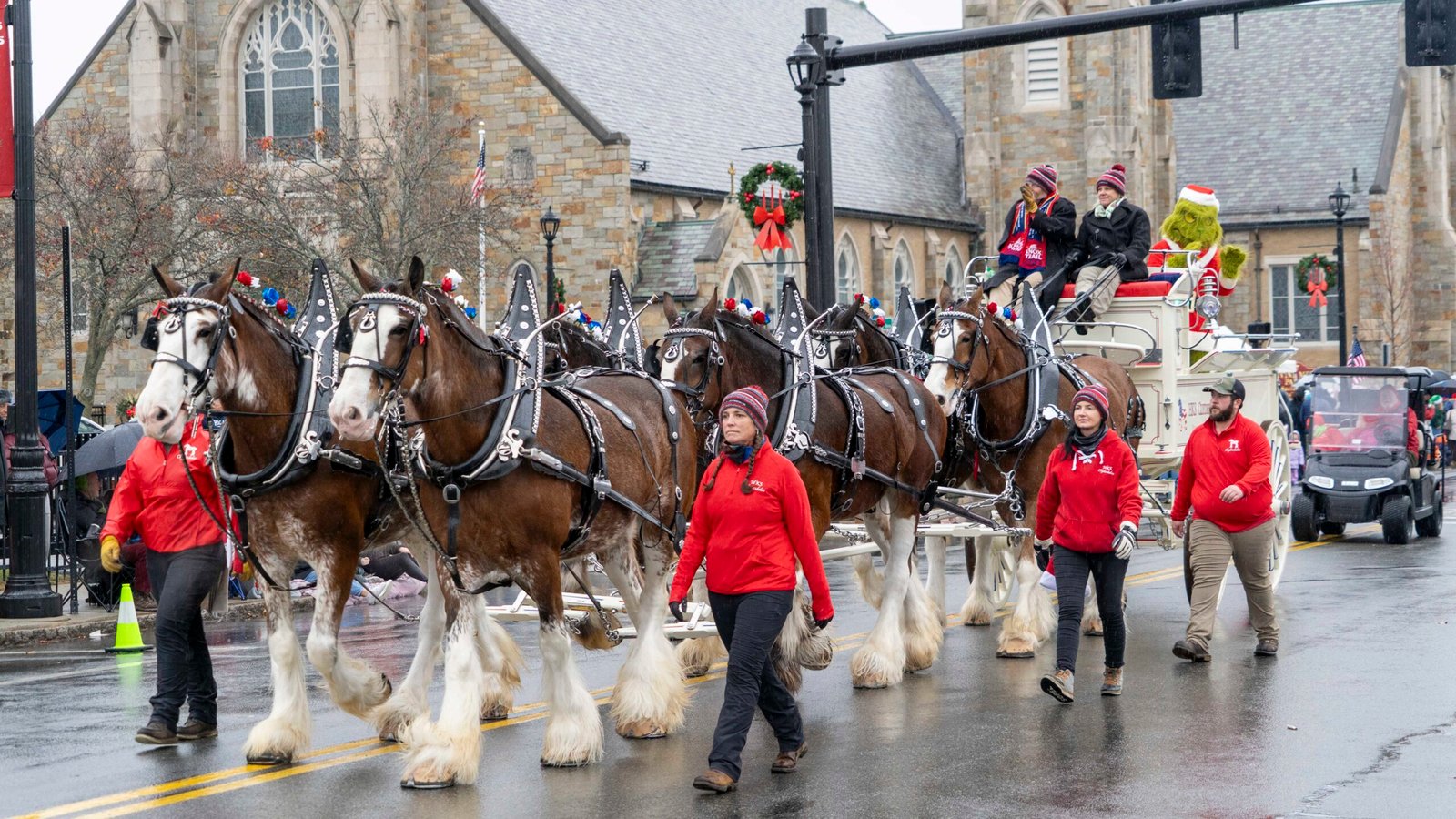
The historic city of Quincy, Massachusetts, once again transformed into a winter wonderland as residents and visitors gathered for the beloved annual tradition that has defined the community’s holiday spirit for more than seven decades.

On November 30th at noon, the streets of Quincy came alive with the 72nd annual “City of Presidents” Christmas Parade, a celebration that pays homage to the city’s unique distinction as the birthplace of two United States presidents—John Adams and his son, John Quincy Adams.
This cherished community event has become a cornerstone of Quincy’s holiday traditions, drawing families from across the Greater Boston area to witness the festive procession that seamlessly blends Christmas cheer with presidential pride. The parade’s enduring popularity speaks to both the city’s rich historical legacy and its vibrant community spirit.
The “City of Presidents” moniker isn’t just ceremonial—it represents Quincy’s authentic connection to American history. As the only city in the United States that can claim two presidents as native sons, Quincy has embraced this distinction while building a modern identity that honors its past while celebrating its present.
The annual Christmas parade serves as more than just a holiday celebration; it’s a testament to the community’s dedication to preserving traditions that bring neighbors together. For 72 years, this event has weathered changing times, growing from a simple local gathering into a regional attraction that showcases the best of small-town American values.
Local families have made attending the parade a multi-generational tradition, with grandparents who attended the very first parades now bringing their grandchildren to experience the same sense of wonder and community connection. The event represents the continuity that makes Quincy special—a place where history lives alongside modern community life.
As the parade wound through Quincy’s streets, it reinforced why this Massachusetts city continues to draw attention not just for its presidential connections, but for its ability to maintain the kind of authentic community traditions that are increasingly rare in today’s fast-paced world.