





































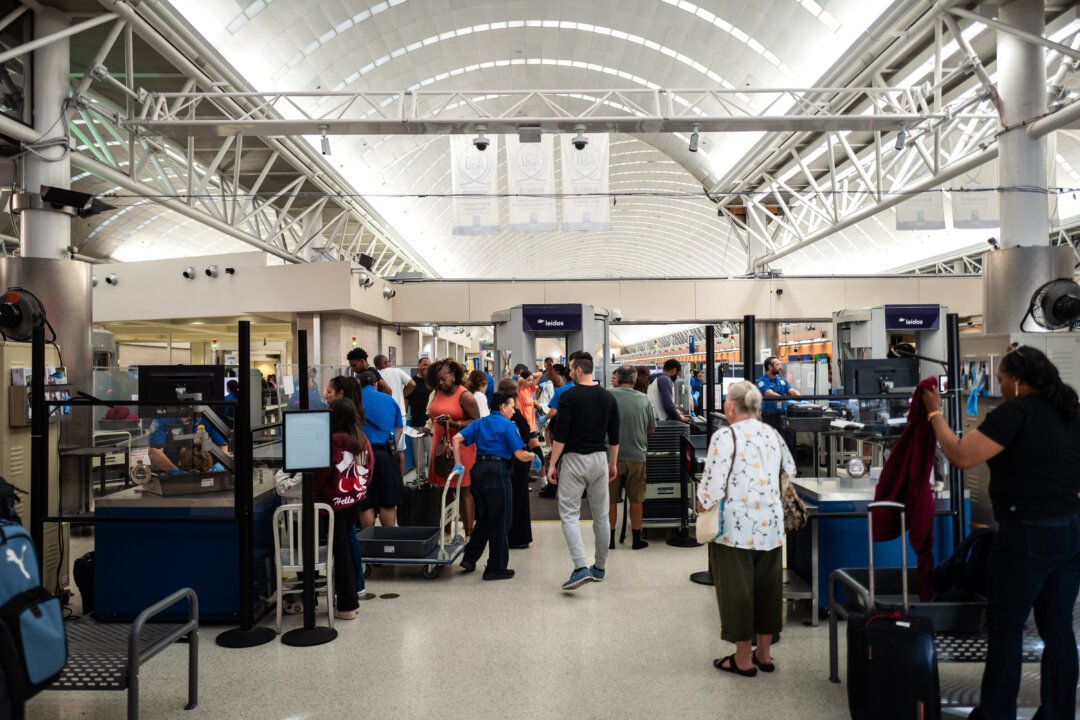
Air travelers who fail to bring a REAL ID, passport, or other federally accepted identification will soon face a significant financial penalty at airport security checkpoints. The Transportation Security Administration announced Sunday that beginning February 1, 2025, passengers lacking proper identification documents will be charged a $45 fee for domestic flights.

The new policy represents a major shift in TSA enforcement of federal identification standards, moving beyond warnings and delays to monetary consequences for unprepared travelers. The fee applies to all passengers whose identification fails to meet the enhanced security requirements established under the REAL ID Act.
Currently, travelers without compliant identification face extended screening procedures and potential delays, but no additional charges. The TSA has warned that passengers should expect significantly longer wait times at security checkpoints if they arrive without proper documentation, as alternative verification processes require additional time and resources.
The REAL ID Act, passed by Congress in 2005 following the September 11 attacks, established minimum security standards for state-issued driver’s licenses and identification cards. REAL ID-compliant documents feature enhanced security features including digital photographs, anti-counterfeiting technology, and verification of the applicant’s identity documents.
Accepted forms of identification under the new policy include REAL ID-compliant driver’s licenses and state ID cards, U.S. passports, military identification, and several other federally approved documents. The distinctive feature of REAL ID cards is a star symbol in the upper right corner, indicating compliance with federal standards.
The timing of the fee implementation comes as the May 7, 2025 federal deadline approaches, after which REAL ID or equivalent identification will be mandatory for all domestic air travel. The TSA has been conducting extensive public awareness campaigns to inform travelers about the upcoming requirements.
Industry analysts suggest the $45 fee serves a dual purpose: generating revenue for enhanced security procedures while incentivizing travelers to obtain proper identification before arriving at airports. The additional screening required for passengers without compliant ID involves multiple verification steps and ties up security personnel for extended periods.
Airport security experts note that alternative verification procedures can add 15-30 minutes to the screening process, creating bottlenecks during peak travel periods. The new fee structure aims to reduce these delays by encouraging advance preparation while compensating for the additional resources required.
Travelers planning domestic flights after February 1 should verify their identification meets federal standards well in advance of their departure dates. Those needing REAL ID-compliant documents should contact their state’s Department of Motor Vehicles, as processing times can vary significantly across different states.
The policy change affects millions of American travelers who have not yet upgraded to REAL ID-compliant identification. Recent surveys indicate that approximately 20% of eligible adults still lack the enhanced identification required under the federal mandate.
For international travelers, valid U.S. passports remain the preferred form of identification and are unaffected by the new fee structure. The TSA emphasizes that passengers should always verify current identification requirements before traveling, as security protocols continue evolving to address emerging threats.