





































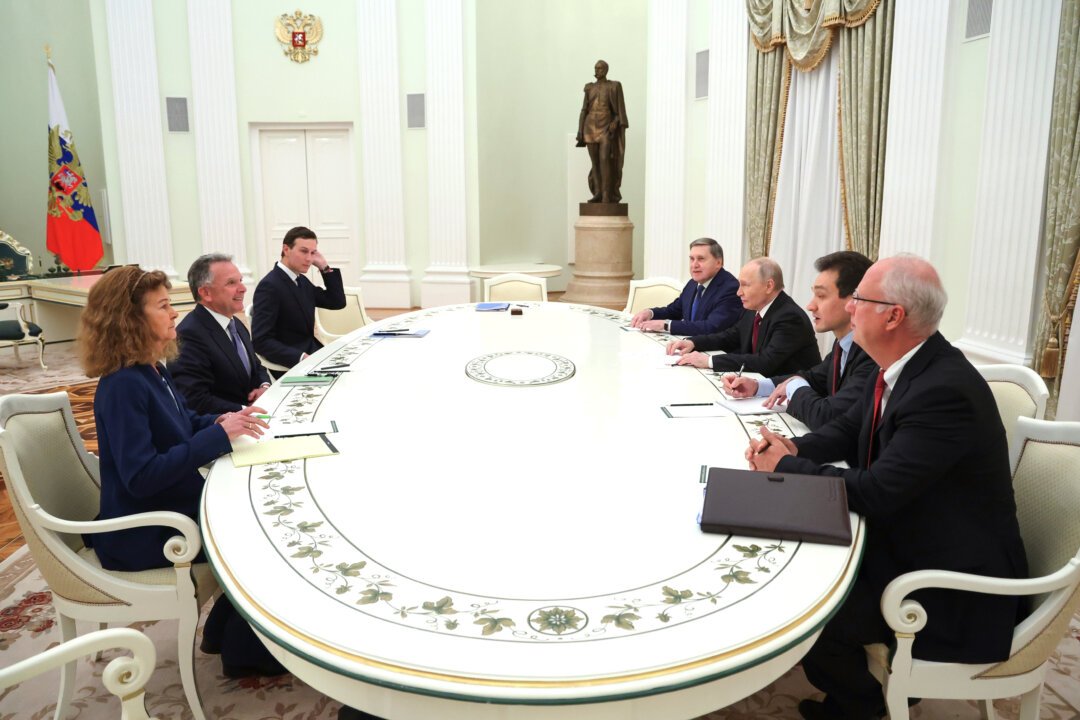
A marathon five-hour diplomatic session in Moscow’s Senate Palace has concluded without breakthrough, as Russian President Vladimir Putin failed to reach agreement with key American negotiators on resolving the Ukraine conflict that has raged for nearly three years.

The December 2nd meeting brought together U.S. Special Envoy Steve Witkoff and Jared Kushner, President Donald Trump’s son-in-law, with Putin and his senior advisers in what many viewed as a crucial test of the new administration’s diplomatic approach to ending Europe’s bloodiest conflict since World War II.
Speaking to reporters following the extended talks, Yuri Ushakov, Putin’s chief foreign policy adviser, offered a measured assessment of the proceedings. While describing the discussions as “constructive,” he made clear that fundamental obstacles remain.
“Compromises have not yet been found,” Ushakov stated during his Kremlin briefing, signaling that the deep divisions over Ukraine’s future territorial status continue to present insurmountable challenges for negotiators.
The high-profile meeting represented one of the most significant diplomatic engagements between American and Russian officials since the conflict began. The presence of Kushner, who previously served as a senior White House adviser and has extensive experience in Middle Eastern diplomacy, underscored the Trump administration’s commitment to pursuing direct dialogue with Moscow.
Also participating in the talks were Russian Direct Investment Fund CEO Kirill Dmitriev, who serves as Putin’s special presidential representative for investment and economic cooperation with foreign countries, suggesting that economic considerations formed part of the broader discussion framework.
The meeting’s duration—extending for five hours—indicated the complexity of issues under discussion and the serious intent of both sides to explore potential pathways forward. However, Ushakov’s comments revealed that territorial disputes remain the primary sticking point in any potential resolution.
The diplomatic encounter comes at a critical juncture in the conflict, with both sides facing mounting pressure to find a negotiated settlement. The involvement of Trump’s inner circle reflects the president’s campaign promise to quickly resolve the Ukraine crisis through direct engagement with world leaders.
Despite the lack of immediate agreement, the very fact that such high-level talks occurred represents a potential shift in diplomatic dynamics. The “constructive” characterization by Russian officials suggests that channels of communication remain open, even as substantial disagreements persist over the fundamental question of Ukraine’s territorial integrity.
The outcome sets the stage for continued diplomatic efforts, though it remains unclear when or if similar high-level meetings might occur. The inability to reach consensus on territorial issues—widely regarded as the conflict’s core dispute—highlights the challenging path ahead for any sustainable peace agreement.