





































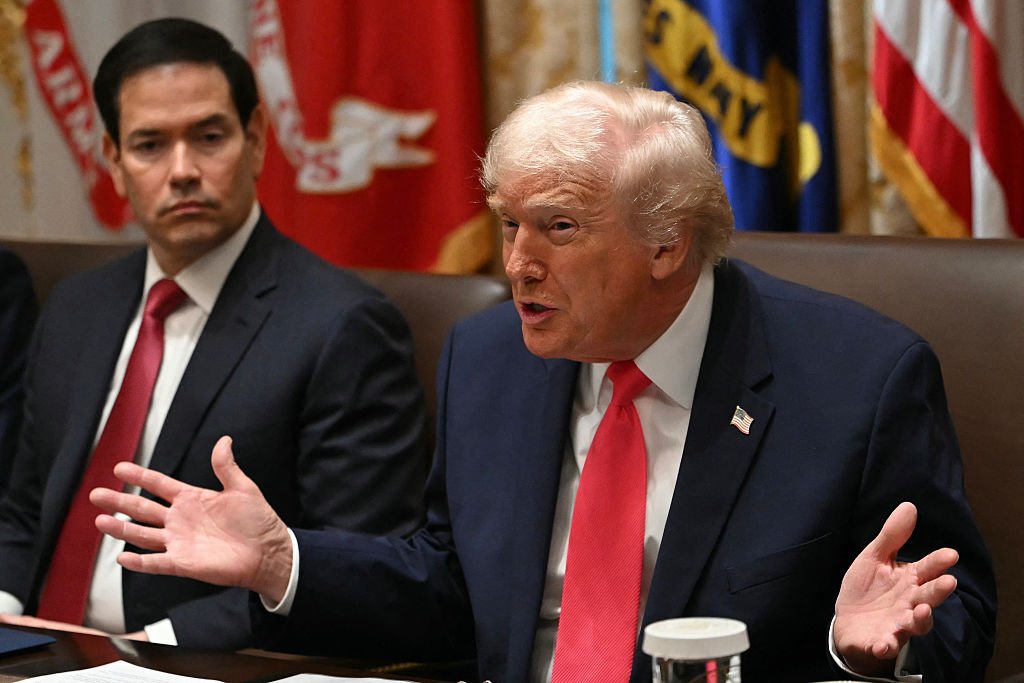
President Donald Trump used his first Cabinet meeting at the White House on December 2 to mount a vigorous defense of his administration’s economic policies, pushing back against critics who claim he has failed to adequately address the cost-of-living crisis gripping American families.

Speaking alongside Secretary of State Marco Rubio and other senior officials, Trump placed the blame squarely on his predecessor’s shoulders, declaring that he “inherited the worst inflation in history” upon taking office.
The president’s remarks come as household affordability continues to dominate the national conversation, with recent polling data from Yahoo/YouGov confirming that high prices remain a primary concern for families across the country. The survey underscores the persistent economic pressures facing ordinary Americans, from grocery bills to housing costs.
Trump’s defensive stance at the Cabinet meeting reflects the mounting political pressure his administration faces over economic conditions. Critics have argued that the president has not taken sufficient action to combat rising costs that have squeezed family budgets nationwide.
The December 2 gathering marked a significant moment for Trump to outline his administration’s approach to tackling affordability issues, though specific policy details were not immediately disclosed during the session.
With inflation and cost-of-living concerns consistently ranking among voters’ top priorities, Trump’s emphasis on inherited economic challenges signals his administration’s strategy of framing current difficulties as legacy problems requiring time to resolve.
The Cabinet meeting took place against the backdrop of ongoing economic uncertainty, as American households continue to grapple with elevated prices across multiple sectors of the economy. The administration now faces the challenge of translating defensive rhetoric into concrete actions that can provide relief to struggling families.
As the political debate over economic stewardship intensifies, Trump’s attribution of current inflation woes to the previous administration is likely to become a recurring theme in his defense of executive branch policies moving forward.