





































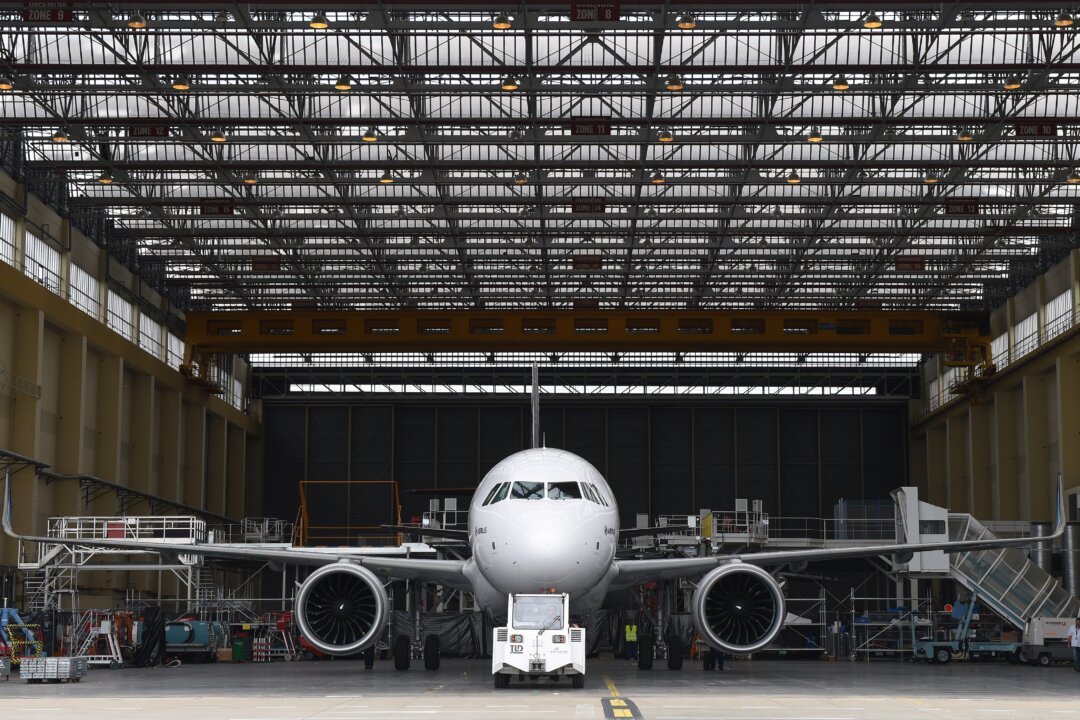
European aerospace giant Airbus has dealt a significant blow to its ambitious 2025 production schedule, announcing a sharp reduction in aircraft delivery targets after discovering critical quality flaws in fuselage panels used across its bestselling A320 aircraft family.

The aviation manufacturer revealed on December 3 that it now anticipates delivering approximately 790 commercial aircraft in 2025, marking a substantial decrease from the previously projected 820 deliveries announced just over a month ago on October 29. This downward revision represents a reduction of roughly 30 aircraft from the company’s original forecast.
The setback stems from defective metal fuselage panels supplied by an undisclosed vendor, forcing Airbus to implement comprehensive precautionary inspections across its A320-family production line. The A320 series, which includes the A319, A320, and A321 variants, represents Airbus’s most commercially successful aircraft program and a cornerstone of the company’s revenue stream.
Industry analysts view this development as a concerning sign for Airbus’s ability to meet the surging global demand for narrow-body aircraft, particularly as airlines continue recovering from the pandemic-induced travel downturn. The A320 family competes directly with Boeing’s 737 MAX series in the highly competitive single-aisle aircraft market.
The quality control issue highlights the complex challenges facing aircraft manufacturers as they ramp up production to unprecedented levels. Airbus has been aggressively scaling its manufacturing capabilities to address a massive backlog of orders, but this supplier-related setback demonstrates the vulnerabilities inherent in the aerospace industry’s intricate supply chain network.
The company’s decision to proactively reduce its delivery guidance, rather than risk potential safety concerns or regulatory interventions, reflects lessons learned from previous industry crises where manufacturers faced severe consequences for inadequate quality oversight. Airbus has not disclosed the specific nature of the panel defects or identified the problematic supplier.
This production adjustment comes at a critical time for the aerospace sector, as airlines worldwide are eager to modernize their fleets with fuel-efficient aircraft to meet both environmental regulations and cost-reduction objectives. The delay could potentially impact airline expansion plans and delivery schedules for carriers counting on new aircraft to support their growth strategies.
Despite the reduced delivery target, Airbus remains one of the world’s leading commercial aircraft manufacturers, competing head-to-head with American rival Boeing for market dominance. The company’s ability to identify and address quality issues proactively may ultimately strengthen customer confidence in its long-term reliability and safety standards.