





































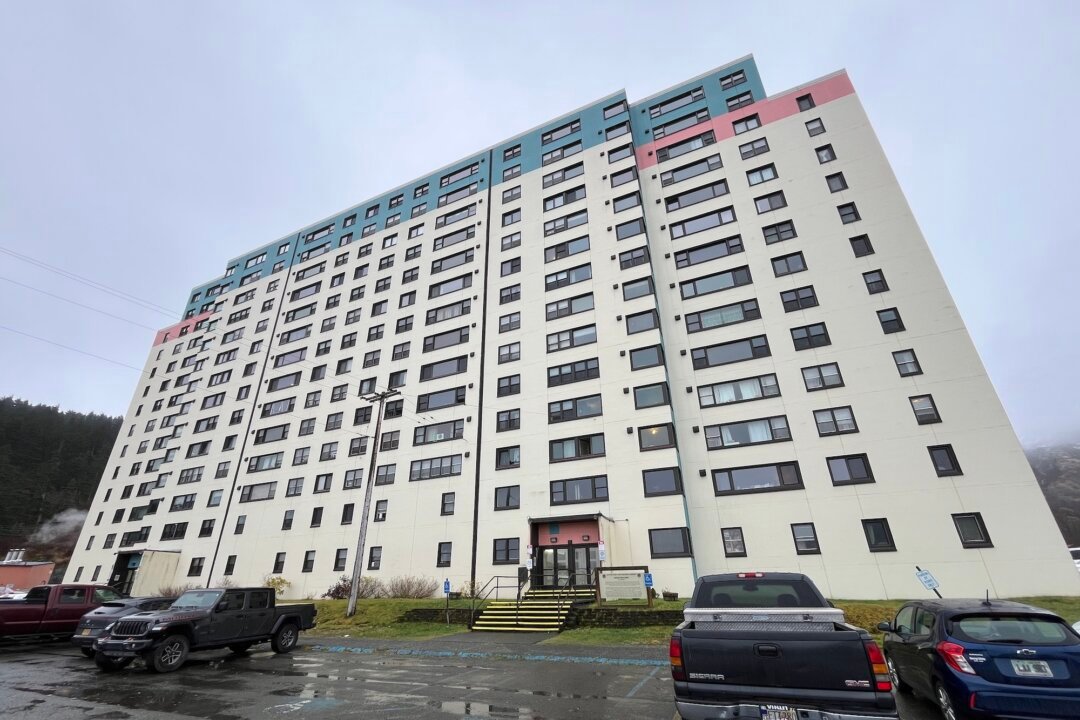
WHITTIER, Alaska—In a world where urban isolation and disconnected communities have become the norm, one small Alaskan town is redefining what it means to live together. Welcome to Whittier, where approximately two-thirds of the city’s 272 residents call the same address home: Begich Towers, a towering 14-story apartment building that serves as both shelter and symbol of an extraordinary social experiment.

This remarkable living arrangement has earned Whittier the nickname “Town Under One Roof,” transforming what could be a sterile apartment complex into America’s most unique residential community. The Begich Towers stands as more than just housing—it’s a testament to how people can create meaningful connections in the most unexpected circumstances.
For some residents like Lorelei Gurung, the path to this unconventional lifestyle began with disillusionment elsewhere. Gurung had spent years pursuing the quintessential Los Angeles dream, grinding through long work hours and carefully saving every dollar to afford the car, the condo, and the Southern California lifestyle she had always envisioned.
But somewhere along the way, the dream lost its luster. “One day, she realized it wasn’t enough. Or maybe it had become too much. The noise, bustle, high prices, and traffic jams just didn’t seem worth it anymore,” reflecting a sentiment shared by many who have traded urban chaos for Whittier’s unique brand of community living.
The Begich Towers represents far more than convenient housing in Alaska’s harsh climate. Within its concrete walls, residents have created a microcosm of small-town America, where neighbors truly know each other and community extends beyond casual hallway greetings. This vertical village challenges conventional notions of privacy and independence, offering instead a model of interdependence that many residents find surprisingly fulfilling.
Living in such close quarters might seem claustrophobic to outsiders, but Whittier’s residents have discovered unexpected benefits. The building creates natural opportunities for social interaction, mutual support, and the kind of genuine community connections that have become increasingly rare in modern American life. When harsh Alaskan weather strikes, residents don’t face isolation—they face it together.
The town’s unique living situation also presents practical advantages. Shared infrastructure makes utility costs more manageable, while the concentrated population ensures that essential services remain viable in this remote location. Maintenance issues are addressed collectively, and the building’s design provides protection from Alaska’s notoriously brutal winters.
This unconventional community arrangement raises fascinating questions about modern living preferences and the future of American housing. As urban areas become increasingly expensive and socially fragmented, Whittier’s model offers an intriguing alternative that prioritizes community over privacy, cooperation over competition.
The success of Whittier’s “Town Under One Roof” concept demonstrates that innovative approaches to community living can thrive even in the most challenging environments. For its 270 residents, the Begich Towers isn’t just an address—it’s proof that home truly is where community flourishes, regardless of how unconventional that community might appear to the outside world.