





































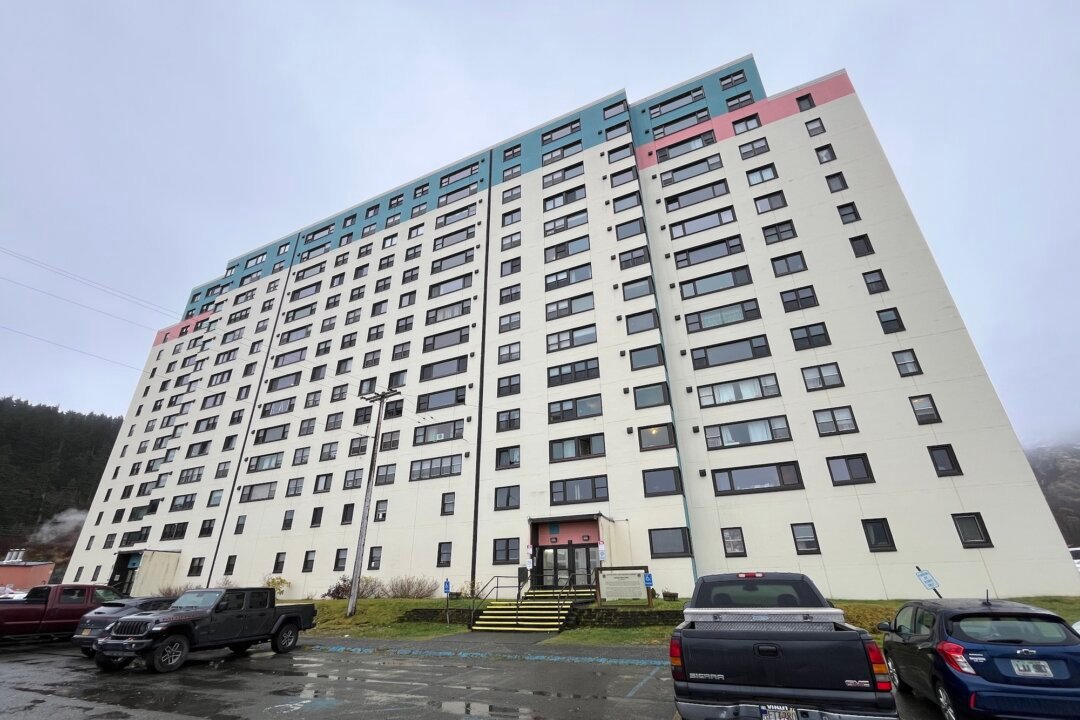
WHITTIER, Alaska—In a world where urban isolation often defines modern living, one Alaskan town has turned conventional community life on its head. Welcome to Whittier, where approximately 270 residents have discovered that living under one roof doesn’t just save on heating bills—it creates bonds that most neighborhoods can only dream of.

The heart of this extraordinary community beats within the towering walls of Begich Towers, a 14-story apartment building that houses roughly two-thirds of Whittier’s 272 residents. This isn’t just any apartment complex—it’s a vertical village where neighbors become family, and privacy paradoxically coexists with profound connection.
For Lorelei Gurung, the journey to this unique Alaskan community began thousands of miles away in Los Angeles. Like countless others, she had pursued the California dream with unwavering determination, working grueling hours and meticulously saving every dollar to acquire the hallmarks of success: the car, the condo, the lifestyle that Southern California promised.
But somewhere along the way, the dream began to feel more like a burden. The relentless noise, the constant bustle, the crushing cost of living, and the endless traffic jams that turned simple errands into hours-long ordeals—it all started to feel hollow. One day, Gurung reached a pivotal realization: what she thought she wanted wasn’t enough, or perhaps it had simply become too much.
This moment of clarity would eventually lead her to Whittier, where the concept of community takes on an entirely different meaning. In Begich Towers, residents don’t just share walls—they share experiences, resources, and a way of life that challenges everything we think we know about modern urban living.
The building itself stands as a testament to human adaptability and ingenuity. Originally constructed as military housing, Begich Towers has evolved into something far more significant: a self-contained ecosystem where residents have access to essential services without ever stepping outside. The structure houses not just apartments, but also the post office, general store, and other vital community services.
What makes Whittier’s living arrangement particularly fascinating is how it redefines the balance between individual space and collective community. In an era where many people don’t even know their next-door neighbors’ names, Whittier residents navigate the delicate dance of maintaining personal privacy while participating in one of America’s most intimate community experiments.
The town’s unique geography contributes to its distinctive character. Accessible primarily through a single tunnel that operates on a schedule, Whittier naturally encourages a slower pace of life and deeper community connections. This isolation, rather than creating claustrophobia, seems to foster a sense of security and belonging that many urban dwellers spend their entire lives seeking.
For those considering a radical change in lifestyle, Whittier represents more than just an alternative living arrangement—it’s a glimpse into how community life might evolve in response to modern challenges like housing costs, social isolation, and environmental concerns. The town demonstrates that sometimes the most innovative solutions to contemporary problems can be found in the most unexpected places.
As housing costs continue to soar across the United States and social isolation becomes an increasingly recognized public health crisis, Whittier’s model offers intriguing possibilities. The town proves that community doesn’t require sprawling neighborhoods or perfect weather—sometimes it just requires people willing to share space, resources, and lives in ways that prioritize connection over convention.
The story of residents like Lorelei Gurung illustrates a broader trend of Americans questioning traditional definitions of success and seeking alternatives that prioritize quality of life over material accumulation. In doing so, they’re not just changing their own lives—they’re contributing to a living laboratory that could inform how we think about community, housing, and human connection in the 21st century.