





































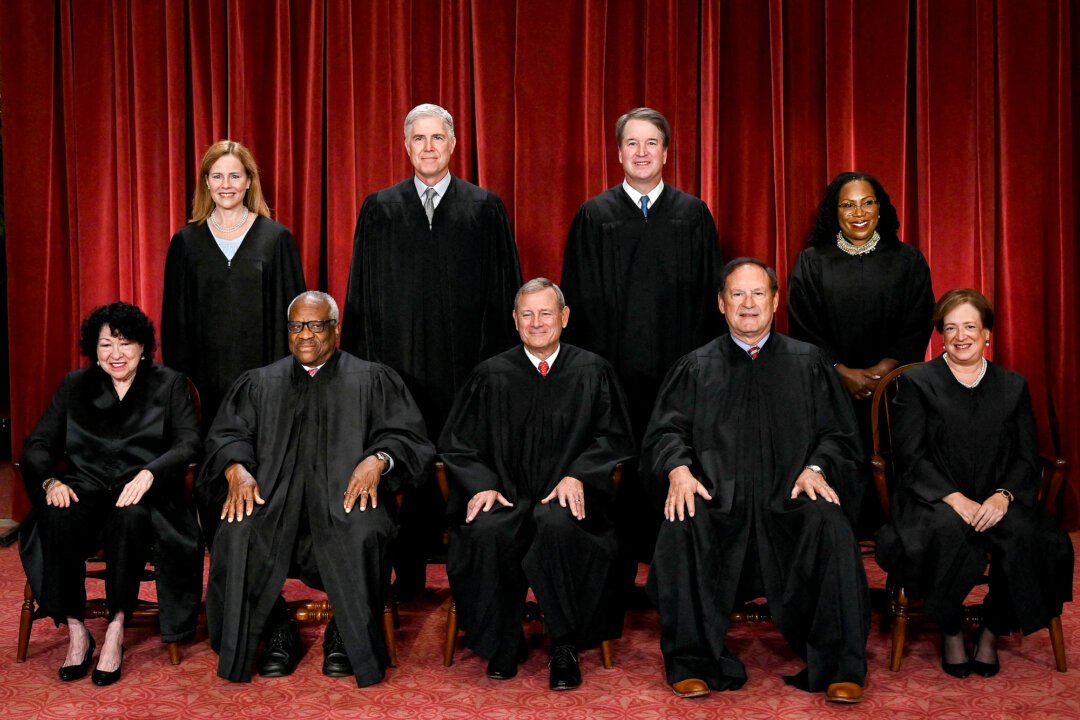
The United States Supreme Court appears ready to deliver another significant blow to campaign finance regulations, with legal experts predicting the justices will strike down federal restrictions that prevent political parties from coordinating spending with candidates.

This assessment comes as the nation’s highest court prepares to hear oral arguments on December 9 in a closely watched case, National Republican Senatorial Committee (NRSC) v. Federal Election Commission (FEC). The case directly challenges key provisions of the Federal Election Campaign Act, which has governed political spending coordination for decades.
The Supreme Court granted the petition to hear this case on June 30, signaling the justices’ willingness to revisit established campaign finance law. Legal observers note this move aligns with the Court’s recent trend of loosening restrictions on political spending, following landmark decisions like Citizens United v. FEC in 2010.
A federal appeals court had previously upheld the existing campaign finance restrictions in this case, but notably acknowledged that the Supreme Court has been moving in the opposite direction on such matters. This acknowledgment by the lower court effectively telegraphed expectations that the high court would likely reverse their ruling.
The current restrictions under challenge prohibit political parties from coordinating their independent expenditures with candidates’ campaigns. These coordination limits were designed to prevent circumvention of contribution limits by ensuring that independent expenditures remain truly independent from candidates’ direct campaign activities.
Should the Supreme Court rule in favor of the NRSC, the decision would represent a substantial shift in campaign finance law, potentially allowing unlimited coordination between political parties and their candidates. Such a ruling could fundamentally alter the landscape of political spending and campaign strategy across the United States.
The timing of this case is particularly significant, coming in the aftermath of recent election cycles that have seen unprecedented levels of political spending. Campaign finance reform advocates have long argued that coordination restrictions are essential for maintaining some semblance of spending limits, while opponents contend these rules violate First Amendment free speech protections.
Legal experts following the case point to the Court’s conservative majority as a key factor in predicting the likely outcome. The current composition of the Supreme Court has shown consistent skepticism toward campaign finance restrictions, viewing them through the lens of free speech rights rather than corruption prevention.
The implications of a ruling favoring the NRSC could extend far beyond the immediate parties involved. Political parties at all levels could gain significantly more flexibility in how they support their candidates, potentially leading to more strategic and coordinated campaign efforts.
As December 9 approaches, campaign finance watchdogs, political strategists, and constitutional law scholars are preparing for what could be another watershed moment in the ongoing evolution of American campaign finance law. The Court’s decision in this case may well shape political campaigns and party operations for years to come.