





































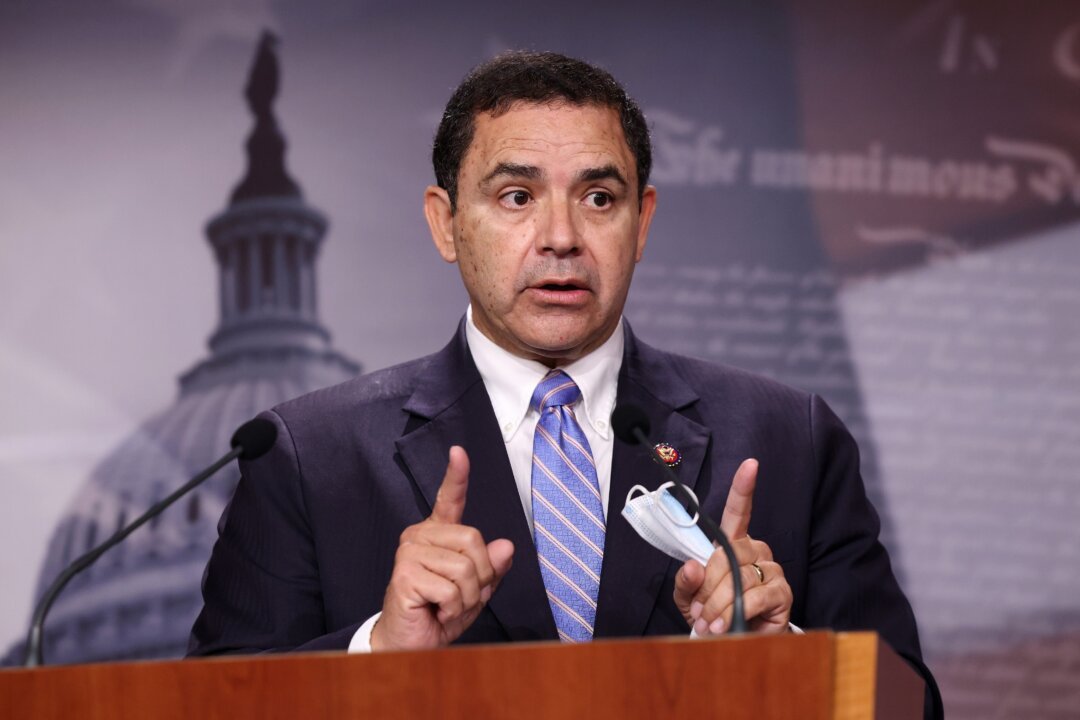
In an unexpected turn of political events, Rep. Henry Cuellar (D-Texas) found himself defending his Democratic allegiance on December 7, just hours after receiving a presidential pardon from Donald Trump – a Republican president who simultaneously criticized the congressman’s political associations.

The unusual situation unfolded when Trump announced pardons for both Cuellar and his wife, Imelda, while publicly questioning why the Texas representative continues to align himself with what the president termed “the same radical left.” This rare cross-party clemency has thrust Cuellar into a unique political spotlight as he prepares for his reelection campaign.
Trump’s decision to grant the pardons came with pointed commentary about Cuellar’s political positioning. The president suggested that the congressman should reconsider his Democratic Party membership, given what Trump characterized as unfair treatment by the previous administration. According to Trump, the Cuellars were targeted by the Biden administration specifically because of Henry Cuellar’s hardline stance on border security issues.
The pardon itself stems from legal challenges that have shadowed Cuellar’s recent political career. Trump emphasized that he had never personally spoken with the congressman before making the clemency decision, describing it as a matter of principle rather than personal favor. The president argued that Cuellar’s prosecution appeared politically motivated, driven by his deviation from typical Democratic positions on immigration enforcement.
For Cuellar, who represents a South Texas district along the U.S.-Mexico border, the situation presents both opportunity and challenge. His constituency has long grappled with immigration issues, and his more conservative approach to border security has occasionally put him at odds with progressive members of his own party. This tension between local interests and national party politics has defined much of his congressional tenure.
The congressman’s response to Trump’s suggestion about switching parties was swift and definitive. Despite receiving clemency from a Republican president, Cuellar made clear his intention to remain within the Democratic fold for his upcoming reelection bid. This decision reflects the complex political calculations facing moderate Democrats in competitive districts.
Political analysts note that Cuellar’s situation highlights broader tensions within both major parties regarding ideological purity versus pragmatic positioning. His case demonstrates how individual lawmakers navigate between national party expectations and local district preferences, particularly on contentious issues like immigration policy.
The timing of these events adds another layer of complexity to Cuellar’s political future. With reelection campaigns heating up, the congressman must balance gratitude for presidential clemency against potential voter reactions to accepting help from across the aisle. His South Texas constituents, many of whom prioritize border security, may view the situation differently than Democratic primary voters in other regions.
As Cuellar moves forward with his Democratic reelection campaign, he faces the challenge of explaining this unprecedented situation to voters. The congressman’s ability to maintain his party loyalty while benefiting from Republican clemency will likely become a central theme in both primary and general election contests.
This development also raises questions about the evolving nature of partisan politics in Washington. The willingness of a Republican president to pardon a Democratic congressman, while simultaneously criticizing that person’s party affiliation, suggests the complex realities that transcend simple party-line divisions on certain issues.