





































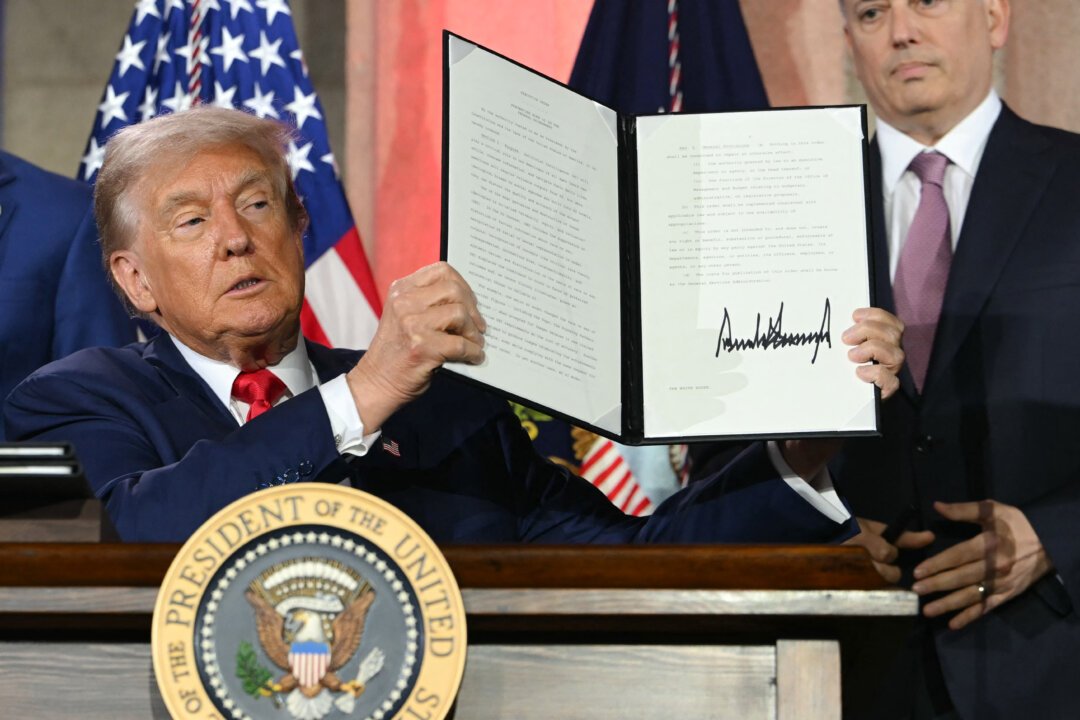
President Donald Trump announced Sunday his intention to sign an executive order this week that would establish unified federal oversight of artificial intelligence regulation while curtailing individual states’ authority to govern the rapidly evolving technology sector.

The move represents a significant shift toward centralized AI governance as the administration seeks to maintain America’s competitive edge in what has become a critical technological battleground with global implications.
“There must be only One Rulebook if we are going to continue to lead in AI,” Trump declared in a Truth Social post on December 8. “We are beating all countries at this point in the race, but that won’t last long if we are going to have 50 States, many of them bad actors, involved in rules and the approval process.”
The proposed executive order would create a single federal framework for AI regulation, effectively overriding the patchwork of state-level initiatives that have emerged across the country as lawmakers grapple with the technology’s rapid advancement and potential risks.
Trump’s announcement comes as artificial intelligence continues to transform industries from healthcare to finance, while raising concerns about job displacement, privacy, and national security. The technology has become a focal point of international competition, with China and other nations investing heavily in AI development and deployment.
Several states have moved forward with their own AI regulatory frameworks in recent months, citing the need for immediate safeguards while federal legislation remains in development. However, the Trump administration appears concerned that this fragmented approach could hinder innovation and slow the approval processes critical to maintaining technological leadership.
The timing of the executive order reflects the administration’s broader strategy to position the United States as the dominant force in AI development while streamlining regulatory processes that could potentially benefit competitors in other countries.
Industry observers note that the centralization effort could significantly impact how AI companies operate across state lines, potentially simplifying compliance requirements while raising questions about whether a single federal standard can adequately address the diverse needs and concerns of different regions.
The executive order, once signed, is expected to face legal challenges from states that have already implemented or are developing their own AI regulatory frameworks, setting up potential constitutional battles over federal versus state authority in emerging technology governance.