






































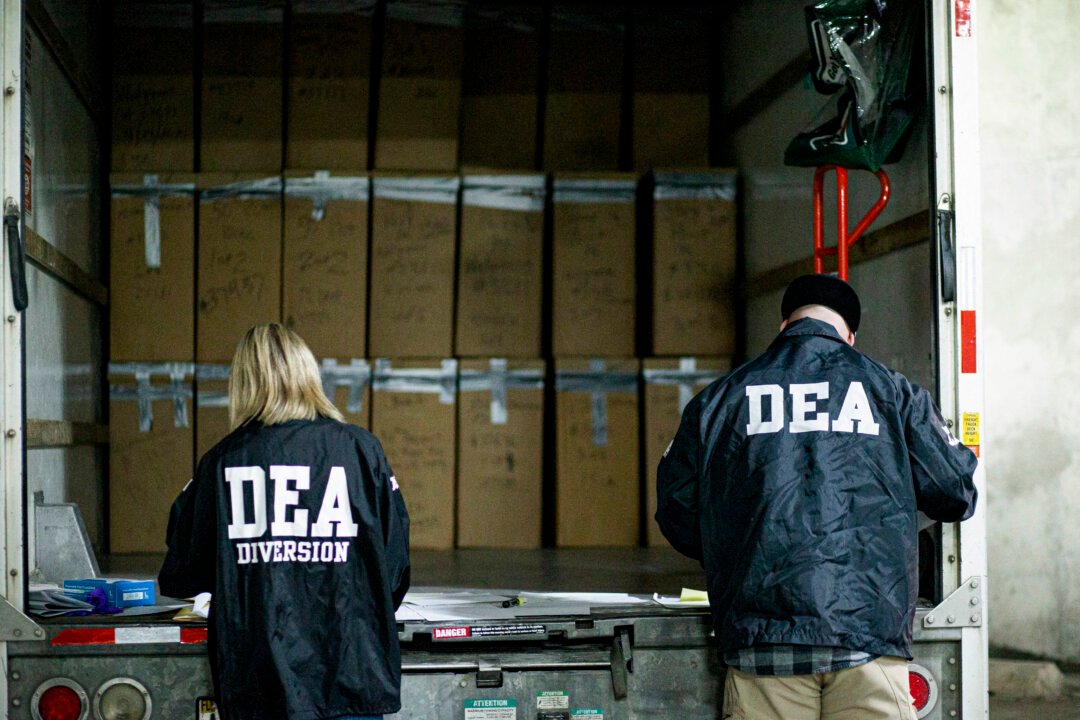
In a stunning betrayal of public trust, federal prosecutors have unveiled charges against a former Drug Enforcement Administration agent and his Florida business associate, alleging they conspired to aid one of Mexico’s most violent criminal organizations in laundering money and trafficking cocaine into the United States.

Paul Campo, 61, of Oakton, Virginia, and Robert Sensi, 75, of Boca Raton, Florida, were arrested last week in New York on federal charges that read like a law enforcement nightmare: narcoterrorism conspiracy, cocaine distribution conspiracy, providing material support to a foreign terrorist organization, and money laundering conspiracy.
According to the Justice Department’s bombshell announcement, the two men allegedly agreed to provide their services to Cartel de Jalisco Nueva Generacion (CJNG) after meeting with what they believed was a cartel representative—who was actually an undercover federal source.
“One of the most notorious Mexican cartels that is responsible for countless deaths through violence and drug trafficking in the United States and Mexico,” is how U.S. Attorney Jay Clayton for the Southern District of New York described CJNG in his statement announcing the charges.
The Mexico-based transnational crime syndicate at the center of this case operates under the iron fist of Nemesio Ruben “El Mencho” Oseguera-Cervantes, according to the federal indictment. CJNG has emerged as one of the most powerful and brutal criminal organizations operating along the U.S.-Mexico border, responsible for flooding American communities with deadly drugs while engaging in spectacular acts of violence.
The allegations strike at the heart of law enforcement integrity, suggesting that a former DEA agent—someone sworn to fight the war on drugs—was willing to switch sides for profit. Campo’s alleged betrayal is particularly shocking given the DEA’s mission to combat the very organizations he’s accused of assisting.
Prosecutors allege that Campo and Sensi were prepared to launder cartel proceeds and provide operational support to facilitate CJNG’s cocaine trafficking operations. The case appears to have been built through sophisticated undercover work, with federal agents posing as cartel operatives to expose the defendants’ alleged willingness to collaborate with one of America’s most dangerous adversaries in the drug war.
The charges carry severe penalties and represent a significant victory for federal law enforcement in their ongoing battle against cartel corruption of U.S. officials. The case also highlights the sophisticated methods cartels use to infiltrate and corrupt American institutions, seeking to exploit insider knowledge and access to further their criminal enterprises.
As this case moves forward through the federal court system, it serves as a stark reminder of the ongoing challenges facing law enforcement agencies in maintaining integrity while combating increasingly sophisticated transnational criminal organizations that stop at nothing—including the corruption of sworn officers—to advance their deadly trade.