







































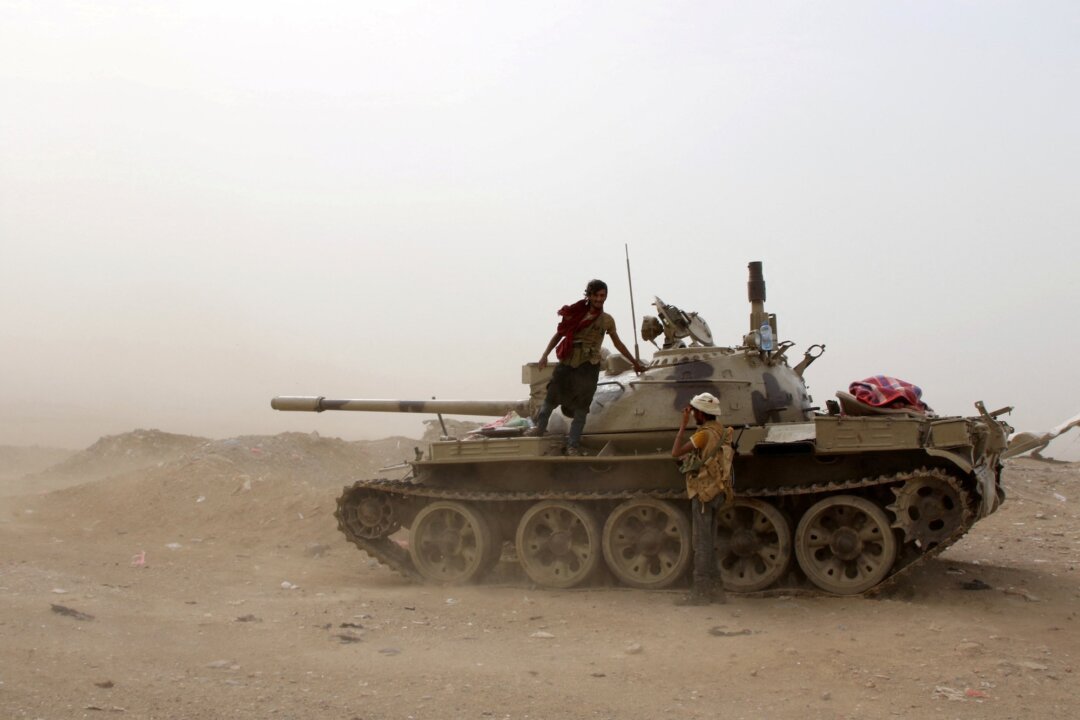
The foundations of one of the Middle East’s most powerful alliances cracked this week when Saudi warplanes struck a weapons convoy in Yemen’s port city of Mukalla—a shipment Riyadh claims was destined from the United Arab Emirates to rival separatist forces. This unprecedented military action between former partners signals how dramatically the relationship between the Gulf’s two heavyweights has deteriorated.

What began as a strategic partnership forged in crisis has evolved into an increasingly tense rivalry that spans from energy markets to regional influence. Nowhere is this transformation more evident than in Yemen, where a decade-old joint military intervention has devolved into a proxy conflict between Saudi and Emirati-backed factions.
The Foundation of an Alliance
The modern Saudi-UAE partnership emerged from the chaos of the 2011 Arab Spring, when both nations faced what they perceived as existential threats from rising Islamist movements across the region. United by shared concerns about political upheaval and Iranian influence, the two kingdoms moved decisively to protect their interests.
Their first major joint operation came in Bahrain, where Saudi and Emirati forces intervened to suppress anti-government protests. This was followed by coordinated support for Egypt’s military coup in 2013, which toppled the Muslim Brotherhood government—a clear signal that both nations were willing to act together against perceived threats to regional stability.
For years, this partnership appeared unshakeable. Crown Prince Mohammed bin Salman of Saudi Arabia and Crown Prince Mohammed bin Zayed of the UAE presented a united front on issues ranging from confronting Iran’s regional ambitions to diversifying their oil-dependent economies.
Cracks Begin to Show
However, beneath the surface of this alliance, fundamental differences in approach and priorities were beginning to emerge. While Saudi Arabia maintained its focus on traditional power projection through military might and religious influence, the UAE pursued a more nuanced strategy emphasizing economic diversification, technological advancement, and diplomatic flexibility.
These divergent paths became increasingly apparent in their approaches to regional conflicts and international relations. The UAE began positioning itself as a more moderate, business-friendly alternative to Saudi Arabia’s more conservative stance, attracting international investment and forging relationships across ideological divides.
Yemen: From Partnership to Proxy War
The transformation from allies to rivals is most starkly illustrated in Yemen, where both nations initially intervened in 2015 as partners in a Saudi-led coalition aimed at restoring the internationally recognized government and countering Iranian-backed Houthi forces.
What began as a coordinated military campaign gradually splintered as each nation began backing different local factions that aligned with their distinct strategic objectives. Saudi Arabia continued its primary focus on combating the Houthis and restoring central government control, while the UAE increasingly supported southern separatist movements that sought greater autonomy or independence.
This week’s airstrike represents the most dramatic escalation yet in this proxy conflict. By directly targeting what it characterized as UAE weapons supplies to separatist forces, Saudi Arabia has crossed a red line that transforms implicit competition into explicit confrontation.
Broader Implications for Regional Stability
The deteriorating relationship between these two Gulf powerhouses carries implications far beyond Yemen’s borders. As traditional allies drift apart, it creates opportunities for other regional powers—including Iran and Turkey—to exploit the growing divisions.
The fracturing of the Saudi-UAE partnership also complicates broader Middle Eastern dynamics, including efforts to contain Iranian influence, manage relationships with Israel, and coordinate responses to regional crises. What was once a predictable alliance has become a source of uncertainty in an already volatile region.
Economic competition has also intensified, with both nations pursuing ambitious development projects and seeking to position themselves as regional business hubs. The UAE’s success in attracting international investment and establishing itself as a global financial center has created new competitive pressures with Saudi Arabia’s own economic transformation efforts.
As these former partners continue on increasingly divergent paths, the implications extend well beyond their bilateral relationship, potentially reshaping the entire regional balance of power in the Middle East.