







































There’s something magical about how a single meal can transport you back in time, evoking memories so vivid you can almost taste them again. For acclaimed cookbook author Diane Rossen Worthington, that transformative moment came during a bone-chilling day in Vienna, when she sought refuge from howling winds in a small restaurant on the city’s outskirts.

What she discovered there would become one of her most treasured culinary memories: an authentic Hungarian goulash that challenged everything her American palate expected from the dish.
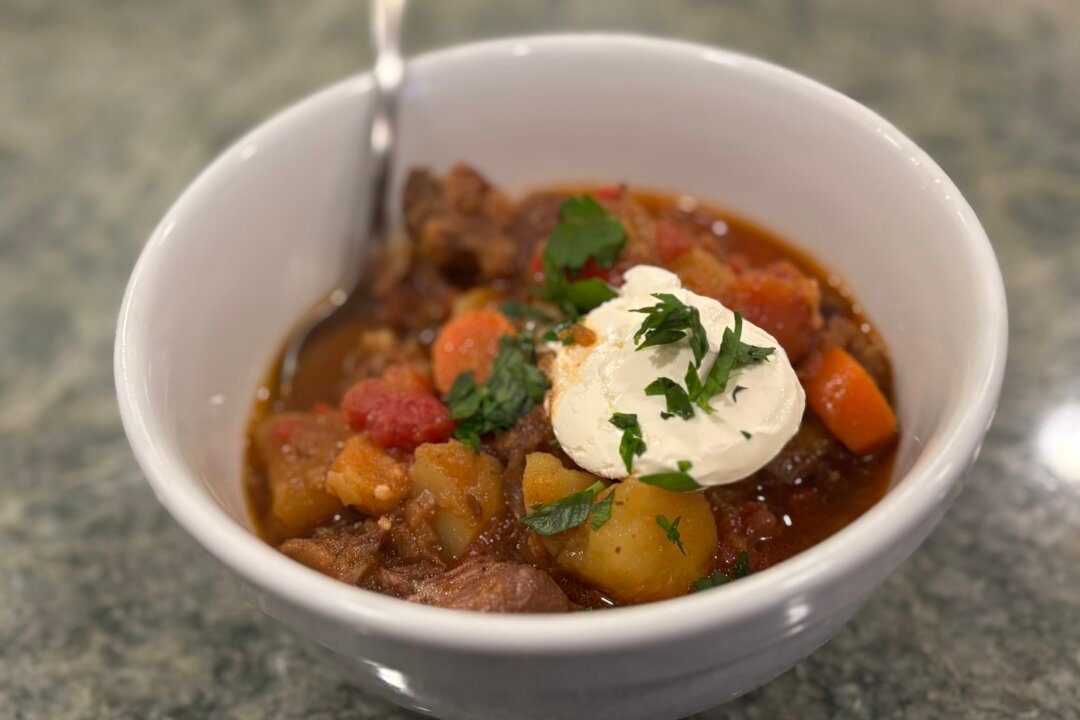
“Years ago, I was traveling to Vienna on a freezing day and stopped into a restaurant on the outskirts of town. I ordered the goulash and was astounded with its flavor profile and cozy comfort as the wind was howling outdoors. What made it unusual to my American palate was the combination of bittersweet caraway seeds, sweet Hungarian paprika and rich diced tomatoes. The meat was beyond tender, and the dish was capped with a dollop of sour cream. I will never forget that day or the taste memory,” recalls Worthington, who has authored 18 cookbooks and hosts a James Beard Award-winning radio show.
The dish that captivated her that day wasn’t just another stew—it was a masterclass in Hungarian flavor combinations. The interplay of bittersweet caraway seeds with sweet Hungarian paprika created a complexity that American versions often lack, while rich diced tomatoes added depth to the tender, slow-cooked meat. The final flourish of cooling sour cream provided the perfect contrast to the warming spices.
That Vienna experience recently resurfaced in Worthington’s mind as she searched for the perfect one-dish meal to combat winter’s chill. However, being the innovative cook she is, she couldn’t resist improving upon tradition.
“Recently, this recipe popped into my mind when trying to come up with a warm, one-dish meal. I’ve changed it up a bit, browning the meat in the oven to cut-down on cooking in batches. I use this method for any stew I make now. It still adds the meaty caramelization using a quicker method. Make sure to select Hungarian paprika (rather than American paprika) for its sweet flavor; it makes a difference,” she explains.
Worthington’s modern adaptation streamlines the traditional process without sacrificing flavor. By browning the meat in the oven rather than in batches on the stovetop, she’s discovered a time-saving technique that still delivers the essential caramelization that makes stews so deeply satisfying. This method has become her go-to approach for all stew preparations, proving that sometimes the best innovations come from practical necessity.
The secret to authentic flavor lies in the details—specifically, sourcing genuine Hungarian paprika. Unlike its American counterpart, Hungarian paprika brings a distinctive sweetness that transforms the entire dish. This single ingredient swap can mean the difference between a good goulash and an extraordinary one that rivals those served in Vienna’s cozy restaurants.
Perfect for those brutal winter evenings when comfort food becomes essential, this Hungarian goulash pairs beautifully with crusty country bread and a crisp green salad. It’s the kind of meal that turns a house into a home, filling the kitchen with aromas that promise warmth and satisfaction.
As Worthington continues to share her culinary expertise through her cookbooks and radio show, this goulash recipe stands as a testament to the power of food memories and the joy of bringing authentic international flavors into American kitchens. Sometimes the best recipes aren’t just about ingredients and techniques—they’re about capturing a moment in time and sharing it with others.