




































A powerful House committee is urging the incoming Trump administration to wage economic warfare against China’s monopolistic control over the global critical minerals market, proposing the creation of a federal “critical minerals czar” and other strategic initiatives designed to rebuild America’s industrial independence.

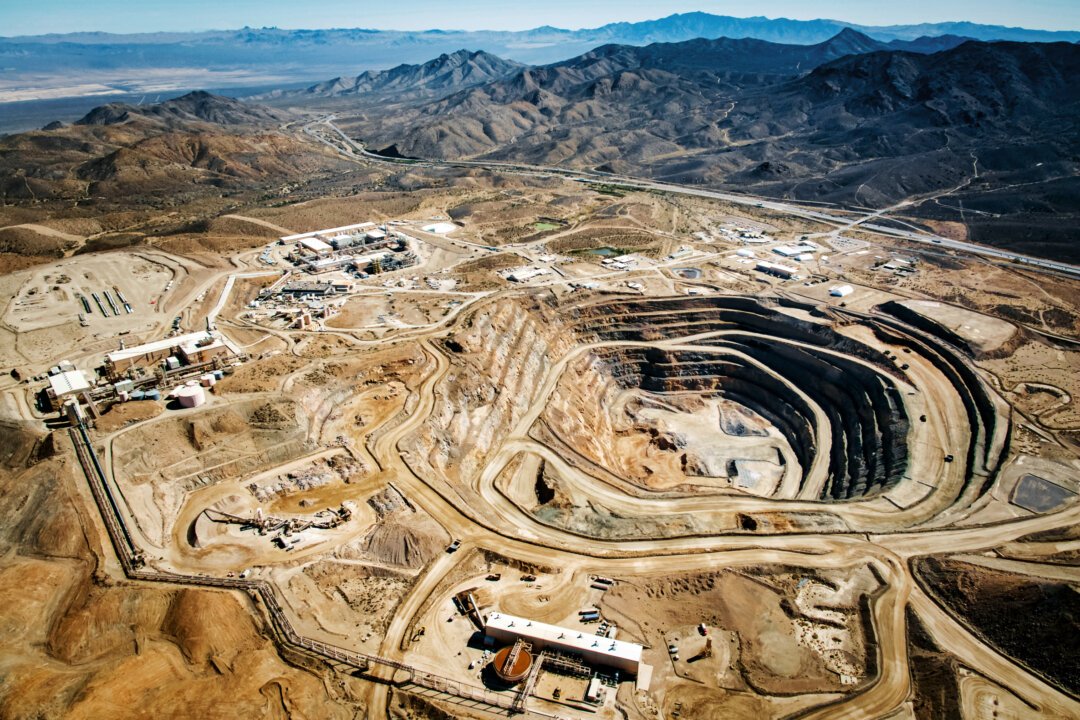
The House Select Committee on the Chinese Communist Party has released a comprehensive 52-page blueprint containing 13 hard-hitting recommendations that could fundamentally reshape how the United States approaches one of its most pressing national security vulnerabilities. The report calls for establishing a strategic resources reserve, implementing critical minerals tax credits, and creating a “National Center for Rare Earths” to jumpstart domestic mining and refining operations.
Representative John Moolenaar, who spearheaded the initiative, delivered a stark warning about the urgency of the situation. “Move quickly to disarm China’s loaded gun before it can be fired again,” Moolenaar declared, emphasizing that these recommendations are designed to prepare the United States for swift action against Chinese market manipulation.
The timing of this report couldn’t be more critical. China currently dominates the production of metals and materials that form the backbone of modern technology, from everyday consumer electronics like iPhones to sophisticated military hardware including F-35 fighter jets. This stranglehold has created a dangerous dependency that leaves American manufacturers and the military vulnerable to supply chain disruptions orchestrated by the Chinese Communist Party.
The committee’s proposals represent a dramatic shift toward economic nationalism, prioritizing the development of domestic supply chains that can withstand geopolitical pressures. The creation of a federal critical minerals czar would centralize coordination efforts across multiple government agencies, streamlining what has historically been a fragmented approach to mineral security.
Perhaps most significantly, the proposed strategic resources reserve would function as a buffer against sudden supply shocks, similar to how the Strategic Petroleum Reserve provides energy security. This stockpiling mechanism could prove crucial during periods of heightened tensions with China or other global disruptions.
The tax credit component of the plan aims to incentivize private sector investment in domestic mining operations, making American production more competitive against heavily subsidized Chinese operations. This market-based approach acknowledges that government intervention alone cannot solve the critical minerals crisis.
The establishment of a National Center for Rare Earths would consolidate research and development efforts, potentially accelerating technological breakthroughs in extraction and processing techniques. This could help American companies overcome the technical challenges that have historically made domestic production less economically viable than Chinese alternatives.
Industry experts have long warned about America’s dangerous reliance on Chinese critical minerals. The COVID-19 pandemic and recent geopolitical tensions have highlighted how quickly supply chains can be weaponized, making the committee’s recommendations particularly relevant for policymakers concerned about national security.
The report’s release comes at a pivotal moment as the Trump administration prepares to take office with promises to reinvigorate American manufacturing and reduce dependence on foreign adversaries. The comprehensive nature of these recommendations suggests that lawmakers recognize the complexity of displacing China’s entrenched position in global mineral markets.
Success in implementing these initiatives will require sustained political will and substantial financial investment over many years. However, the committee’s bipartisan focus on this issue indicates growing recognition that America’s technological and military superiority depends on securing reliable access to these essential materials.
The battle for critical minerals represents a new front in the broader economic competition between the United States and China. How effectively America implements these recommendations could determine whether the nation maintains its technological edge or becomes increasingly dependent on its primary strategic rival for the building blocks of 21st-century innovation.