





































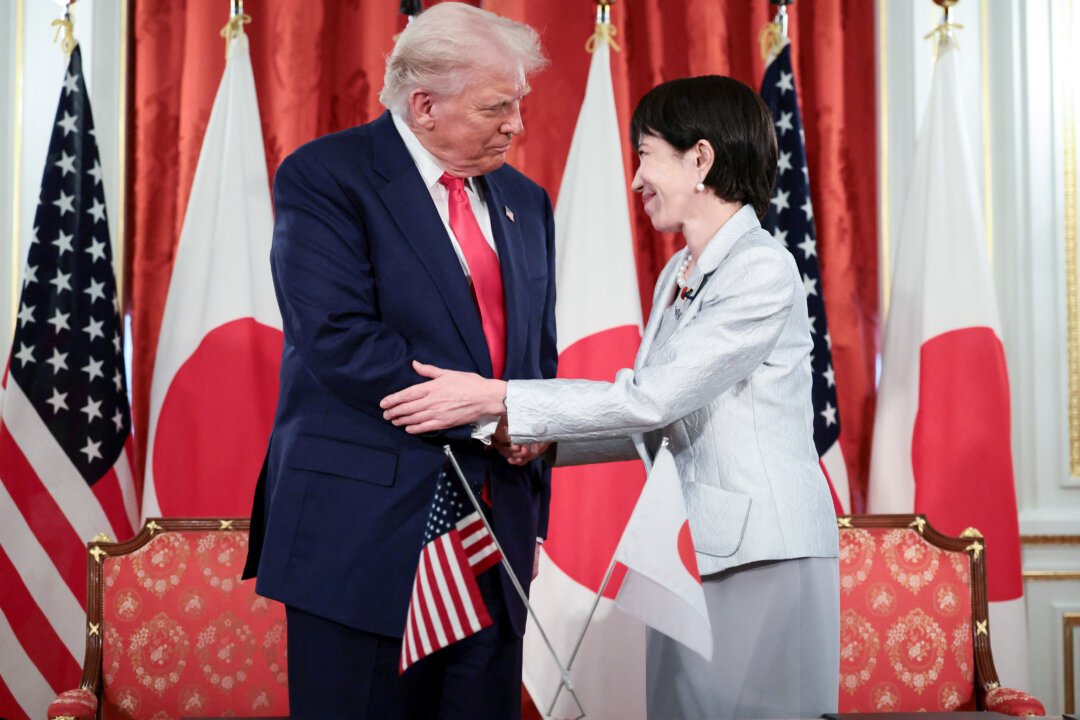
President Donald Trump and Japanese Prime Minister Sanae Takaichi held a crucial phone conversation on the evening of November 24, as diplomatic tensions escalate between Tokyo and Beijing over the sensitive issue of Taiwan.

The call comes at a particularly volatile moment in East Asian geopolitics, with China having imposed a travel boycott against Japan in direct response to controversial remarks made by Takaichi regarding Taiwan earlier this month. The Chinese government’s punitive measures represent a significant escalation in diplomatic pressure against one of America’s key regional allies.
Speaking to reporters the following day, Prime Minister Takaichi provided limited insight into the substance of her conversation with the U.S. president, according to The Japan Times.
“President Trump gave a brief explanation of the recent state of U.S.-China relations,” Takaichi revealed to the press on November 25, though she declined to elaborate further on the specific details discussed during their diplomatic exchange.
The timing of this high-level communication underscores the delicate balance of power in the Asia-Pacific region, where the United States and its allies continue to navigate increasingly complex relationships with an assertive China. Taiwan remains one of the most contentious flashpoints in U.S.-China relations, with Beijing viewing any international support for the self-governing island as a direct challenge to its sovereignty claims.
Japan’s position in this regional dynamic has become increasingly precarious, as Tokyo seeks to maintain both its security alliance with Washington and its substantial economic ties with Beijing. The Chinese travel boycott represents a clear attempt to pressure Japan into moderating its stance on Taiwan, using economic leverage as a diplomatic weapon.
The phone call between Trump and Takaichi signals the importance both nations place on coordination amid these rising tensions. As China continues to assert its influence across the region, the U.S.-Japan alliance faces new tests in balancing diplomatic engagement with firm opposition to what both countries view as destabilizing Chinese actions.
This latest development adds another layer to the complex web of relationships defining contemporary East Asian geopolitics, where economic interdependence and security concerns often pull nations in competing directions. The international community continues to watch closely as these tensions unfold, with potential implications extending far beyond the immediate region.