





































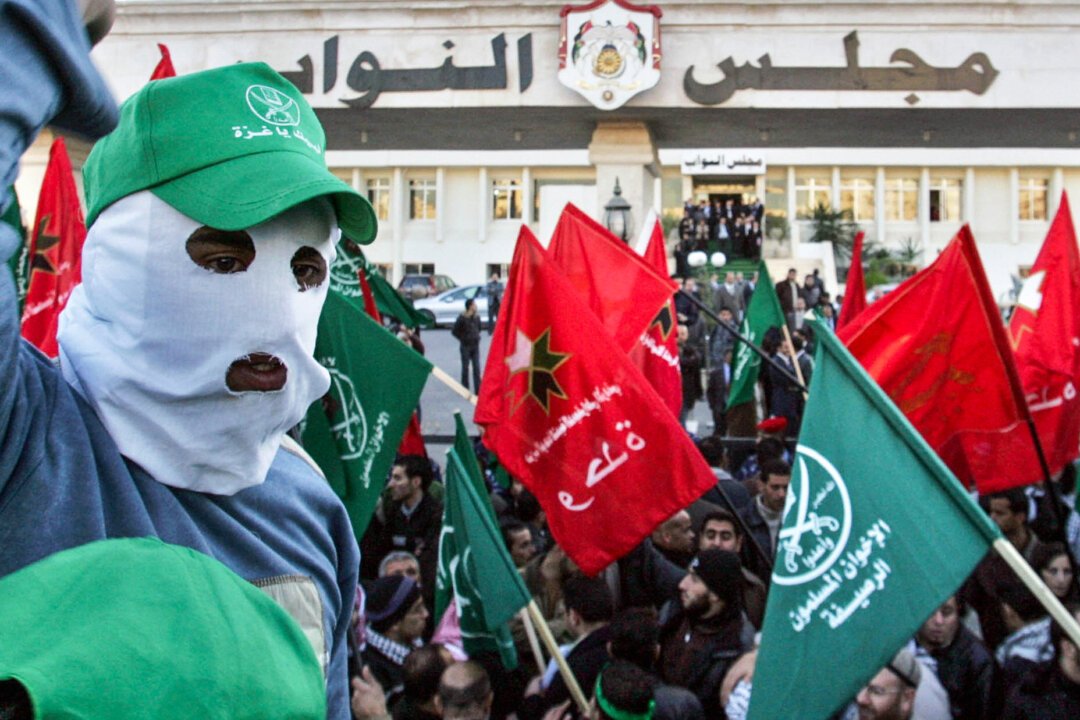
President Donald Trump has signed a sweeping executive order directing his administration to begin the formal process of designating certain chapters of the Muslim Brotherhood as foreign terrorist organizations, marking a significant escalation in the U.S. government’s approach to the influential Islamist movement.

The executive order, signed on November 24, tasks Secretary of State Marco Rubio and Treasury Secretary Scott Bessent with initiating procedures to classify specific Muslim Brotherhood chapters as both Foreign Terrorist Organizations (FTOs) and Specially Designated Global Terrorists (SDGTs). This dual designation would trigger severe financial sanctions and legal restrictions on any individuals or entities found to be providing material support to the targeted groups.
The Muslim Brotherhood, founded in Egypt in 1928, has evolved into one of the world’s most prominent Islamist movements, with affiliated organizations and chapters operating across the Middle East, North Africa, and beyond. While the organization maintains it pursues peaceful political and social reform, critics argue that some of its branches have connections to militant activities or provide ideological support for extremist groups.
This executive action represents a fulfillment of a policy position Trump has previously articulated. During his earlier presidency and subsequent campaigns, Trump expressed intentions to formally classify the Muslim Brotherhood as a terrorist organization, arguing that such a designation was necessary for national security purposes.
The decision to target specific chapters rather than the entire global network suggests a more nuanced approach than initially anticipated. This strategy acknowledges the complex reality that Muslim Brotherhood affiliates operate differently across various countries, with some participating in legitimate political processes while others may engage in more controversial activities.
The terrorist designation process involves extensive intelligence reviews and legal procedures. Once initiated, the State Department and Treasury will need to compile evidence demonstrating that the targeted chapters meet the legal criteria for terrorist designation, including engagement in terrorist activities that threaten U.S. national security or the safety of American citizens.
If successfully designated as FTOs, the affected Muslim Brotherhood chapters would face significant consequences. U.S. financial institutions would be required to freeze any assets belonging to these organizations, and it would become a federal crime for Americans to knowingly provide material support or resources to them. Additionally, members and representatives of designated groups could be denied entry to the United States.
The move is likely to generate considerable debate both domestically and internationally. Supporters argue that the designation is long overdue and necessary to combat organizations they view as promoting radical ideology. However, critics may contend that such broad designations could impact legitimate political movements and civil society organizations in various countries where Muslim Brotherhood affiliates operate.
Several U.S. allies, including Egypt, Saudi Arabia, and the United Arab Emirates, have already designated the Muslim Brotherhood as a terrorist organization. However, other allies, particularly in Europe, have maintained different approaches, often distinguishing between the organization’s political and militant wings.
The executive order comes as the Trump administration appears to be taking a more aggressive stance toward organizations it views as threats to national security. This action fits within a broader pattern of using economic sanctions and terrorist designations as foreign policy tools to pressure adversarial groups and nations.
The implementation timeline for these designations remains unclear, as the formal process typically requires months of legal and intelligence work. The State Department and Treasury will need to coordinate their efforts while ensuring that any designations can withstand potential legal challenges.
This development is expected to have ripple effects across the Middle East, where Muslim Brotherhood affiliates have played significant roles in various countries’ political landscapes. The designations could potentially complicate U.S. diplomatic relationships in regions where these groups maintain substantial influence or popular support.