







































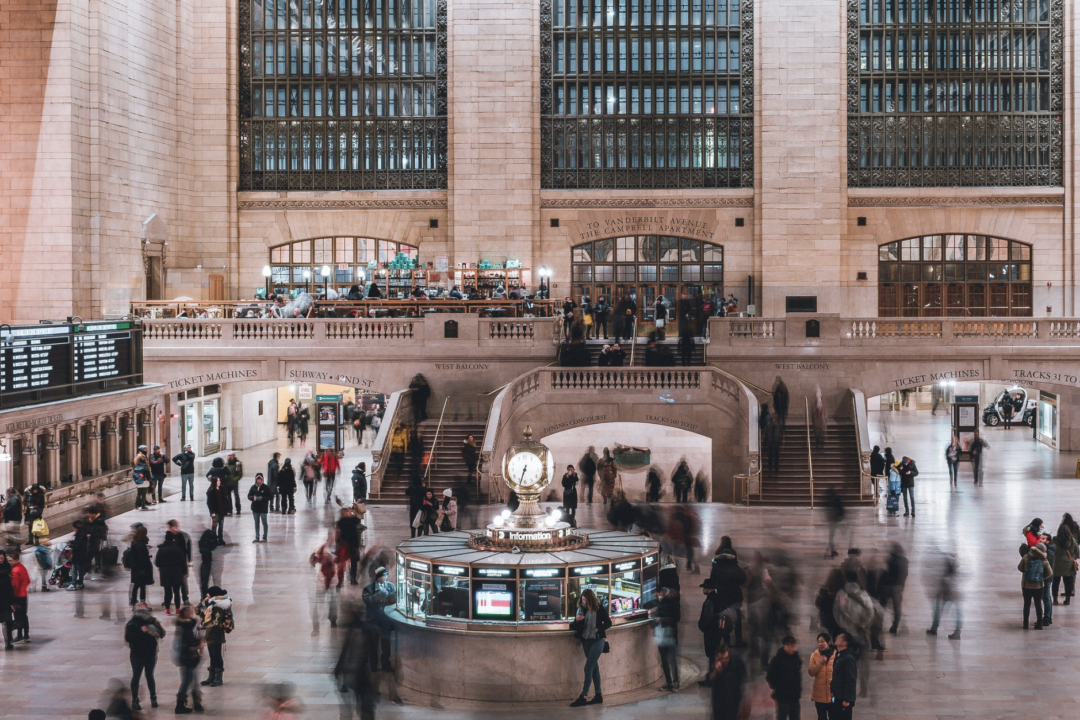
In the pulsing heart of Manhattan, where the rhythm of New York City never falters, stands one of America’s most magnificent transportation hubs. Each day, approximately 750,000 people surge through the majestic halls of Grand Central Terminal, creating a living tapestry of human movement that has captivated visitors and commuters alike for over a century.

For the millions who pass through its doors annually, Grand Central Terminal represents far more than a simple transit point. It serves as a crossroads where countless life stories intersect—a place where business executives rushing to crucial meetings brush shoulders with tourists marveling at the celestial ceiling, where tearful goodbyes unfold alongside joyous reunions, and where the very essence of New York’s relentless energy finds its most perfect expression.
Born from Tragedy: A Station’s Remarkable Genesis
The fascinating origins of this architectural masterpiece are meticulously documented in the 2017 publication “Building Grand Central Terminal” by Gregory Bilotto and Frank DiLorenzo. The terminal’s creation story begins not with triumph, but with tragedy—a sobering reminder that sometimes our greatest achievements emerge from our darkest moments.
The catastrophic train accident that would ultimately inspire the construction of Grand Central Terminal serves as a powerful testament to how human ingenuity can transform devastating loss into lasting legacy. This tragic event became the catalyst for reimagining urban transportation infrastructure, leading to the creation of what would become one of the world’s most celebrated railway terminals.
Today, as commuters hurry across the terminal’s iconic main concourse beneath the famous constellation ceiling, few pause to consider the profound history embedded in every marble step and steel beam. The terminal stands as a monument to both human resilience and architectural ambition, its Beaux-Arts grandeur serving as a daily reminder that functional spaces can also inspire wonder.
The sheer scale of human activity within Grand Central Terminal is staggering. With three-quarters of a million people flowing through its corridors each day, the terminal processes more daily visitors than many small cities have residents. This constant stream of humanity creates an ever-changing symphony of languages, cultures, and stories that embodies the quintessential New York experience.
From the harried commuter catching the 7:45 to White Plains to the wide-eyed tourist photographing the information booth’s four-faced clock, Grand Central Terminal continues to serve as more than infrastructure—it remains a vital organ in the city’s circulatory system, pumping life and energy throughout the metropolitan area while preserving its role as one of New York’s most treasured landmarks.