






































The University of California–Berkeley finds itself in federal crosshairs as the Department of Education launches an investigation into the campus’s handling of violent protests that erupted during a conservative student event earlier this month.

Education Secretary Linda McMahon announced on November 25 that federal investigators are examining whether UC Berkeley provided adequate safety and security measures before a November 10 Turning Point USA event descended into chaos, resulting in multiple arrests and raising serious questions about campus security protocols.
The stakes couldn’t be higher for the prestigious public university. McMahon warned that if investigators uncover significant security deficiencies, Berkeley could face the loss of federal funding under the stringent requirements of the Jeanne Clery Act, a federal law that mandates colleges maintain safe campus environments and properly report crime statistics.
The controversial Turning Point USA event, which featured conservative speakers, became a flashpoint for campus tensions when protesters gathered outside the venue. What began as demonstrations quickly escalated into violent confrontations, forcing Berkeley police to make arrests as they struggled to maintain order.
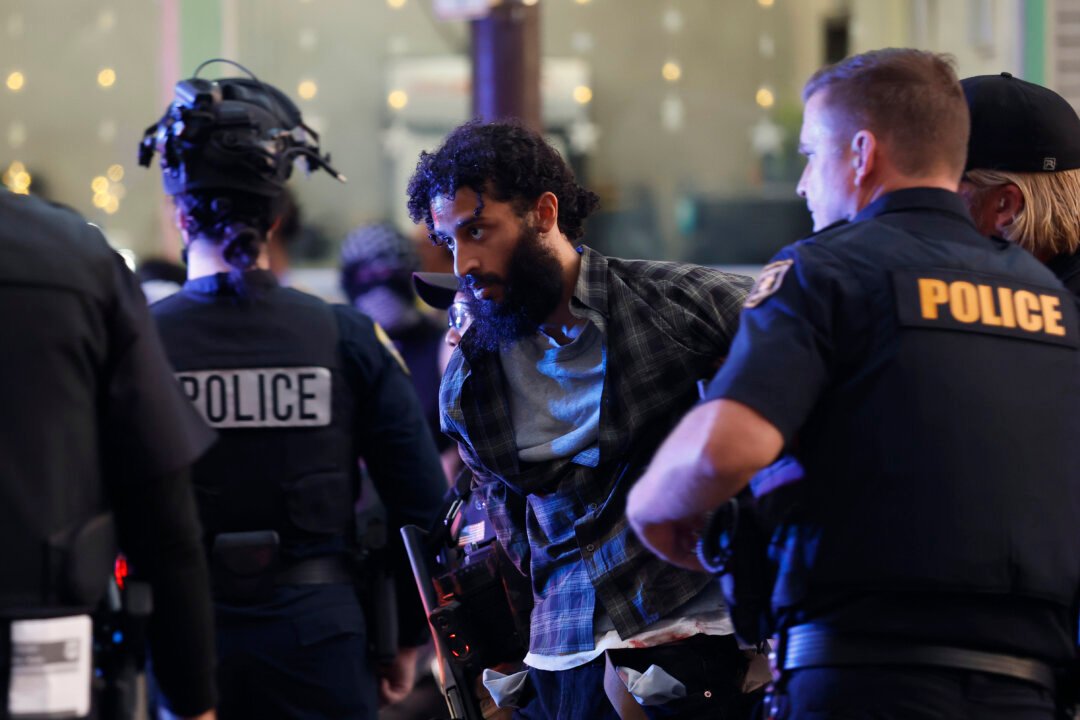
Images from the November 10 incident showed officers restraining protesters outside the event venue, highlighting the security challenges that have become increasingly common at Berkeley and other universities when hosting politically charged speakers or events.
The federal investigation represents a significant escalation in the ongoing debate over campus free speech and university safety obligations. Berkeley, long known as the birthplace of the Free Speech Movement in the 1960s, has ironically found itself repeatedly at the center of controversies involving the suppression of conservative voices on campus.
For UC Berkeley, the potential loss of federal funding would be devastating. Like most major research universities, Berkeley relies heavily on federal grants, contracts, and student aid programs that collectively represent hundreds of millions of dollars annually. Such funding supports everything from cutting-edge research initiatives to student financial assistance programs.
The Jeanne Clery Act, originally passed in 1990 and named after a Lehigh University student who was murdered in her dormitory, requires colleges and universities that receive federal funding to maintain and disclose campus crime statistics and security policies. More importantly, it mandates that institutions provide adequate security measures to protect students, faculty, and visitors.
University administrators now face intense pressure to demonstrate that they took appropriate steps to prepare for and manage the November 10 event. Federal investigators will likely scrutinize everything from pre-event security planning and staffing levels to communication protocols and emergency response procedures.
The timing of this investigation adds another layer of complexity, coming as universities nationwide grapple with how to balance free speech protections with campus safety concerns. The challenge has become particularly acute when hosting events featuring speakers or topics that generate strong opposition from segments of the campus community.
As the investigation unfolds, UC Berkeley leadership must work to address federal concerns while maintaining their commitment to hosting diverse viewpoints on campus. The outcome could set important precedents for how universities across the country approach security planning for controversial events and speakers.
The Department of Education has not provided a timeline for completing its investigation, leaving Berkeley administrators and the broader university community in a state of uncertainty about their federal funding status and future obligations under campus safety regulations.