





































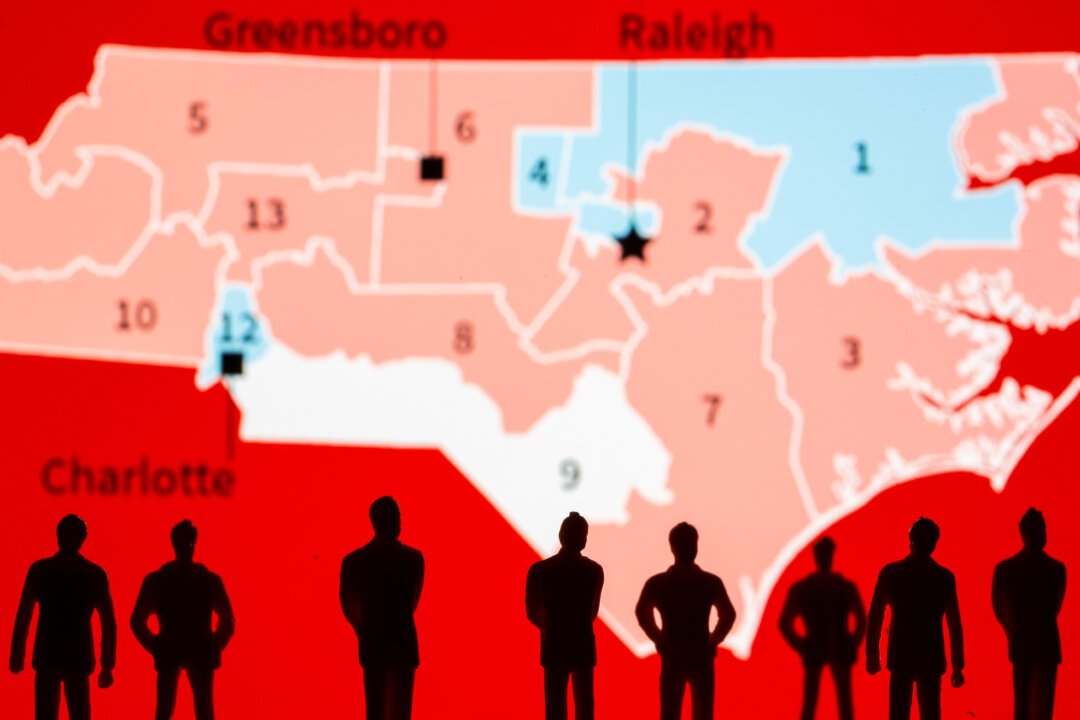
A federal three-judge panel has delivered a significant victory to North Carolina Republicans, unanimously rejecting an attempt to block the state’s controversial redrawn congressional map that could hand the GOP an additional House seat in upcoming midterm elections.

The November 23 ruling represents the latest chapter in North Carolina’s lengthy redistricting saga, allowing state officials to proceed with implementing the new electoral boundaries for the 2026 congressional races. The decision effectively denied Democrats and voting rights advocates their request for an emergency injunction that would have prevented the map’s use.
The stakes couldn’t be higher in a state that has become ground zero for national redistricting battles. North Carolina’s congressional delegation plays a crucial role in determining party control of the House of Representatives, making every seat a coveted prize in an era of razor-thin majorities.
The redrawn map emerges from a complex legal and political process that has seen North Carolina’s electoral boundaries challenged repeatedly in both state and federal courts over the past decade. Previous iterations of the state’s congressional maps have faced accusations of partisan gerrymandering from both sides of the political aisle.
Republican state legislators, who control the redistricting process in North Carolina, have defended the new map as legally compliant and fair. They argue that the boundaries reflect natural geographic and community considerations while adhering to federal voting rights protections.
However, critics contend that the map represents a strategic effort to dilute Democratic voting strength and maximize Republican representation in the state’s congressional delegation. North Carolina has historically been viewed as a purple state where both parties maintain competitive chances across multiple districts.
The timing of the court’s decision proves particularly significant, as it provides certainty for the 2026 election cycle and allows candidates to begin planning their campaigns with knowledge of the final district boundaries. Campaign strategists from both parties have been closely monitoring the case’s outcome to adjust their electoral strategies accordingly.
This ruling adds to a broader national trend of courts grappling with redistricting disputes following the 2020 census. States across the country have faced similar legal challenges as parties seek to maximize their electoral advantages through the map-drawing process.
The unanimous nature of the three-judge panel’s decision suggests that challengers faced significant legal hurdles in proving their case against the map. Federal courts typically require clear evidence of constitutional violations or violations of federal voting rights law to intervene in state redistricting processes.
As North Carolina moves forward with the approved congressional map, political observers will closely watch how the new boundaries affect candidate recruitment, fundraising, and ultimately electoral outcomes in what promises to be highly competitive 2026 midterm elections.