



























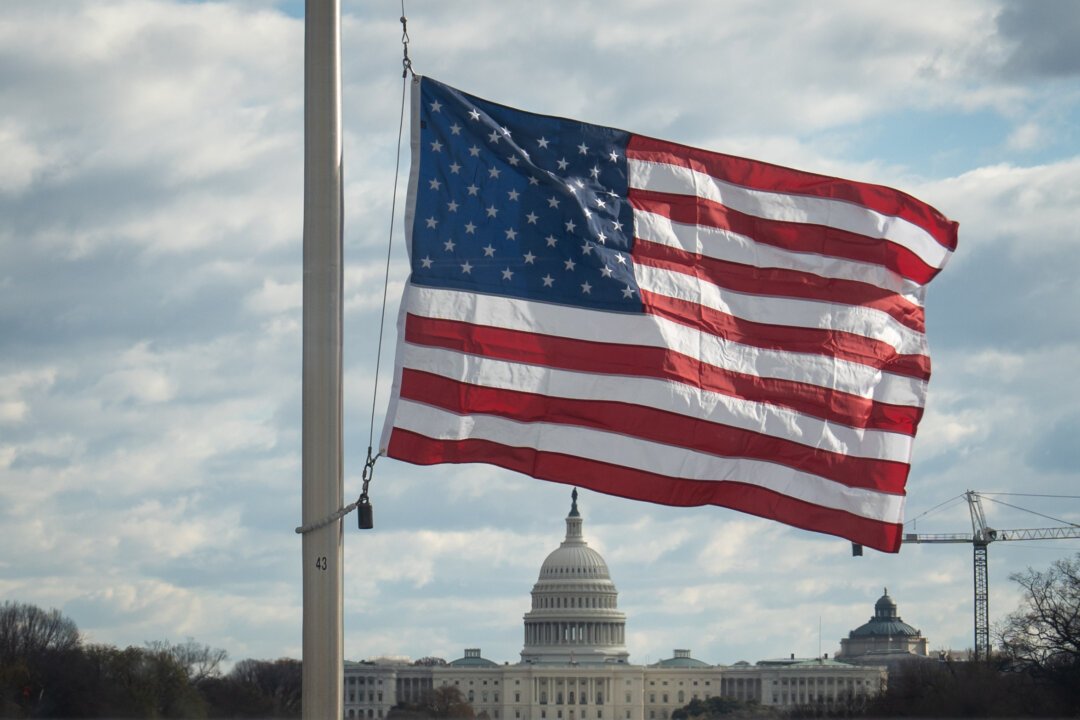
Long before the Founding Fathers signed the Declaration of Independence or crafted the Constitution, a powerful vision took root in American soil—the promise of the American Dream. This wasn’t merely political rhetoric or empty campaign slogans. It was a sacred covenant with those brave enough to risk everything for a chance at something better.

Today, that foundational promise faces unprecedented challenges, and the very leaders who should champion it are telling young Americans to lower their expectations and accept less than their parents achieved. This represents a dangerous departure from the principles that made America exceptional.
The Origins of American Exceptionalism
The blueprint for American greatness was articulated centuries ago by John Winthrop during a pivotal moment in 1630. Standing aboard the Arbella in the middle of the Atlantic Ocean, just three weeks before reaching New England, Winthrop delivered a sermon that would echo through the ages. He envisioned America as a “city upon a hill,” declaring:
“For we must consider that we shall be as a city upon a hill. The eyes of all people are upon us. So that if we shall deal falsely with our God in this work we have undertaken, and so cause Him to withdraw His present help from us, we shall be made a story and a byword through the world.”
This vision rested on two unshakeable pillars: absolute freedom—particularly religious liberty—and genuine economic opportunity. These weren’t abstract concepts but tangible promises that every person could own land and climb the economic ladder through hard work and determination.
When America’s Promise Attracted the World
Early promoters understood the magnetic appeal of this New World opportunity. The Virginia Company, established in 1606, distributed promotional materials like Nova Britannia in 1609, painting vivid pictures of abundant land where “every man may be master and owner of his owne labour and land.” This fundamental expectation quickly became the defining characteristic that separated Americans from their European counterparts.
The European elite found this American attitude deeply troubling—much like certain voices in today’s establishment. Lord Dunmore, serving as colonial governor of Virginia in 1774, complained about Americans’ relentless optimism and ambition: “The established authority of any government in America, and the policy of government at home, are both insufficient to restrain the Americans … that they should for ever imagine the lands further off, are still better than those upon which they are already settled.”
The Modern Attack on American Aspirations
This historical disdain for American ambition has found new expression among today’s conservative intellectuals. The American Enterprise Institute recently echoed Lord Dunmore’s sentiment in a Thanksgiving opinion piece. Yuval Levin argued:
“We, the conservative party to the conflicts in our culture, have to temper our outrage with our lower expectations, and to remember that ours will always be the more demanding educational challenge. It requires us to draw younger Americans into a spirit of appreciation and humility, not into arrogance and anger.”
This perspective reflects a broader dismissal of legitimate concerns among young Americans struggling with unprecedented economic challenges. Former Heritage Foundation economist Steve Moore recently posted on social media: “The Snowflake Generation is the only group of Americans not optimistic about the economy. They are graduating with useless degrees that don’t match what employers actually need.”
The Price of Misplaced Priorities
When political leaders suggest focusing on domestic challenges rather than foreign interventions, they face immediate pushback from commentators insisting “we can walk and chew gum at the same time.” Yet after fifteen years of attempting this balancing act, the results speak for themselves—young Americans can’t afford homes, economic mobility has stagnated, and the American Dream feels increasingly out of reach.
The message from establishment conservatives has become clear: lower your expectations, stop complaining about economic hardship, and don’t dare suggest prioritizing young Americans’ ability to own property or advance economically. This represents a fundamental betrayal of conservative principles and American values.
An Unprecedented Retreat from American Values
What makes this situation particularly alarming is its complete break from American historical tradition. Never before have Americans been asked to accept less than previous generations achieved. The notion of lowering expectations, embracing the status quo, and silencing legitimate grievances contradicts everything America has traditionally represented—it’s as foreign to American culture as monarchy itself.
The time has come to reject the dismissal of domestic challenges as inevitable or acceptable. These problems are neither unavoidable nor secondary concerns—they represent the highest priority for any nation serious about preserving its founding promises.
Reclaiming America’s Future
Americans deserve opportunities that surpass what previous generations enjoyed, not diminished prospects accompanied by lectures about gratitude. Currently, young Americans see a future that falls short of their parents’ achievements. Given how quickly their legitimate concerns are dismissed by those in positions of influence, their pessimism becomes entirely understandable.
The American Dream isn’t a relic of the past or an unrealistic expectation for the future. It remains the defining promise of American life—the commitment that through freedom, opportunity, and hard work, each generation can achieve more than the last. Abandoning this promise doesn’t represent mature conservative thinking; it represents the abandonment of what makes America exceptional.
Our obligation isn’t to manage decline or lower expectations. Our obligation is to restore the conditions that made the American Dream achievable for millions and ensure it remains within reach for future generations. Anything less betrays the vision of those who first imagined America as a city upon a hill, with the eyes of the world watching our success or failure.