



























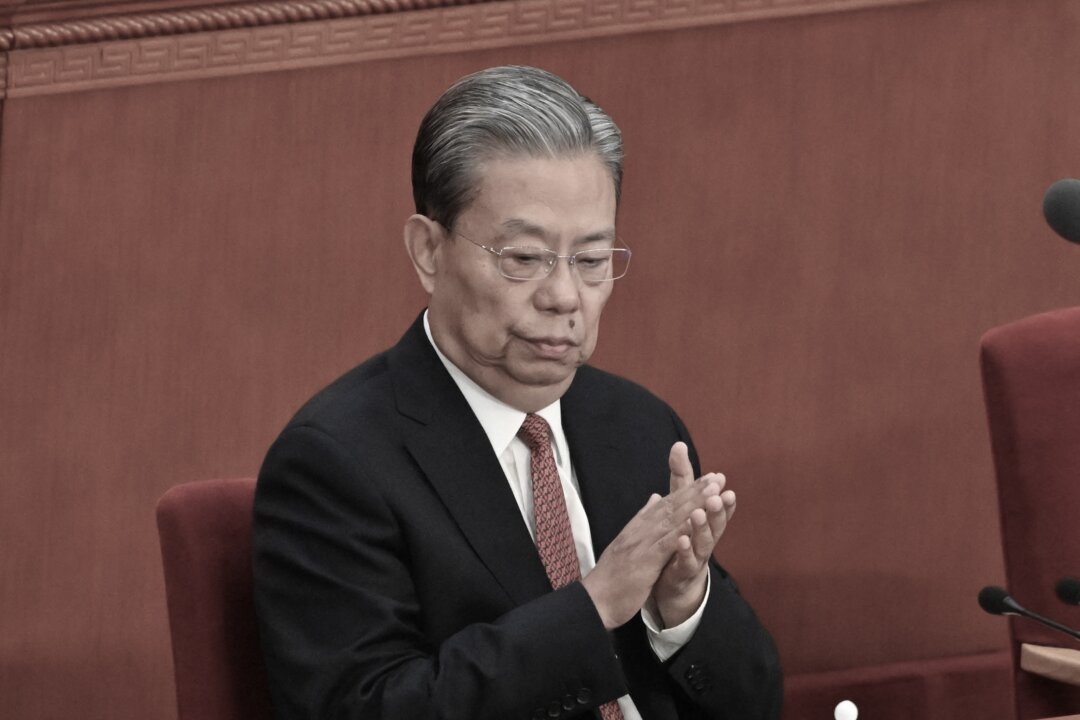
China’s third-highest ranking official has delivered a direct diplomatic message to Australia, urging the nation to align with Beijing’s territorial claims over Taiwan and the South China Sea during a series of high-profile meetings in the Australian capital.

Zhao Leji, who serves as chairman of the National People’s Congress Standing Committee and maintains close ties with Chinese Communist Party leader Xi Jinping, conducted strategic discussions with Australia’s Governor-General Samantha Mostyn and participated in an exclusive breakfast meeting hosted by Prime Minister Anthony Albanese on November 24.
The diplomatic pressure comes at a critical juncture as Australia continues to navigate its complex relationship with China, maintaining what analysts describe as a deliberately ambiguous position on Taiwan that reflects the nation’s delicate balancing act between security concerns and economic interests.
Australia’s cautious approach to the Taiwan question stems largely from its substantial economic interdependence with China, which remains the country’s largest trading partner. This economic reality has consistently influenced Canberra’s foreign policy decisions, leading to a carefully calibrated stance that avoids taking definitive positions on Beijing’s territorial claims.
The visit by Zhao Leji, who ranks as the third most powerful figure in China’s political hierarchy, underscores Beijing’s strategic effort to secure international support for its positions on contested territories. His presence in Australia’s halls of power signals the importance China places on maintaining Australian neutrality, if not outright support, for its regional ambitions.
The timing of these diplomatic exchanges is particularly significant as tensions in the Taiwan Strait continue to escalate, with China increasing military pressure on the self-governing island that Beijing claims as its territory. Australia’s response to these developments has been closely watched by both Washington and Beijing as a bellwether of regional alliance dynamics.
Prime Minister Albanese’s decision to host a breakfast meeting with the Chinese official demonstrates Australia’s ongoing commitment to diplomatic engagement with Beijing, despite persistent disagreements over human rights issues and regional security concerns. This approach reflects Canberra’s broader strategy of maintaining dialogue channels while preserving its sovereign decision-making processes.
The meetings occurred against a backdrop of evolving geopolitical tensions, with Australia seeking to maintain its strategic autonomy while managing competing pressures from its security alliance with the United States and its economic partnership with China. This diplomatic tightrope walk has become a defining characteristic of Australian foreign policy in the Indo-Pacific region.
Zhao Leji’s visit to Australia represents part of a broader Chinese diplomatic offensive aimed at building international consensus around Beijing’s territorial claims and foreign policy positions. The success of such efforts will likely influence China’s approach to similar diplomatic engagement with other regional partners in the months ahead.