













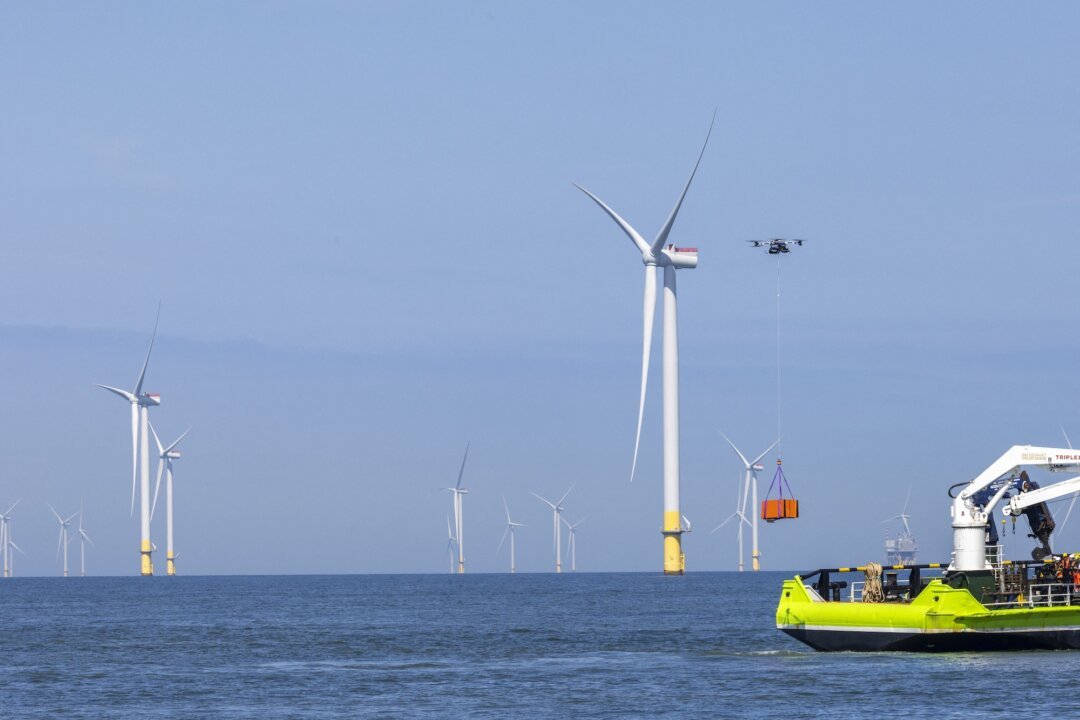
In a bold legal maneuver that could reshape America’s renewable energy landscape, Danish energy powerhouse Orsted has filed a federal lawsuit challenging the Trump administration’s abrupt suspension of offshore wind construction projects across the United States.

The high-stakes legal battle began January 2nd when Revolution Wind LLC, a joint venture spearheaded by Orsted, petitioned a federal judge in Washington D.C. to immediately block what the company characterizes as a “patently unlawful” construction moratorium. The disputed order, issued by the Interior Department’s Bureau of Ocean Energy Management (BOEM) on December 22nd, has effectively frozen progress on five major offshore wind developments.
The sweeping 90-day construction halt has sent shockwaves through the renewable energy sector, with the Trump administration citing unspecified national security risks as justification for the unprecedented action. The timing of the moratorium, implemented just weeks before the new administration took office, has raised questions about the political motivations behind the decision.
Orsted, which has established itself as a global leader in offshore wind development, finds itself at the center of a legal confrontation that could determine the future trajectory of America’s offshore wind ambitions. The company’s Revolution Wind project represents a significant investment in the nation’s clean energy infrastructure, making the legal challenge a crucial test case for the industry.
The federal lawsuit underscores the growing tension between energy security concerns and renewable energy development goals. While the Trump administration has emphasized national security considerations in its decision-making process, critics argue that the moratorium could severely impact America’s competitiveness in the global clean energy market.
Industry observers are closely monitoring the case, as its outcome could influence the broader regulatory landscape for offshore wind projects nationwide. The legal challenge comes at a critical juncture when many coastal states have committed to ambitious renewable energy targets that heavily rely on offshore wind development.
The dispute highlights the complex intersection of international business interests, domestic energy policy, and national security considerations that have become increasingly prominent in America’s energy sector. As the case proceeds through federal court, it may establish important precedents for how administrative agencies can regulate foreign involvement in critical infrastructure projects.
The outcome of Orsted’s legal challenge will likely reverberate far beyond the immediate parties involved, potentially affecting billions of dollars in planned investments and thousands of jobs in the emerging offshore wind industry. With multiple stakeholders watching closely, the federal court’s decision could serve as a defining moment for America’s renewable energy future.