



























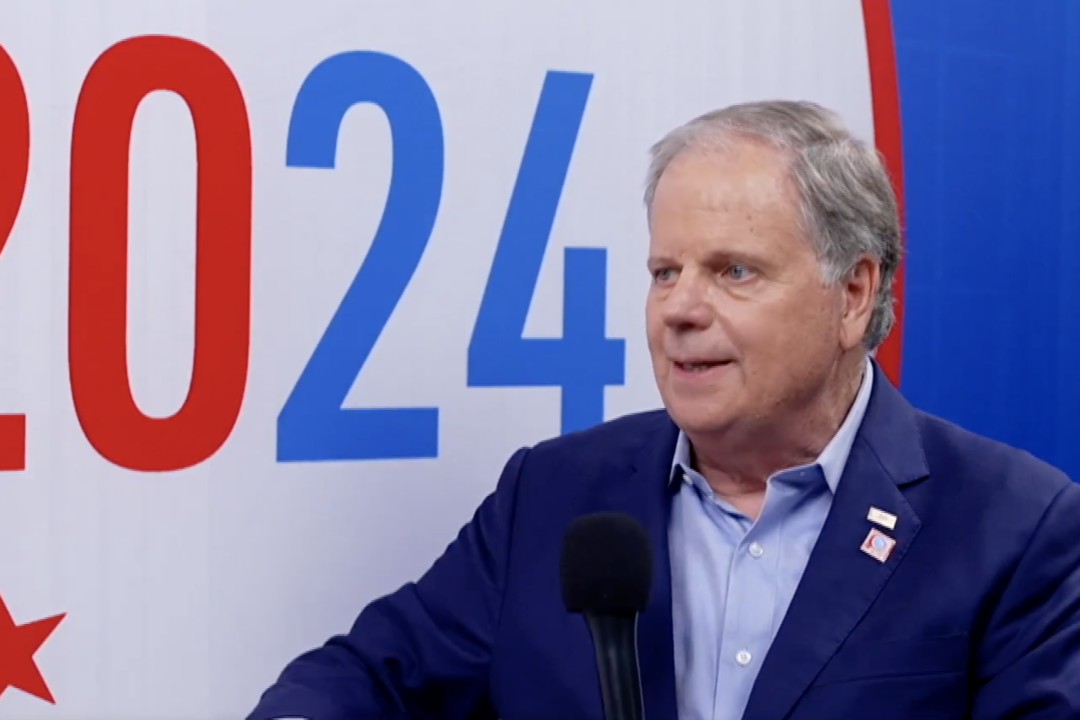
Former Democratic Senator Doug Jones has officially thrown his hat into the ring for Alabama’s 2026 gubernatorial race, marking a significant political development that could reshape the electoral landscape in one of America’s most reliably Republican states.

The announcement positions Jones as Democrats’ most prominent candidate in a state where the party has struggled to achieve statewide victories in recent years. His entry into the governor’s race also raises the intriguing possibility of a high-stakes rematch with Republican Senator Tommy Tuberville, should the former Auburn football coach decide to pursue the governor’s mansion.
The potential Jones-Tuberville matchup would carry significant historical weight, as the two political figures previously clashed in Alabama’s 2020 U.S. Senate contest. In that race, Tuberville delivered a decisive victory, defeating the incumbent Jones by approximately 20 percentage points in a result that underscored Alabama’s deep-red political orientation.
Jones brings considerable name recognition and political experience to his gubernatorial campaign. The former federal prosecutor made national headlines in 2017 when he pulled off one of the most stunning political upsets in recent memory, defeating controversial Republican candidate Roy Moore to claim Alabama’s Senate seat. That victory made Jones the first Democrat to represent Alabama in the U.S. Senate in over two decades.
However, Jones faces the challenging reality of Alabama’s evolving political dynamics. His previous Senate victory came under unique circumstances, with Moore’s candidacy severely damaged by allegations of sexual misconduct involving teenage girls. The 2020 Senate race against Tuberville presented a more conventional political contest, and the results demonstrated the difficulty Democrats face in statewide Alabama elections.
The 2026 gubernatorial race will test whether Jones can overcome Alabama’s Republican lean and build a coalition capable of winning statewide office. His campaign will likely focus on economic development, education funding, and healthcare access—issues that could potentially resonate across party lines in a state grappling with various socioeconomic challenges.
For Alabama Republicans, the prospect of facing Jones again represents both an opportunity and a potential concern. While Tuberville’s previous victory margin suggests Republican strength, Jones’ ability to mount competitive campaigns has been proven, and gubernatorial races often involve different dynamics than federal contests.
The gubernatorial campaign timeline provides both candidates substantial opportunity to build their respective cases before Alabama voters. With more than two years until the election, the political landscape could shift significantly, potentially influenced by national political trends, economic conditions, and local Alabama issues that emerge during the campaign period.
As Alabama approaches this pivotal electoral moment, Jones’ candidacy ensures that the 2026 governor’s race will attract national attention and significant financial resources from both parties, making it one of the most closely watched political contests in the Southeast.