













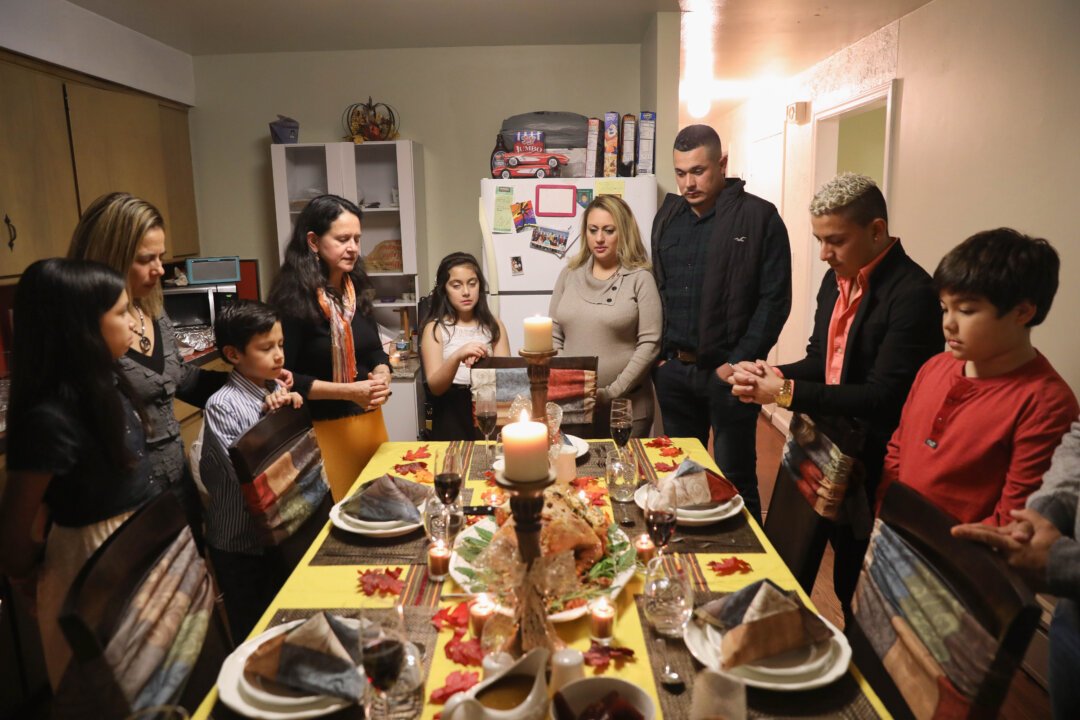
The dinner table doesn’t have to become a war zone this holiday season. While a majority of Americans now worry about heated political arguments erupting during family gatherings—with many considering skipping festivities altogether—mental health experts say there are effective ways to preserve both peace and relationships during these potentially volatile encounters.

According to recent data from the American Psychological Association, concerns about political confrontations at holiday events have reached unprecedented levels, with many families finding themselves divided along ideological lines. The survey reveals that Americans are increasingly anxious about facing relatives whose political views clash dramatically with their own.
However, experts who spoke with The Epoch Times emphasized that Thanksgiving and Christmas celebrations don’t have to deteriorate into stress-filled confrontations. The key lies in preparation and strategic thinking before walking through the door.
The Power of Planning Ahead
Mental health professionals unanimously agree that the most effective approach to managing potentially explosive family dynamics involves arriving at gatherings with a clear strategy. Rather than hoping for the best or avoiding family altogether, they recommend developing specific techniques for redirecting conversations when political tensions begin to surface.
This proactive approach becomes especially crucial when dealing with family members who hold passionate, opposing political beliefs. The experts note that emotions tend to run higher during holiday gatherings, where alcohol consumption, family stress, and current events can create a perfect storm for conflict.
Preserving Relationships While Maintaining Boundaries
The stakes extend beyond simply getting through a single meal without argument. Many families have experienced significant strain in their relationships due to political polarization, and holiday gatherings often represent critical opportunities to either heal these rifts or potentially damage them further.
Experts emphasize that successful navigation of these situations doesn’t require abandoning one’s principles or pretending to agree with opposing viewpoints. Instead, it involves developing sophisticated communication skills that allow family members to coexist respectfully despite fundamental disagreements.
A Growing National Concern
The American Psychological Association’s findings reflect a broader trend affecting families across the United States. Political divisions that once remained largely confined to voting booths and social media platforms have increasingly penetrated intimate family relationships, creating lasting tensions that extend far beyond election cycles.
This phenomenon has transformed traditional holiday gatherings—historically viewed as opportunities for connection and celebration—into sources of anxiety and potential conflict. Many Americans now find themselves strategizing about seating arrangements, conversation topics, and even whether to attend family events at all.
Hope for Healing Divided Families
Despite these challenges, mental health professionals maintain an optimistic outlook about families’ ability to navigate political differences successfully. They point to numerous examples of families who have learned to compartmentalize political disagreements while strengthening other aspects of their relationships.
The experts stress that holiday gatherings, when approached thoughtfully, can actually serve as vehicles for demonstrating that family bonds transcend political affiliations. By focusing on shared values, common experiences, and mutual respect, relatives can often find ways to connect that bypass their ideological differences entirely.
As families across America prepare for holiday celebrations, the message from experts remains clear: with proper preparation and realistic expectations, it’s entirely possible to maintain both personal integrity and family harmony, even in an era of unprecedented political division.