













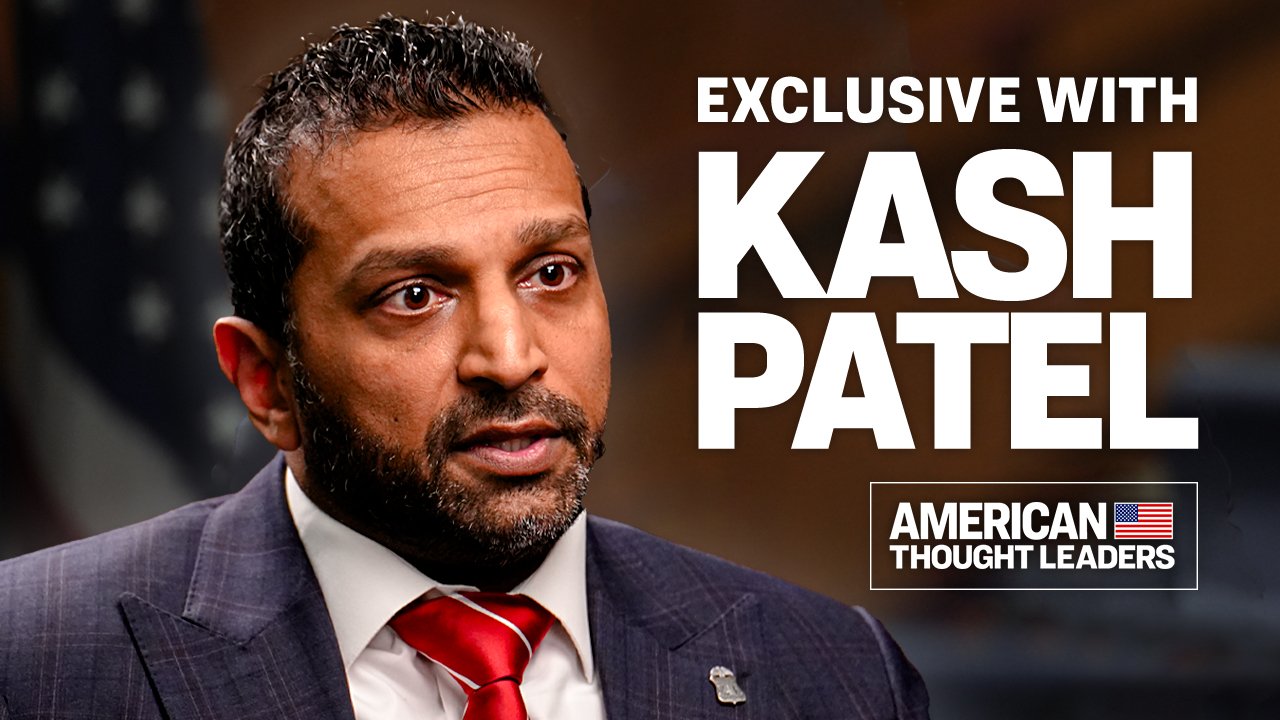
In a forthcoming exclusive interview set to air November 29, FBI Director Kash Patel opens up about the Bureau’s intensified efforts to combat both foreign espionage operations and domestic criminal enterprises that threaten American security.

The wide-ranging discussion, scheduled to premiere at 5 p.m. ET on American Thought Leaders, provides rare insight into the FBI’s current priorities under Patel’s leadership, including the agency’s response to China’s role in the fentanyl epidemic that continues to devastate American communities.
During the interview, Patel addresses his recent diplomatic mission to China, where discussions centered on curbing the flow of fentanyl precursor chemicals that fuel America’s ongoing overdose crisis. The synthetic opioid has become the leading cause of death for Americans under 50, with Chinese-manufactured chemicals serving as key components in the drug’s production.
The FBI Director also sheds light on the mysterious “764 network,” a criminal organization that has captured the attention of federal law enforcement agencies. While details remain limited ahead of the interview’s broadcast, the network appears to represent a significant focus area for the Bureau’s investigative resources.
Patel’s appearance comes amid mounting scrutiny of FBI operations and methodology, criticisms he addresses head-on during the conversation. The interview promises to reveal the Director’s perspective on recent challenges facing the agency and his vision for its future direction.
Of particular interest to viewers will be Patel’s discussion of the controversial “burn bags” – a topic that has generated considerable speculation within intelligence and law enforcement circles. The Director’s comments on this matter are expected to provide clarity on practices that have drawn both public attention and congressional oversight.
The exclusive interview represents one of Patel’s most comprehensive public discussions since assuming leadership of the FBI, offering Americans an unprecedented look at how the nation’s premier law enforcement agency is adapting to evolving threats in an increasingly complex global security environment.
As the Bureau continues to navigate challenges ranging from international espionage to domestic terrorism, Patel’s insights promise to illuminate the strategies and priorities guiding federal law enforcement efforts in protecting American interests both at home and abroad.