













A federal appeals court has delivered a significant victory to New York state officials, ruling that the controversial 18-hour training requirement for concealed carry permits does not violate the Constitution. The U.S. Court of Appeals for the Second Circuit issued an unpublished and unsigned opinion on November 21, rejecting a constitutional challenge that could have dismantled a key provision of the state’s restrictive gun laws.

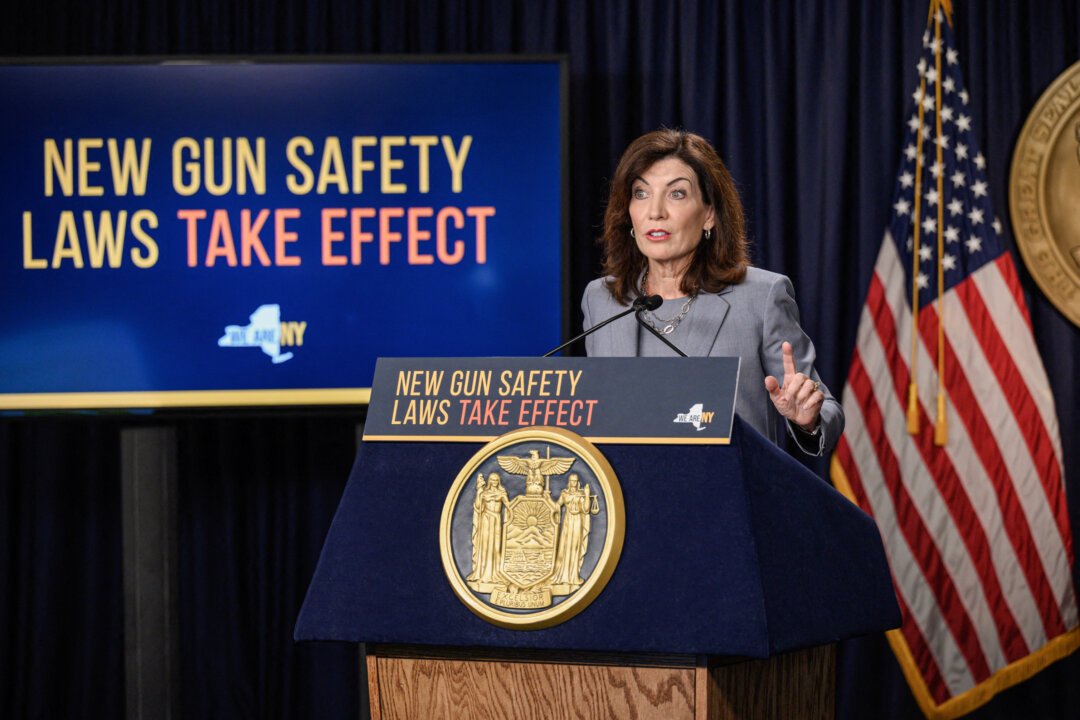
The ruling represents the latest chapter in an ongoing legal battle surrounding New York’s Concealed Carry Improvement Act (CCIA), a sweeping piece of legislation that Governor Kathy Hochul signed into law on August 31, 2022. The law emerged as part of the state’s response to evolving Second Amendment jurisprudence and has faced numerous court challenges since its implementation.
At the heart of the current case was a lawsuit filed by a New York resident who argued that the mandatory training requirement violated his constitutional rights. The plaintiff contended that forcing citizens to complete 18 hours of instruction before obtaining a concealed carry license created an unconstitutional barrier to exercising Second Amendment rights.
However, the Second Circuit panel disagreed with this assessment, pointing to established Supreme Court precedent that has consistently found training requirements to be within constitutional bounds. The court’s opinion emphasized that such educational mandates serve legitimate public safety interests without fundamentally infringing upon the core right to bear arms.
The Concealed Carry Improvement Act has been a lightning rod for controversy since its inception, drawing fierce opposition from gun rights advocates who view it as an attempt to circumvent Supreme Court decisions that have expanded Second Amendment protections. The law includes numerous provisions beyond the training requirement, creating what supporters describe as comprehensive safeguards and what critics characterize as unconstitutional obstacles.
Governor Hochul’s administration has consistently defended the legislation as a necessary measure to protect public safety while complying with federal constitutional requirements. When announcing the new regulations in 2022, state officials emphasized their commitment to balancing individual rights with community security concerns.
The timing of this ruling carries particular significance, as it comes amid a broader national conversation about gun rights and regulations. Courts across the country have been grappling with similar questions about the scope of permissible restrictions on concealed carry permits, creating a complex patchwork of legal precedents.
Legal experts note that the unpublished nature of the opinion, while still binding in this case, may limit its broader precedential impact. However, the decision nonetheless provides important guidance for other jurisdictions considering similar training requirements and reinforces the principle that reasonable educational mandates can coexist with constitutional rights.
The ruling is unlikely to end the legal challenges facing New York’s concealed carry law, as multiple cases continue to work their way through various levels of the federal court system. Gun rights organizations have signaled their intention to continue fighting provisions they view as unconstitutional, while state officials express confidence in their legal position.
For New York residents seeking concealed carry permits, the decision means the 18-hour training requirement remains in effect for the foreseeable future. The mandate requires applicants to complete comprehensive instruction covering firearm safety, legal responsibilities, and practical skills before being eligible for permit approval.
This latest development underscores the ongoing tension between state efforts to regulate firearms and individual assertions of Second Amendment rights, a dynamic that continues to shape gun policy across the United States. As similar cases proceed through the courts, the legal landscape surrounding concealed carry regulations remains in a state of active evolution.