
























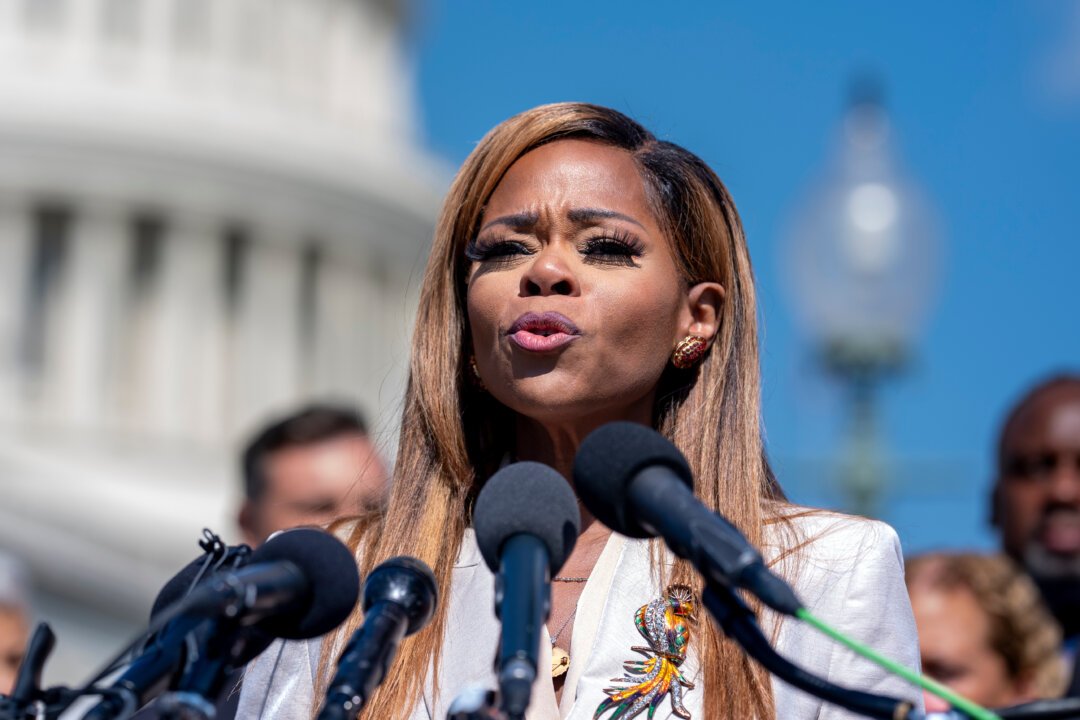
A federal courtroom in Miami became the stage for a dramatic fall from grace Tuesday as U.S. Representative Sheila Cherfilus-McCormick faced a judge on charges that could define her political career and personal freedom. The Florida Democrat, who has served her district with distinction, now finds herself at the center of a federal investigation alleging she conspired to steal $5 million in COVID-19 relief funds.

U.S. Magistrate Judge set bond at $60,000 for the congresswoman during her initial court appearance, marking the beginning of what promises to be a closely watched legal battle. The charges stem from allegations that Cherfilus-McCormick orchestrated a scheme to misappropriate federal disaster funds specifically allocated to combat the spread of COVID-19 during the height of the pandemic in 2021.
Federal prosecutors have leveled 15 separate counts against the representative, painting a picture of systematic fraud involving her family’s healthcare enterprise. According to the indictment, Trinity Healthcare Services, the company at the heart of the allegations, had secured a legitimate government contract to facilitate COVID-19 vaccination registrations during the critical early phase of the national immunization campaign.
The prosecution’s case centers on claims that Trinity Healthcare Services received overpayments from the federal government, which Cherfilus-McCormick allegedly conspired to keep rather than return to federal coffers. These funds, originally intended to serve as a lifeline for pandemic response efforts, instead allegedly found their way into unauthorized channels through what prosecutors describe as a deliberate conspiracy.
The timing of these alleged activities adds another layer of gravity to the charges. In 2021, as communities across the nation struggled with vaccine distribution and public health infrastructure, federal agencies were rapidly deploying billions of dollars in emergency funding. The alleged misappropriation of these critical resources occurred precisely when such funds were desperately needed to save lives and protect public health.
Cherfilus-McCormick’s appearance in the Fort Lauderdale federal courthouse represents a stunning reversal of fortune for a politician who has been a vocal advocate for her constituents. Her recent public appearances, including her September address at the Capitol condemning hate speech and misinformation about Haitian immigrants, now seem like distant memories as she confronts the most serious challenge of her career.
The $60,000 bond amount, while substantial, reflects the court’s assessment of flight risk and public safety concerns. Federal magistrates typically consider factors including the severity of charges, community ties, and financial resources when setting bond amounts in white-collar crime cases of this magnitude.
Trinity Healthcare Services, the family business now under federal scrutiny, operated within the complex web of government contractors that emerged during the pandemic’s early stages. Companies across the nation secured similar contracts to support vaccination efforts, making this case a potential bellwether for how federal authorities will pursue alleged fraud within pandemic relief programs.
The legal proceedings ahead will likely shed light on the broader oversight mechanisms governing emergency federal spending during national crises. As prosecutors prepare to present their evidence, questions about accountability and transparency in pandemic relief distribution continue to resonate throughout the political landscape.
For Cherfilus-McCormick’s constituents and colleagues in Congress, the allegations represent more than just another political scandal. They strike at fundamental questions about public trust and the responsible stewardship of taxpayer funds during national emergencies. The congresswoman’s legal team will undoubtedly mount a vigorous defense as the case moves through the federal court system.
The federal investigation that led to these charges reflects the ongoing efforts by law enforcement agencies to identify and prosecute alleged misuse of pandemic relief funds. With billions of dollars distributed rapidly during the COVID-19 emergency, federal authorities have made clear their commitment to pursuing accountability wherever evidence of fraud emerges.