













A dramatic political crisis is unfolding in Guinea-Bissau as the West African nation’s main opposition presidential candidate has declared victory in this week’s closely contested election while making explosive allegations that the current president orchestrated a fabricated military coup to avoid electoral defeat.

The controversy erupted on November 26 when soldiers unexpectedly appeared on Guinea-Bissau’s state television, announcing they had seized control of the government and arrested President Umaro Sissoco Embaló. However, opposition candidate Fernando Dias immediately dismissed the military takeover as a calculated deception designed to disrupt the democratic process.
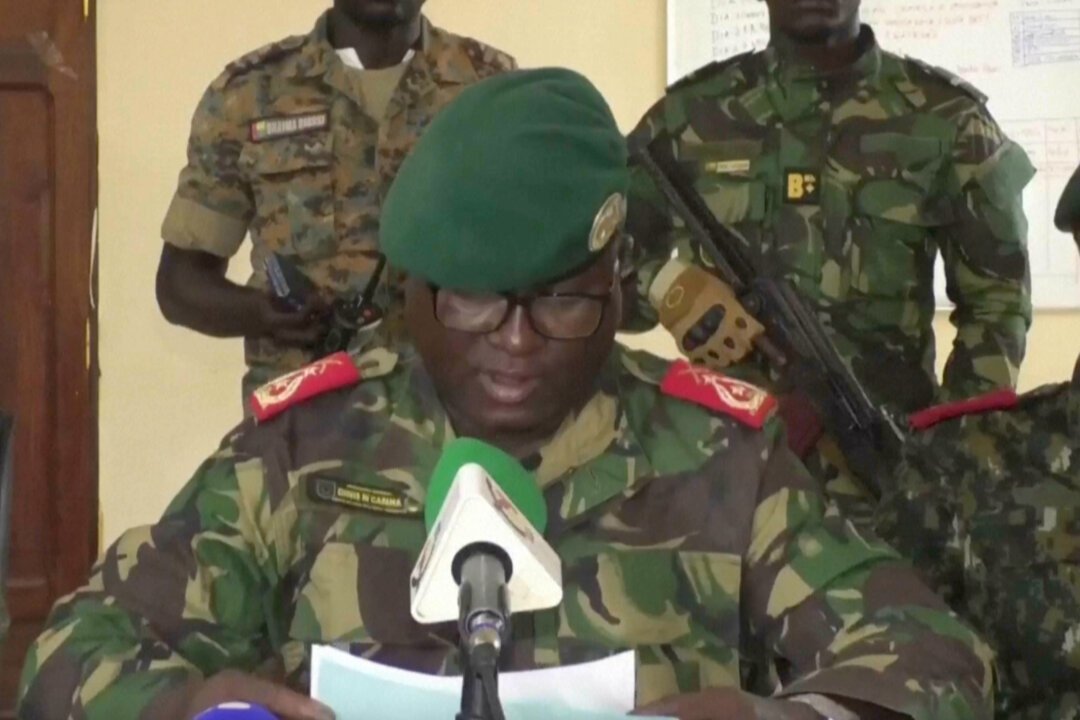
According to military spokesperson Dinis N’Tchama, who delivered the coup announcement on national television, the armed forces had assumed control of the country and detained the sitting president. The timing of this development has raised significant suspicions, coming just one day before official election results were scheduled to be announced on November 27.
Dias, who represents the primary opposition to Embaló’s administration, has boldly proclaimed himself the winner of the presidential race and characterized the alleged military intervention as nothing more than political theater. “The military takeover was fabricated,” Dias asserted, suggesting that Embaló himself masterminded the coup narrative as a desperate measure to maintain his grip on power despite facing potential electoral defeat.
This latest political upheaval adds another chapter to Guinea-Bissau’s troubled democratic history. The small coastal nation has experienced numerous military coups and political instability since gaining independence from Portugal in 1974, making it one of West Africa’s most politically volatile countries.
The allegations of a staged coup represent an unprecedented accusation in Guinea-Bissau’s political landscape, where genuine military interventions have been a recurring feature of governance transitions. If Dias’s claims prove accurate, it would mark a new low in the country’s struggle to establish stable democratic institutions.
As the scheduled release of official election results approaches, international observers and regional bodies are closely monitoring the situation. The outcome of this political standoff could have significant implications not only for Guinea-Bissau’s democratic development but also for stability in the broader West African region, where several nations have recently experienced military takeovers.
The coming hours will be critical in determining whether Guinea-Bissau will witness a genuine transfer of power through democratic means or descend into another period of political chaos that has plagued the nation throughout its post-independence history.