













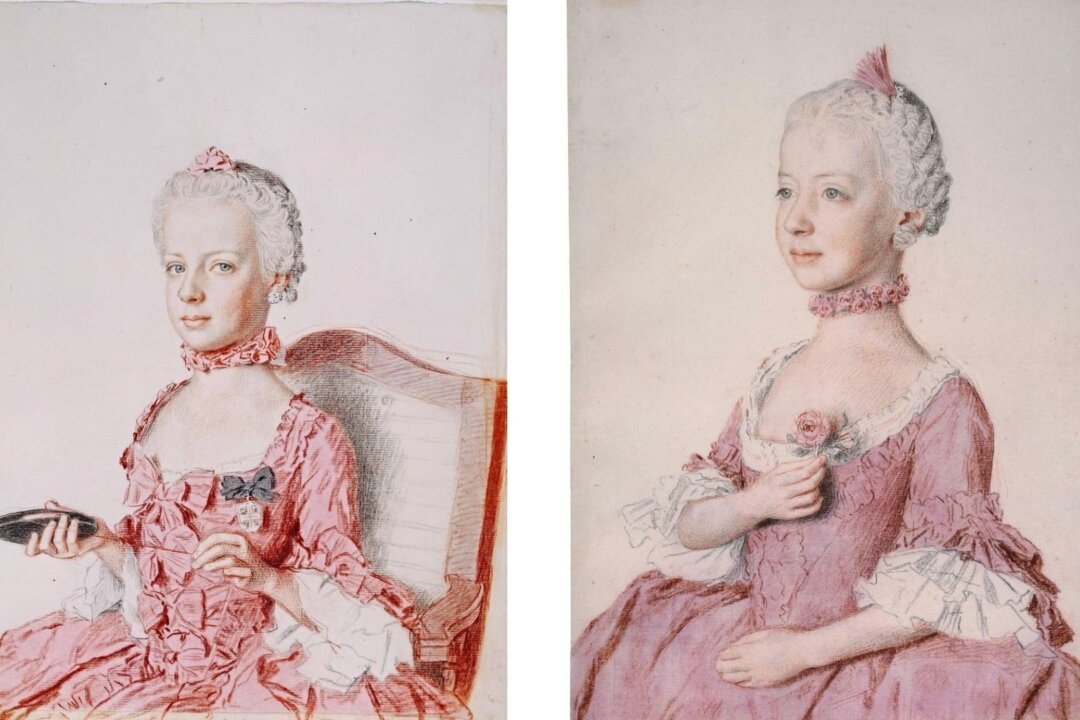
A centuries-old case of mistaken identity in the art world has finally been resolved, revealing that one of history’s most cherished portraits attributed to Marie Antoinette actually depicts her older sister instead.

For generations, art historians and museum visitors alike have admired what they believed to be Jean-Etienne Liotard’s exquisite portrait of 7-year-old Marie Antoinette, the future queen of France whose life would end tragically during the French Revolution. However, groundbreaking new research has uncovered a fascinating mix-up that has persisted for centuries.
The portrait in question actually shows Maria Carolina, Marie Antoinette’s sister who would eventually become queen of Naples and Sicily. This remarkable discovery emerged from the meticulous research of Catriona Seth, the Marshal Foch professor of French literature and a fellow of All Souls College at the University of Oxford.
Seth stumbled upon this historical revelation while conducting research for her new book focused on portraits of Marie Antoinette, who lived from 1755 to 1793. Her scholarly investigation into the Austrian archduchess’s visual legacy led to this unexpected correction of art historical record.
The confusion extends to a pair of companion portraits by Liotard, both featuring young girls from the Habsburg royal family. For centuries, experts believed the portrait showing a child holding a shuttle depicted Marie Antoinette, while the one featuring a girl with a rose was thought to be Maria Carolina. The new research has revealed the opposite is true – Maria Carolina is the child holding the shuttle, while her younger sister Marie Antoinette is portrayed holding the rose.
This discovery highlights the complex challenges faced by art historians when attempting to identify subjects in historical portraits, particularly when dealing with royal children who often shared similar clothing, poses, and artistic treatments of the era. The Habsburg family, known for commissioning numerous portraits of their children, created a rich but sometimes confusing visual archive that has challenged scholars for generations.
Jean-Etienne Liotard, the Swiss-French artist behind these masterful portraits, was renowned for his exceptional skill in capturing the delicate features and personalities of his young subjects. His work provides invaluable glimpses into 18th-century royal childhood, even when the identities of those subjects require scholarly detective work to unravel.
The correction of this attribution doesn’t diminish the artistic or historical value of these portraits. Instead, it offers a more accurate understanding of both sisters’ visual legacy and demonstrates how ongoing research continues to refine our knowledge of art history. Maria Carolina, who would go on to rule alongside her husband in southern Italy, now reclaims her place in this particular corner of artistic history.
This revelation also underscores the importance of continued scholarly examination of historical artworks. As research methods advance and new documentation comes to light, long-held assumptions about famous pieces can be challenged and corrected, leading to a more precise understanding of our cultural heritage.
For museums and private collections housing these portraits, Seth’s discovery necessitates updated labels and catalogues. More importantly, it serves as a reminder that art history remains a dynamic field where new discoveries can reshape our understanding of even the most familiar and beloved works.