












Hong Kong authorities have arrested a university student on charges of “seditious intent” after he launched an online petition demanding government accountability following one of the city’s most devastating residential fires in recent memory. The incident has reignited international concerns about the expanding use of Hong Kong’s National Security Law to suppress civic engagement and peaceful dissent.

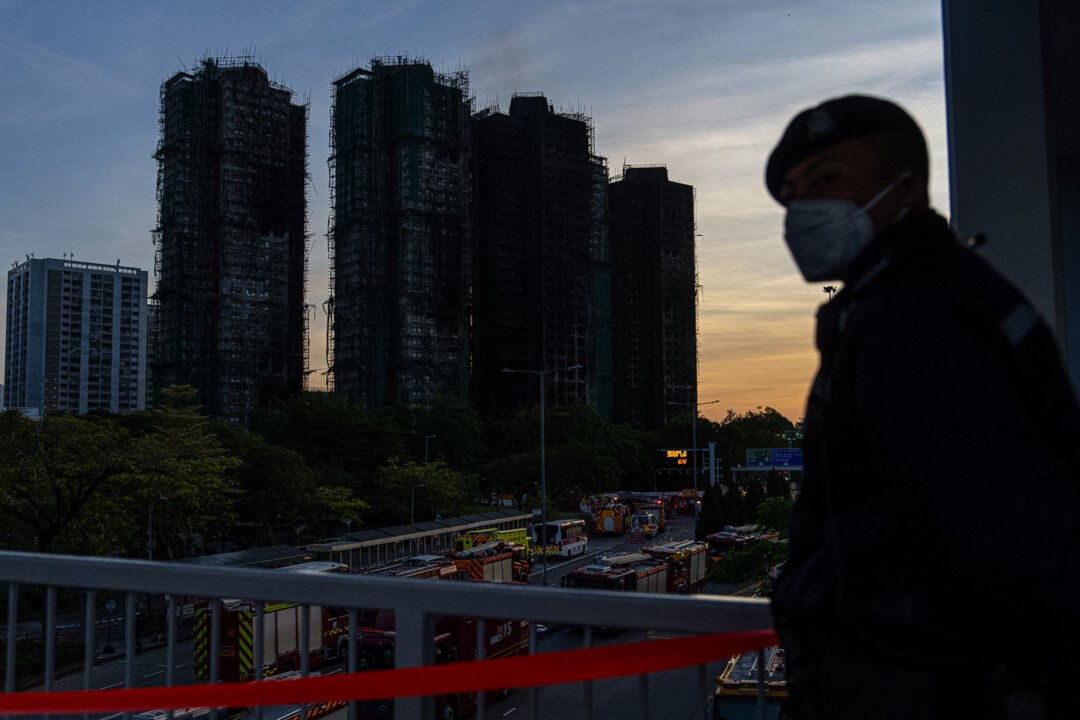
Miles Kwan, the student activist behind the petition, was taken into custody by the Hong Kong Police National Security Department after calling for an independent investigation into the catastrophic blaze that consumed a public housing complex in the Tai Po district last week. The fire at Wang Fuk Court residential estate has claimed 146 lives, with authorities warning the death toll may continue to rise as search and rescue operations persist.
The arrest marks another troubling milestone in Hong Kong’s increasingly restrictive political landscape, where even basic calls for government transparency and accountability are now being treated as potential threats to national security. Kwan’s online petition, which sought an independent probe into the circumstances surrounding the deadly fire, represents the kind of civic advocacy that was commonplace in Hong Kong before the implementation of the National Security Law.
Local media outlets across Hong Kong have reported extensively on Kwan’s detention, highlighting the chilling effect such arrests have on public discourse and citizen engagement. The case underscores how authorities are interpreting the National Security Law’s broad provisions to target individuals seeking answers about government performance during public emergencies.
The devastating fire at Wang Fuk Court has exposed critical questions about building safety standards, emergency response protocols, and fire prevention measures in Hong Kong’s aging public housing stock. These residential complexes house hundreds of thousands of Hong Kong residents, many of whom are now questioning whether adequate safety measures are in place to prevent similar tragedies.
The timing of Kwan’s arrest has particularly alarmed civil rights advocates and international observers, who view the detention as a clear signal that even disaster-related accountability efforts are not immune from prosecution under national security provisions. The case demonstrates how the scope of activities considered potentially seditious has expanded far beyond what many initially anticipated when the law was enacted.
This latest arrest adds to a growing pattern of prosecutions targeting individuals and organizations involved in peaceful advocacy and civic participation. The National Security Law, implemented in 2020, has fundamentally altered Hong Kong’s political and social landscape, with authorities using its sweeping powers to investigate and prosecute activities previously considered legitimate forms of civil engagement.
For residents of Hong Kong’s public housing estates, Kwan’s arrest may serve as a deterrent to speaking out about safety conditions or demanding improvements to their living environments. The message appears clear: even seeking accountability for government failures that result in loss of life can be construed as a threat to state security.
The international community continues to monitor Hong Kong’s use of national security legislation, particularly in cases involving fundamental rights like freedom of expression and the right to petition government for redress of grievances. Kwan’s detention represents another test case for how broadly authorities are willing to apply these controversial legal powers.
As the death toll from the Wang Fuk Court fire continues to mount, questions about prevention, preparedness, and response remain largely unanswered. The arrest of the student who sought to ensure these questions would be thoroughly investigated highlights the increasingly narrow space for public accountability in Hong Kong’s current political environment.