



























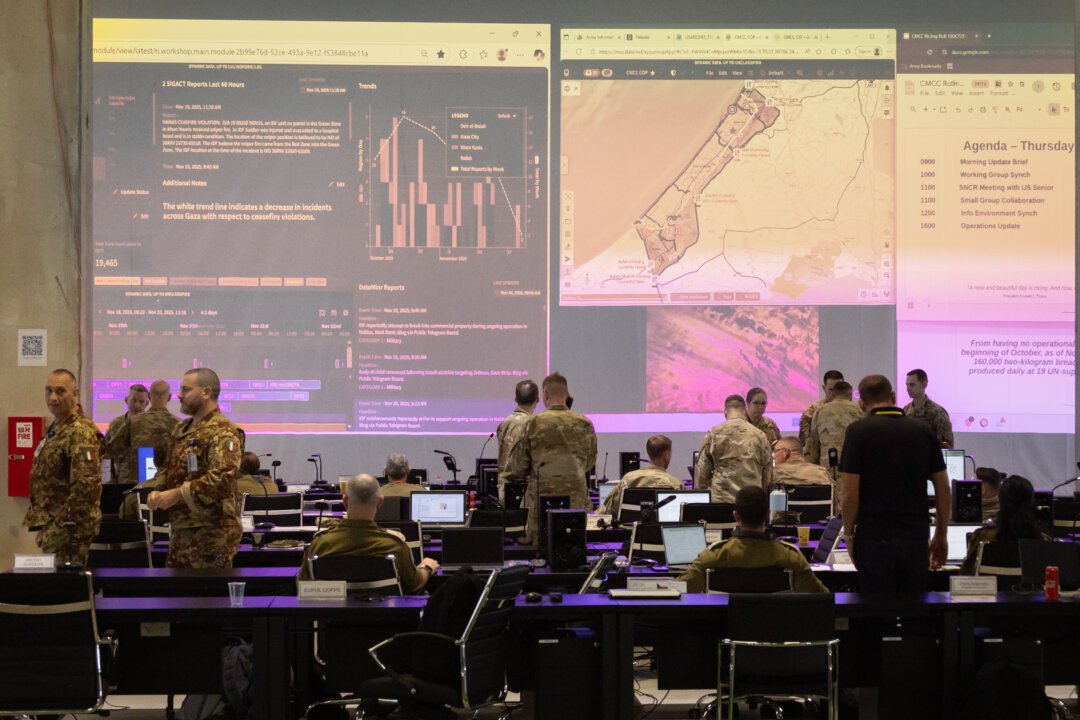
In the industrial city of Kiryat Gat, Israel, an unlikely humanitarian nerve center has emerged from what was once a mundane storage facility. The Civil-Military Coordination Center now serves as the beating heart of international relief efforts for Gaza Strip civilians, where American soldiers work alongside Israeli Defense Forces personnel in a remarkable display of multinational cooperation.

The transformation of this multilevel building from a commercial storage space to a critical humanitarian hub represents one of the most significant coordinated relief efforts in the region’s recent history. Since launching operations on October 17, 2025, the center has become the primary coordination point for delivering essential aid to Palestinian civilians caught in the crossfire of conflict.
The facility’s establishment followed swiftly after world leaders signed a pivotal U.S.-brokered agreement designed to end hostilities between Israel and Hamas. This diplomatic breakthrough paved the way for unprecedented cooperation between former adversaries in the humanitarian sphere, marking a potential turning point in regional relations.
What makes this operation particularly noteworthy is its truly international character. The center brings together not just American and Israeli military personnel, but also European forces and civilian specialists from multiple nations. This diverse coalition represents a unified approach to addressing one of the world’s most complex humanitarian challenges.
The choice of location in Kiryat Gat, a development town in southern Israel, positions the center strategically close to Gaza while maintaining necessary security protocols. The conversion of a commercial storage building into a sophisticated coordination center demonstrates how quickly international communities can mobilize resources when political will aligns with humanitarian need.
Daily operations at the center involve complex logistics coordination, ensuring that food, medical supplies, and other essential materials reach Gaza’s civilian population efficiently and safely. The multinational team must navigate intricate security arrangements while maintaining the steady flow of humanitarian assistance that thousands of families depend upon for survival.
This collaborative model could serve as a blueprint for future humanitarian operations in conflict zones worldwide. The successful integration of military and civilian personnel from multiple nations working toward a common humanitarian goal showcases what’s possible when international cooperation takes precedence over political divisions.
The center’s work represents more than just aid distribution—it symbolizes hope for sustainable peace-building through practical cooperation. As soldiers from different armies share common workspace and objectives, they’re writing a new chapter in regional relations, one humanitarian mission at a time.
The success of this operation will likely influence future humanitarian responses in complex conflict zones, demonstrating that even in the most challenging circumstances, international cooperation can create pathways for delivering critical assistance to those who need it most.