












Regional tensions in the East China Sea have reached a dangerous new threshold following an unprecedented aerial confrontation between Chinese and Japanese military aircraft that has sparked international condemnation and diplomatic protests.

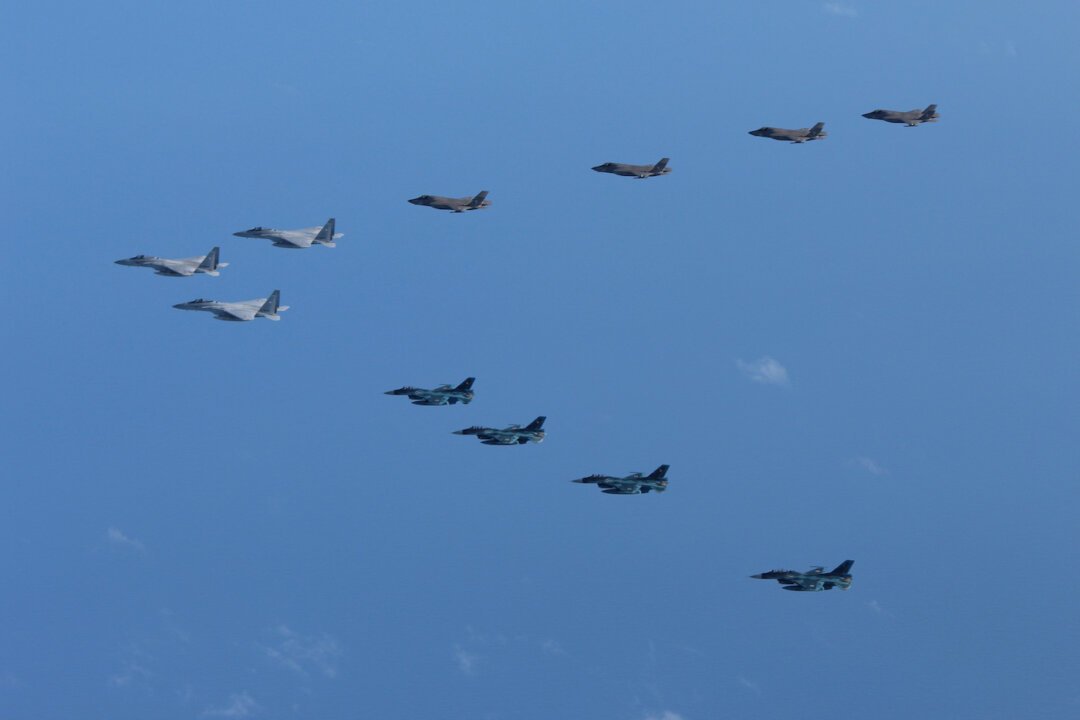
Japan’s Ministry of Defense revealed that two Chinese J-15 fighter jets deliberately targeted Japanese F-15 interceptors with their radar systems during a tense standoff in international airspace southeast of Okinawa on Saturday. The provocative action prompted Tokyo to immediately file a formal diplomatic protest with Beijing, marking another serious escalation in the increasingly volatile relationship between the two regional powers.
The radar-locking incident represents a significant departure from standard military protocols and has been widely interpreted as a deliberate act of aggression. When military aircraft “paint” another aircraft with targeting radar, it typically signals preparation for weapons engagement, making such actions extremely dangerous even during peacetime encounters.
Japanese defense officials confirmed that while no aircraft sustained damage during the confrontation, the Chinese jets’ actions violated established international aviation safety protocols. Crucially, the Ministry of Defense noted that the Chinese fighters remained in international airspace throughout the incident, avoiding a direct territorial violation that could have triggered an even more severe response.
Australia quickly rallied to Japan’s side, with Canberra joining Tokyo in condemning the radar targeting as a dangerous and destabilizing action that undermines regional security. Both nations characterized the incident as yet another example of Beijing’s growing disregard for the established rules-based international order that has maintained stability in the Asia-Pacific region for decades.
The confrontation occurred in the strategically vital waters near Okinawa, home to significant U.S. and Japanese military installations and a frequent flashpoint for regional tensions. The area has become increasingly contested as China expands its military presence and asserts broader territorial claims throughout the East and South China Seas.
This latest incident follows a pattern of escalating military encounters between Chinese and regional forces, as Beijing continues to challenge traditional security arrangements through increasingly aggressive aerial and naval operations. Military analysts warn that such direct targeting actions significantly raise the risk of accidental conflict or miscalculation that could spiral into broader confrontation.
The timing of the radar-targeting incident is particularly significant, coming as regional allies strengthen military cooperation and defense partnerships in response to China’s expanding military assertiveness. Joint military exercises between Japan, Australia, and the United States have increased dramatically in recent years, reflecting growing concern about Beijing’s strategic intentions.
Defense experts emphasize that radar-locking incidents represent one of the most serious forms of military provocation short of actual weapons deployment. The practice effectively simulates attack conditions and can trigger automatic defensive responses, making such actions extremely dangerous in contested airspace where multiple nations conduct routine patrols.
The international response to Saturday’s incident underscores growing regional alignment against what many view as China’s increasingly destabilizing military behavior. Japan and Australia’s coordinated diplomatic response signals a strengthening of security partnerships aimed at deterring further Chinese aggression in critical maritime and aerial corridors.
As tensions continue to escalate across multiple fronts in the Asia-Pacific region, this latest confrontation serves as a stark reminder of how quickly routine military encounters can evolve into serious international incidents with far-reaching diplomatic and security implications.