



























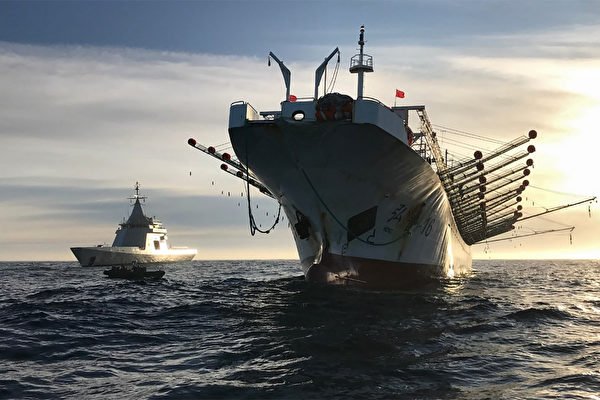
In a strategic move to counter China’s growing maritime aggression, Japan has announced significant aid packages for South American nations struggling to protect their territorial waters from illegal Chinese fishing operations. The initiative comes as Beijing’s massive distant-water fishing fleet continues to expand its controversial activities across the globe.

The Japanese assistance program targets a critical security challenge that has been escalating for years. China operates the world’s largest distant-water fishing fleet, with vessels routinely engaging in illegal fishing activities that extend far beyond simple poaching operations, according to maritime security experts.
Beyond Fishing: Intelligence Gathering and Gray Zone Operations
Analysts speaking with The Epoch Times emphasized that China’s fishing fleet serves dual purposes that extend well beyond commercial fishing. These vessels are increasingly used for intelligence collection and what experts term “gray zone” operations—activities that fall short of open conflict but still threaten regional stability and sovereignty.
The scope of the problem has become particularly acute in South American waters, where Chinese vessels have repeatedly violated exclusive economic zones. A stark example occurred in May 2020 when Argentina’s Navy documented illegal Chinese fishing operations within its sovereign waters, highlighting the persistent nature of these violations.
International Coalition Building Against Maritime Threats
Japan’s decision to provide direct assistance to South American countries represents a significant shift in how the international community approaches China’s maritime expansion. Security analysts note that this coordination signals growing recognition that Beijing’s fishing fleet poses threats to global maritime security that require collective response.
The aid program comes at a time when South American nations are grappling with limited resources to patrol their vast ocean territories effectively. Chinese fishing vessels often operate with sophisticated equipment and in large numbers, making enforcement challenging for individual nations.
Economic and Environmental Impact
The illegal fishing operations are causing substantial damage beyond security concerns. These activities are systematically depleting global fisheries resources and destroying traditional livelihoods that coastal communities have depended on for generations. The environmental impact extends to entire marine ecosystems, affecting biodiversity and food chain stability.
For South American countries, the economic implications are severe. Local fishing industries face unfair competition from illegal operations that ignore quotas, seasons, and conservation measures designed to maintain sustainable fish populations.
Strategic Implications for Regional Security
The Japanese initiative reflects broader geopolitical concerns about China’s expanding influence in Latin America. By providing practical assistance to combat illegal fishing, Japan is positioning itself as a reliable partner for countries seeking to maintain sovereignty over their maritime resources.
This support comes as regional governments increasingly recognize that Chinese fishing fleet activities represent more than environmental or economic challenges—they constitute a form of territorial pressure that tests national sovereignty and regional stability.
The aid package is expected to include technology transfers, training programs, and potentially direct naval cooperation to enhance maritime patrol capabilities. These measures aim to help South American nations better monitor and enforce their territorial waters against unauthorized fishing activities.
As China’s distant-water fishing fleet continues to expand globally, Japan’s South American initiative may serve as a model for similar cooperative efforts in other regions facing comparable challenges to their maritime security and economic interests.