



























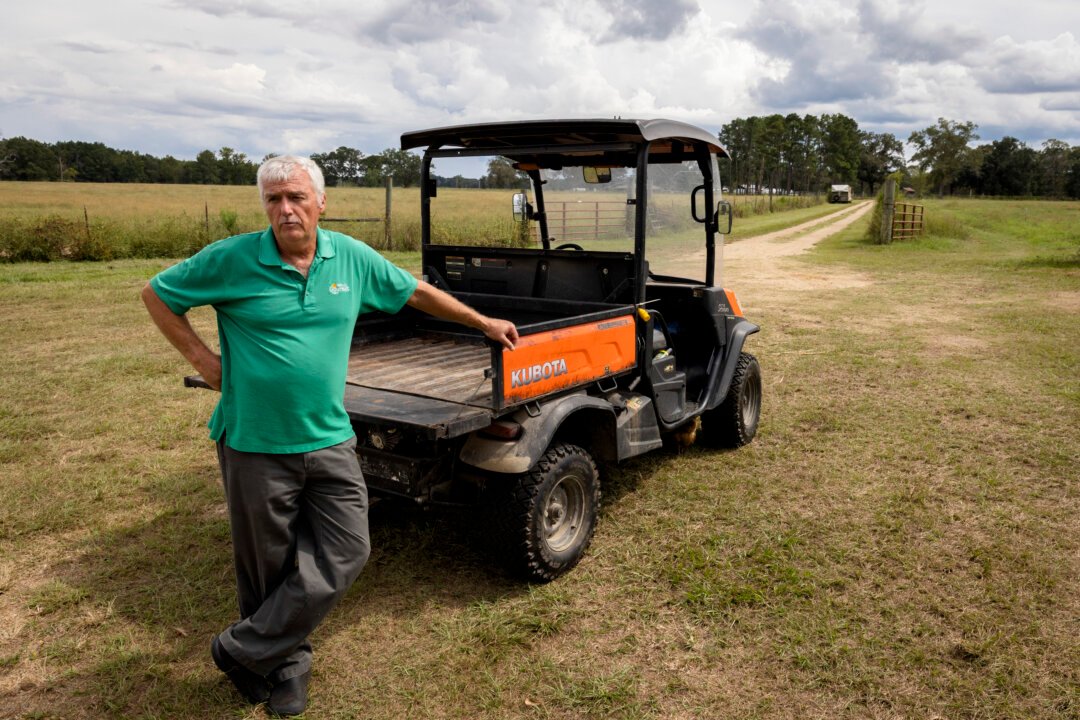
PETAL, Miss.—The rolling fields surrounding this small Mississippi town tell a story of dramatic change. Where family farms once flourished with grazing cattle and bustling harvest seasons, many now sit empty or converted to industrial operations. But Ben Simmons refuses to let that agricultural heritage fade away.

Standing among his grazing cattle on a September afternoon, the Mississippi farmer surveys land that represents more than just his livelihood—it’s his vision for transforming both the state’s struggling health outcomes and its agricultural future through regenerative farming practices.
Simmons believes the key to reversing Mississippi’s troubling health statistics lies in expanding access to clean, locally-produced food while simultaneously preserving the farming traditions that once defined rural communities across the state. His approach centers on regenerative agriculture, a method that focuses on rebuilding soil health, increasing biodiversity, and creating sustainable farming ecosystems.
“When I was growing up, you could drive down any country road around Petal and see active family farms everywhere,” Simmons recalls, his gaze sweeping across pastures where his cattle graze contentedly. “Tractors working the fields, livestock scattered across the landscape, families making their living from the land—that was the heartbeat of Mississippi.”
The transformation he witnessed wasn’t unique to his corner of the state. Across Mississippi, small family operations have steadily disappeared, replaced by large-scale industrial farming or abandoned altogether. This shift has coincided with the state’s ongoing struggles with diet-related health issues, creating what Simmons sees as an urgent need for change.
His solution involves building a network of regenerative farms throughout Mississippi, each focused on producing nutrient-dense food while employing farming methods that actually improve the land over time. Unlike conventional agriculture that often depletes soil and relies heavily on chemical inputs, regenerative farming works to restore natural ecosystems while maintaining productive agricultural output.
The timing couldn’t be more critical for Mississippi, which consistently ranks among the nation’s unhealthiest states. High rates of obesity, diabetes, and heart disease have plagued communities across the region for decades, issues that Simmons believes are directly connected to limited access to fresh, nutritious food options.
“We’re not just growing crops and raising livestock,” he explains. “We’re growing a solution to some of our state’s biggest challenges while honoring the agricultural legacy that built these communities in the first place.”
Simmons’ farm serves as both a working example and a training ground for others interested in regenerative practices. The methods he employs focus on soil health as the foundation for everything else—healthy soil produces more nutritious crops, supports diverse wildlife populations, and can even help combat climate change by sequestering carbon from the atmosphere.
The network he envisions would connect regenerative farmers across Mississippi, creating supply chains for local markets while sharing knowledge and resources. This collaborative approach could help overcome one of the biggest challenges facing sustainable agriculture: the economic pressures that often make conventional farming seem like the only viable option.
For Simmons, the mission extends beyond the boundaries of his own farm. He sees regenerative agriculture as a pathway to revitalizing rural communities, providing economic opportunities for young farmers, and ultimately improving health outcomes for Mississippi families who currently have limited access to fresh, locally-produced food.
The movement he’s championing represents a return to farming methods that prioritize long-term sustainability over short-term yields, community health over corporate profits, and environmental stewardship over industrial efficiency. It’s an approach that looks both backward to agricultural traditions and forward to innovative solutions for modern challenges.
As Mississippi grapples with persistent health disparities and rural economic struggles, farmers like Simmons are proving that agriculture can be part of the solution. By growing their network of regenerative farms one operation at a time, they’re working to ensure that the next generation of Mississippians will once again see thriving family farms dotting the countryside—farms that nourish both the land and the communities they serve.