













A devastating 7.6 magnitude earthquake struck off Japan’s northeastern coast late Sunday evening, prompting immediate tsunami warnings and raising fears of potentially deadly waves reaching up to 10 feet in height.

The powerful tremor hit at approximately 11:15 p.m. local time on December 8, sending shockwaves through the region and triggering emergency protocols across multiple prefectures. The Japan Meteorological Agency (JMA) quickly issued warnings for tsunami waves potentially reaching 3 meters (10 feet) along the vulnerable northeastern coastline.
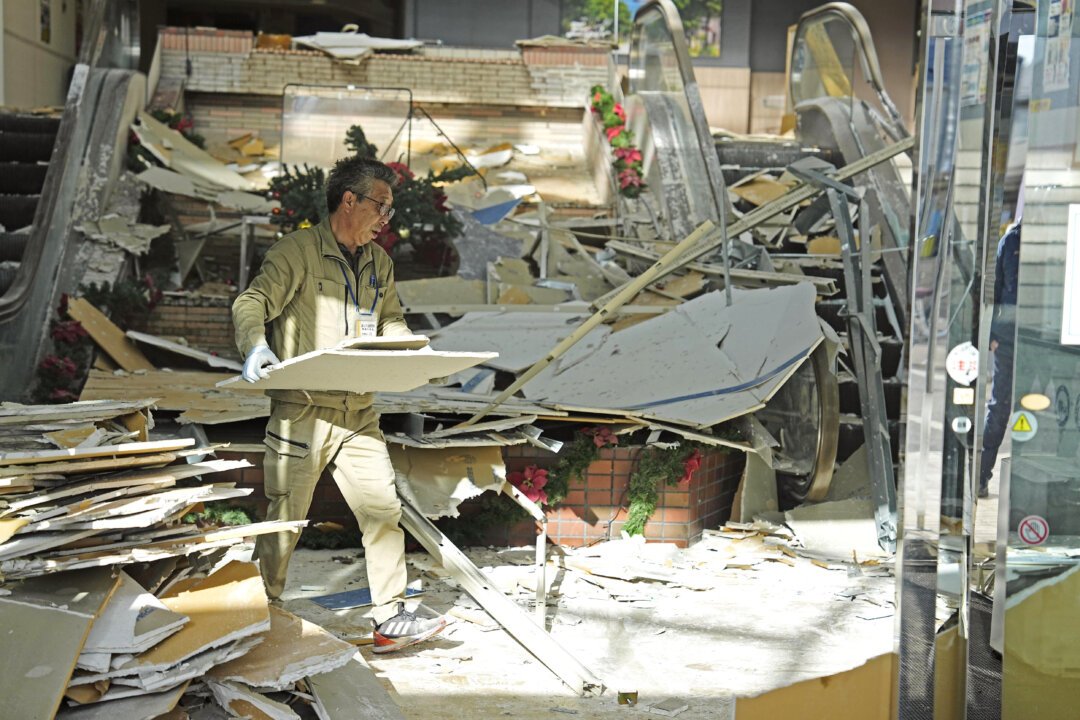
In the aftermath of the seismic event, debris littered commercial facilities across the affected region, with cleanup efforts beginning immediately. Images from Hachinohe in Aomori prefecture showed the extent of damage as residents and emergency crews worked to assess the situation in the early morning hours of December 9.
The earthquake’s timing and location inevitably drew comparisons to the catastrophic 2011 disaster that devastated the same region. However, early reports from Japan’s nuclear regulatory authority provided some relief, confirming that power stations in the critical areas of Totsu, Fukushima, and Onagawa showed no immediate signs of abnormalities following the latest tremor.
The nuclear facilities’ status remains under constant monitoring, given the region’s history with the Fukushima disaster that followed the 2011 earthquake and tsunami. Authorities have maintained heightened vigilance around these installations, implementing enhanced safety protocols developed in response to lessons learned from the previous catastrophe.
Emergency response teams mobilized quickly across the affected prefectures, with local governments activating evacuation procedures in coastal areas most vulnerable to incoming tsunami waves. The JMA’s early warning system, significantly improved since 2011, provided crucial minutes for residents to seek higher ground and safer locations.
Japan sits along the volatile Pacific Ring of Fire, making it one of the world’s most earthquake-prone nations. The country experiences thousands of seismic events annually, though earthquakes of this magnitude remain relatively rare and potentially catastrophic events that test the nation’s sophisticated disaster preparedness systems.
As the immediate crisis unfolds, meteorological agencies continue monitoring seismic activity and ocean conditions to provide updated guidance to coastal communities. The full extent of damage and any potential casualties from both the earthquake and subsequent tsunami activity are still being assessed as daylight reveals the scope of impact across Japan’s northeastern region.