













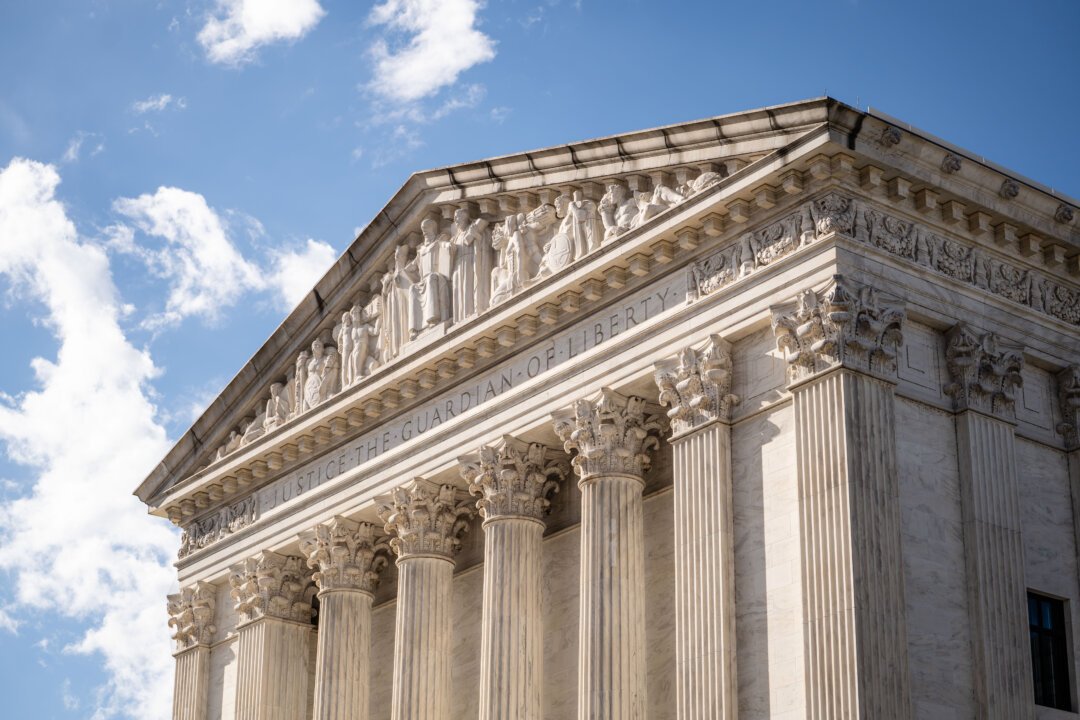
The United States Supreme Court stands at the threshold of a potentially transformative decision that could fundamentally alter the balance of power between the executive branch and federal bureaucracy. At the center of this constitutional showdown lies a question that has plagued recent administrations: Can a president freely remove high-level government officials, or does Congress have the authority to shield certain bureaucrats from presidential dismissal?

The high court’s upcoming consideration of this issue threatens to upend Humphrey’s Executor v. United States, a landmark 1935 ruling that has governed executive power for nearly a century. This precedent currently permits Congress to restrict the circumstances under which presidents can terminate officials serving on independent agencies and regulatory boards.
The constitutional drama has been unfolding in courtrooms across the nation, where federal judges have repeatedly compelled President Donald Trump to reinstate agency heads he sought to remove. These judicial interventions have been anchored in the Humphrey’s Executor precedent, creating a legal standoff that highlights the tension between presidential authority and congressional oversight.
The 1935 Supreme Court decision established that certain federal positions—particularly those involving quasi-legislative or quasi-judicial functions—could be insulated from direct presidential control. This framework has allowed Congress to create independent agencies where board members and commissioners serve fixed terms and can only be removed “for cause,” such as misconduct or neglect of duty.
However, this arrangement has increasingly come under scrutiny from constitutional scholars and political leaders who argue it undermines the president’s role as chief executive. Critics contend that the current system creates an unaccountable “fourth branch” of government that operates beyond the reach of democratically elected leadership.
The implications of overturning Humphrey’s Executor would be far-reaching, potentially affecting dozens of federal agencies and thousands of government positions. Independent regulatory bodies like the Federal Communications Commission, Securities and Exchange Commission, and National Labor Relations Board could find their leadership structures fundamentally altered.
For President Trump, who has consistently advocated for expanded executive authority over the federal bureaucracy, a favorable Supreme Court ruling could provide the legal foundation for the sweeping personnel changes he has long sought to implement across government agencies.
The case represents more than just an academic exercise in constitutional interpretation—it strikes at the heart of how modern American government functions. The outcome could determine whether future presidents will have unprecedented control over the vast federal bureaucracy or whether the current system of checks and balances will remain intact.
Legal experts are closely watching how the Court’s conservative majority will approach this separation of powers question. The justices have shown increasing skepticism toward expansive administrative power in recent years, suggesting they may be receptive to arguments favoring stronger presidential control over executive branch personnel.
As the Supreme Court prepares to tackle this constitutional question, the decision will likely resonate far beyond the current administration, establishing precedents that will shape the relationship between presidents and the federal bureaucracy for generations to come.