













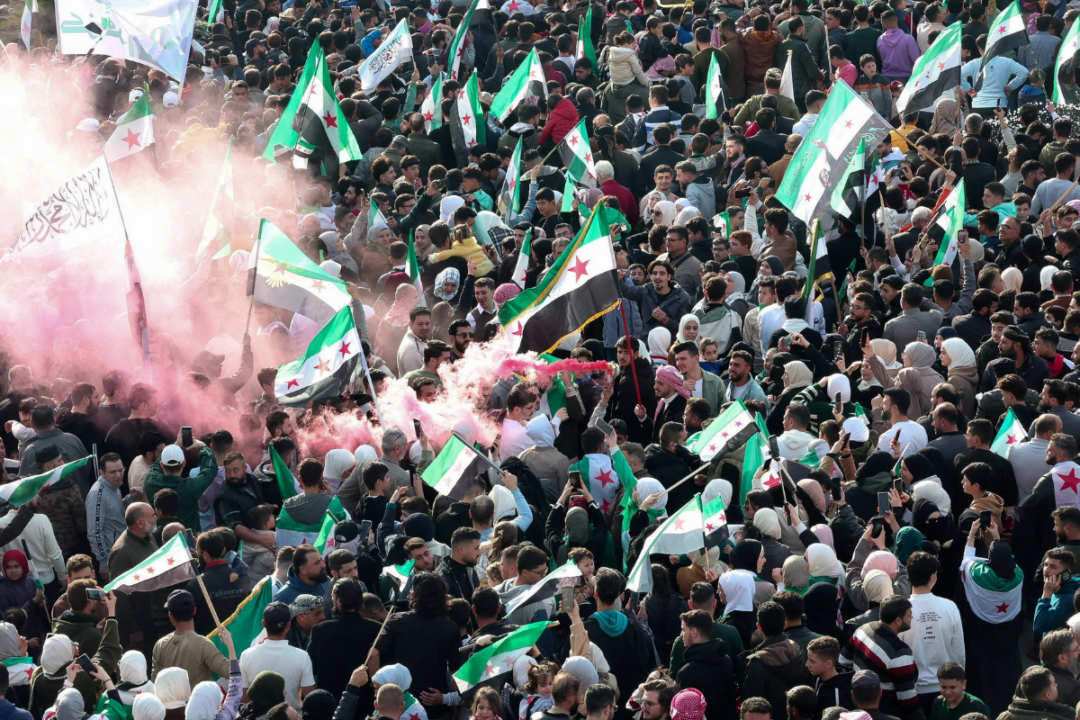
Syria reached a pivotal milestone on December 8, marking exactly one year since the dramatic fall of Bashar al-Assad’s authoritarian government, which brought an end to more than five decades of Ba’athist Party dominance and concluded one of the most devastating civil wars in modern history.

The historic anniversary was observed across the war-torn nation, with particularly significant gatherings in cities that bore witness to the regime’s brutal crackdown during the 13-year conflict that claimed hundreds of thousands of lives and displaced millions of Syrians.
In the capital Damascus, Syrian President Ahmed al-Sharaa addressed the nation from the revered Umayyad Mosque, speaking to worshipers who had gathered for dawn prayers at the ancient Islamic site. According to reports from Syria’s state-owned news agency SANA, al-Sharaa used the solemn occasion to outline his administration’s ongoing commitment to rebuilding the shattered country.
The president emphasized his government’s dedication to the monumental task of post-war reconstruction, highlighting efforts to restore state institutions that were either destroyed or severely compromised during the prolonged conflict. Al-Sharaa’s address focused heavily on the need for collective healing and progress in the aftermath of decades of authoritarian rule.
“Syrians would face future challenges together,” al-Sharaa declared, making a passionate appeal for national unity as the country continues to grapple with the complex process of democratic transition and institutional rebuilding.
The anniversary comes as Syria continues to navigate the challenging path toward stability and democratic governance. The fall of Assad’s regime last December marked the end of an era that began in 1963 when the Ba’ath Party first seized power, later consolidated under Hafez al-Assad and subsequently passed to his son Bashar in 2000.
Across the country, residents in cities like Hama—which suffered some of the war’s most brutal episodes—gathered to commemorate this transformative moment in Syrian history. The observances reflected both celebration of newfound freedoms and recognition of the enormous challenges that lie ahead in rebuilding a nation scarred by years of conflict.
The Syrian civil war, which began in 2011 as part of the broader Arab Spring movement, evolved into a complex international conflict involving multiple regional and global powers. The war’s conclusion and Assad’s departure have opened a new chapter for Syria, though significant obstacles remain in establishing lasting peace and effective governance.
As Syria moves forward from this historic anniversary, the focus remains on healing deep societal divisions, rebuilding destroyed infrastructure, and creating inclusive institutions that can serve all Syrians regardless of their sectarian or ethnic backgrounds. The success of these efforts will largely determine whether the country can achieve the stability and prosperity that has eluded it for more than a decade.