












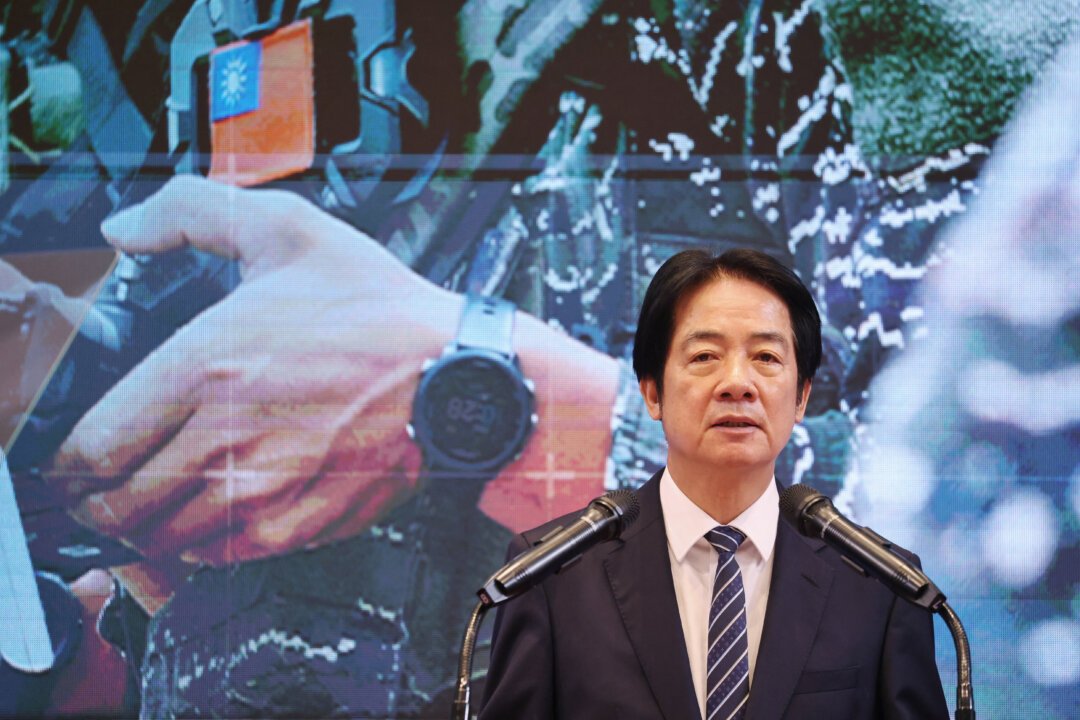
In a stark warning about escalating regional tensions, Taiwan’s President Lai Ching-te announced a comprehensive $40 billion defense spending package on Tuesday, declaring that China is rapidly advancing military preparations for what he described as a forced seizure of the island by 2027.

Speaking from the presidential office in Taipei, President Lai outlined an ambitious eight-year defense strategy spanning 2026 to 2033, designed to bolster Taiwan’s military capabilities against mounting Chinese pressure. The centerpiece of this initiative includes the development of a sophisticated “Taiwan Dome” air defense system, featuring advanced detection technology and robust interception capabilities.
The announcement comes as cross-strait relations continue to deteriorate, with Beijing maintaining its longstanding position that Taiwan must be reunified with mainland China, by force if necessary. President Lai’s warning about China’s 2027 timeline reflects growing concerns among defense analysts about the People’s Liberation Army’s modernization efforts and increasingly aggressive military posture in the Taiwan Strait.
The substantial defense investment represents one of Taiwan’s most significant military spending commitments in recent years, signaling the island’s determination to strengthen its defensive capabilities amid what officials describe as an evolving security landscape. The multi-billion-dollar package is expected to encompass various defense projects beyond the air defense system, though specific details of additional programs were not immediately disclosed.
The timing of this announcement is particularly significant, coming as regional security dynamics shift and international attention focuses on potential flashpoints in the Asia-Pacific region. Taiwan’s defense modernization efforts have gained renewed urgency as military experts analyze China’s growing naval and air force capabilities, along with increased frequency of military exercises near Taiwanese territory.
International observers have noted the strategic importance of Taiwan’s geographic position and its role in global semiconductor manufacturing, factors that contribute to broader geopolitical implications of any potential conflict in the region. The island’s commitment to substantial defense spending underscores the seriousness with which Taiwanese leadership views current security challenges.
The top U.S. envoy in Taiwan has welcomed President Lai’s announcement, emphasizing that the entire world “has a stake” in ensuring peace and stability in the region. This statement reflects the broader international dimensions of Taiwan’s security situation and the global implications of maintaining peace across the Taiwan Strait.
President Lai’s defense initiative comes against the backdrop of Taiwan’s ongoing efforts to maintain its democratic governance and security independence while navigating complex regional power dynamics. The eight-year timeline for implementing these defense improvements suggests a comprehensive, long-term approach to addressing evolving security challenges.
As Taiwan moves forward with this ambitious defense modernization program, regional stakeholders and international partners will likely monitor developments closely, given the significant implications for regional stability and global economic security. The success of these initiatives may prove crucial in shaping the future security landscape of the Asia-Pacific region.