













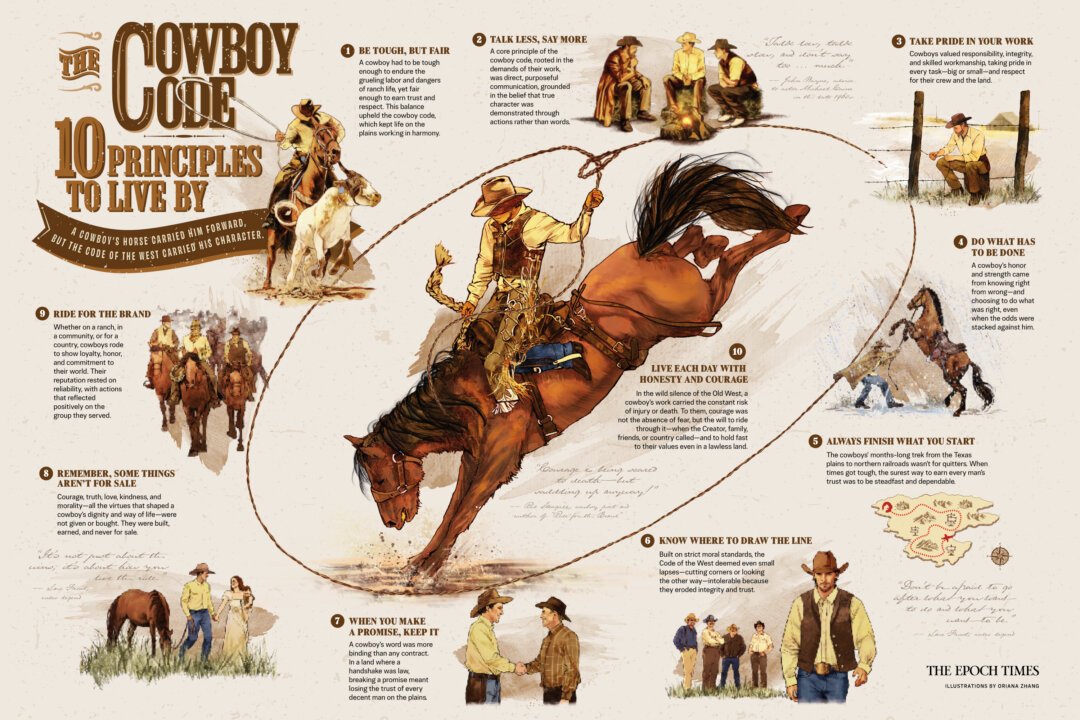
In the dusty trails of the American West, cowboys carried more than just their saddlebags and six-shooters. Tucked away in their weathered hearts was something far more valuable—a moral compass forged by the harsh realities of frontier life. The Cowboy Code, an unwritten set of principles that governed behavior on the range, remains as relevant today as it was over a century ago.

This legendary code wasn’t born in boardrooms or written by philosophers. Instead, it emerged from the practical necessities of survival in an unforgiving landscape where a person’s word could mean the difference between life and death. Cowboys understood that in the vast expanse of the frontier, reputation was currency, and character was everything.
The ten core principles that defined the Cowboy Code continue to resonate with people seeking authentic values in our modern world. Honesty topped the list—not as a lofty ideal, but as a survival mechanism. When you’re miles from civilization with only your fellow riders for company, trust becomes absolutely essential. A cowboy’s word was his bond, and breaking it meant social exile in a world where isolation could prove fatal.
Respect formed another cornerstone of this frontier philosophy. Cowboys showed respect not only to their fellow riders but to the land, the animals in their care, and the Native American tribes whose territories they crossed. This respect wasn’t born from political correctness but from a deep understanding of interdependence in the natural world.
Resilience perhaps defined the cowboy spirit more than any other trait. Facing harsh weather, dangerous terrain, and unpredictable livestock, cowboys learned to adapt, endure, and push forward regardless of circumstances. This mental toughness became legendary, inspiring generations of Americans facing their own challenges.
Surprisingly to many modern observers, kindness also played a crucial role in the Cowboy Code. Far from the Hollywood stereotype of the gruff, emotionless gunslinger, real cowboys understood that compassion was a strength, not a weakness. They showed kindness to their horses, consideration for injured comrades, and hospitality to strangers—values that helped civilize the wild frontier.
The remaining principles of the code—courage, loyalty, hard work, self-reliance, humility, and justice—created a comprehensive moral framework that helped transform the American West from lawless territory into thriving communities. These weren’t abstract concepts but practical guidelines for daily living in challenging circumstances.
Today’s business leaders, community organizers, and everyday citizens are rediscovering the power of these time-tested principles. In an era of digital communication and global connectivity, the simple honesty of the cowboy’s handshake deal offers a refreshing alternative to complex contracts and legal maneuvering.
The enduring appeal of the Cowboy Code lies not in nostalgia for a bygone era, but in its practical wisdom for navigating life’s challenges. Whether you’re managing a team, raising a family, or simply trying to live with integrity, these ten principles provide a sturdy foundation for decision-making and character development.
As we face the complexities of the 21st century, perhaps it’s time to dust off the old Cowboy Code and remember that some values never go out of style. After all, the frontier may have closed, but the human need for honor, respect, and authentic living continues to ride on.