













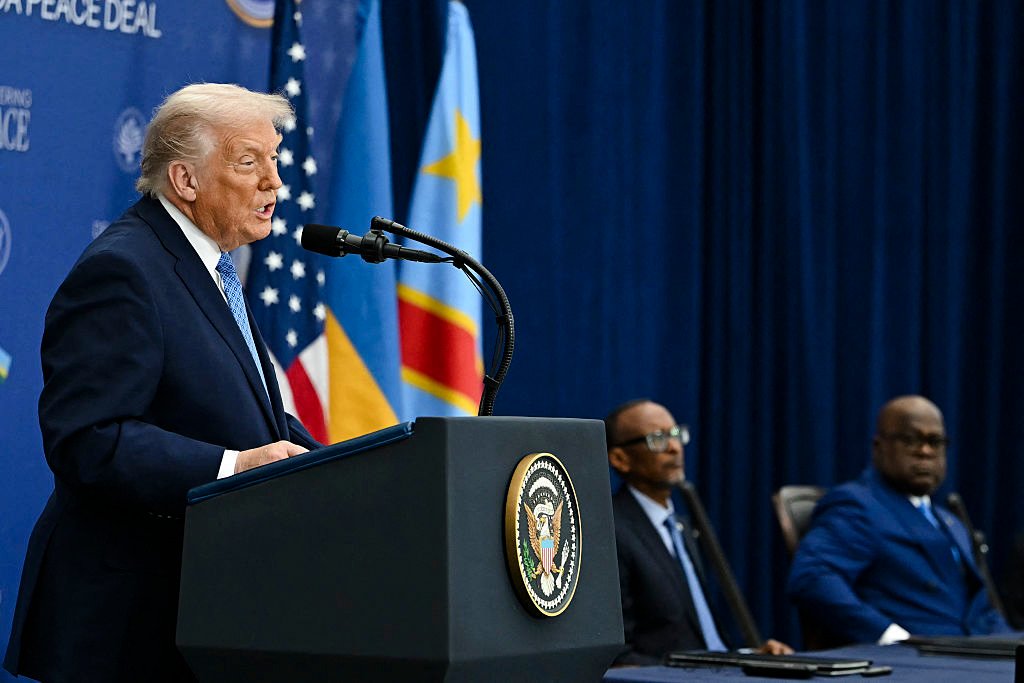
The Trump administration has unveiled its comprehensive National Security Strategy, marking a decisive pivot in America’s approach to China and signaling a new era of strategic competition with the Chinese Communist Party. Released on December 5th, the document positions President Trump as the architect of a fundamental shift away from decades of engagement policies that ultimately strengthened Beijing’s global position.

The strategy document boldly declares that “President Trump single-handedly reversed more than three decades of mistaken American assumptions about China,” highlighting the administration’s view that previous foreign investment and engagement policies inadvertently bolstered the Chinese Communist Party’s power and influence on the world stage.
At the heart of this new approach lies a recognition that traditional diplomatic and economic engagement strategies have failed to moderate China’s authoritarian tendencies or integrate the nation into the liberal international order as originally hoped. Instead, these policies are now viewed as having provided Beijing with the resources and legitimacy needed to challenge American leadership globally.
The National Security Strategy outlines an ambitious framework for reasserting American dominance in the Indo-Pacific region and beyond, primarily through leveraging America’s technological superiority and military capabilities. The administration plans to deploy strategic financial incentives as key tools in this competition, though specific details of these economic measures remain to be fully elaborated.
This strategic recalibration reflects a broader bipartisan consensus that has emerged in Washington regarding the need for a more confrontational stance toward China. The document suggests that the Trump administration views the current moment as critical for establishing clear parameters for the U.S.-China relationship moving forward.
The timing of the strategy’s release underscores the administration’s urgency in addressing what it perceives as China’s growing assertiveness across multiple domains, from military expansion in the South China Sea to technological competition in critical sectors like artificial intelligence and semiconductors.
As the United States grapples with how to maintain its global leadership position while addressing the rise of a strategic competitor, this National Security Strategy represents a foundational document that will likely influence American foreign policy discourse for years to come. The emphasis on technological and military advantages suggests a competition that will play out across multiple theaters, from the traditional battlegrounds of diplomacy and trade to emerging domains like cyber warfare and space exploration.
The strategy’s focus on the Indo-Pacific region acknowledges the strategic importance of this theater, where China has been steadily expanding its military presence and economic influence through initiatives like the Belt and Road program. By positioning American technological and military capabilities as decisive advantages, the administration is signaling its intention to compete directly with China’s growing influence in this critical region.