

























At 58, Liu was simply pushing her husband’s wheelchair down their apartment hallway when excruciating pain suddenly tore through her lower back. Unable to stand upright, she found herself rushed to the hospital where scans delivered shocking news—a lumbar compression fracture had occurred from this routine daily activity.

Chen’s story mirrors this frightening reality. The 62-year-old had been standing at a community event for just over an hour when intense lower back pain struck, forcing her to collapse into a chair. Her diagnosis revealed the same devastating condition: a lumbar fracture.
Both women were battling severe osteoporosis, a silent disease that makes bones so fragile that everyday activities can trigger catastrophic breaks. Their experiences highlight a growing health crisis as our population ages.
According to the Centers for Disease Control and Prevention, the statistics paint a concerning picture. Between 2017 and 2018, 12.6 percent of Americans aged 50 and older were diagnosed with osteoporosis, while an alarming 43.1 percent had low bone density—a precursor condition that dramatically elevates fracture risk.
Recognizing the Warning Signs
Dr. Kuo-Pin Wu, a traditional Chinese medicine practitioner with nearly two decades of experience and current director of XinYiTang Clinic in Taiwan, explains that osteoporosis manifests through several key symptoms that patients should never ignore.
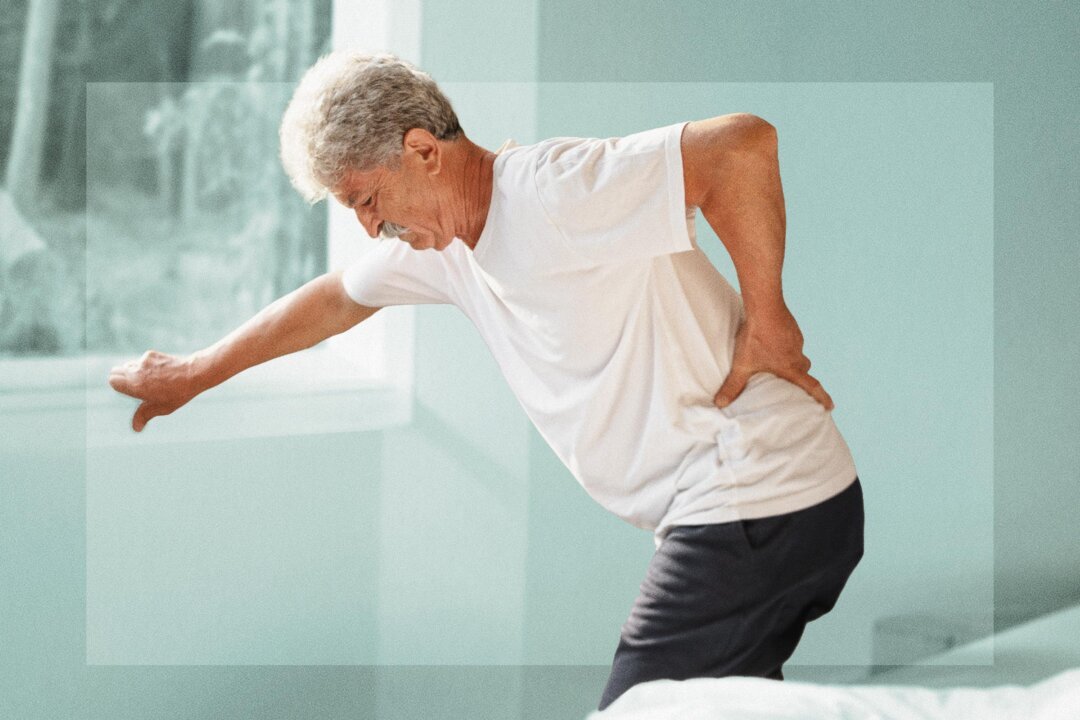
Lower back pain represents the most common early warning sign. This discomfort typically intensifies during prolonged periods of sitting, standing, or maintaining static positions. Unlike typical muscle soreness, this pain stems from weakening vertebrae struggling to support the body’s weight.
As the condition progresses, spinal deformities become evident. The decreased bone density makes vertebrae vulnerable to compression fractures, leading to the characteristic hunched posture many associate with advanced age. In severe cases, patients cannot lie flat comfortably, severely impacting sleep quality and overall well-being.
The cascade of complications extends beyond back pain. When the spine curves forward, it compresses the chest cavity, potentially causing breathing difficulties, heart palpitations, abdominal bloating, and digestive problems. The altered anatomy essentially forces internal organs into unnatural positions.
Nerve compression presents another serious concern. When lumbar vertebrae collapse or fracture, they can pinch nearby nerves, sending shooting pain down the legs and creating mobility challenges that further limit a patient’s independence.
Perhaps most frighteningly, osteoporotic bones fracture with shocking ease. The hip, spine, and wrist remain particularly vulnerable, with breaks occurring from minor falls or simple movements that healthy individuals would never consider dangerous. A 2024 research study revealed that hip fractures in people over 65 carry a sobering mortality rate of up to 35.4 percent within one year of injury.
The Treatment Trap
Many patients experiencing these symptoms turn to long-term pain medications for relief, creating a problematic cycle. While these drugs may temporarily mask discomfort, they often produce serious side effects that damage the stomach lining, strain the cardiovascular system, and compromise kidney function—potentially creating new health problems while the underlying bone weakness continues unchecked.
A Traditional Approach to Modern Problems
Dr. Wu’s unique background—combining engineering expertise with traditional Chinese medicine training—allows him to approach osteoporosis treatment through a distinctive lens. His methodology focuses on identifying patterns within the body’s systems to address root causes rather than merely managing symptoms.
Traditional Chinese medicine views osteoporosis through the framework of kidney function, not solely the Western anatomical understanding of kidneys, but the broader concept of kidney energy that governs bone health, reproductive function, and overall vitality. According to this philosophy, stimulating kidney function through gentle exercises and targeted acupoint massage can significantly improve osteoporotic symptoms.
This approach offers hope for patients seeking alternatives to pharmaceutical interventions or those looking to complement their existing treatment protocols. By addressing the underlying energy imbalances that contribute to bone weakness, patients may experience improvements in both bone density and overall quality of life.
The rising prevalence of osteoporosis demands innovative solutions that go beyond conventional treatment methods. As cases like Liu’s and Chen’s demonstrate, this condition can transform routine activities into dangerous endeavors, making effective prevention and treatment strategies more crucial than ever.
For individuals over 50, understanding these warning signs and exploring comprehensive treatment approaches—including traditional methods like those Dr. Wu advocates—could mean the difference between maintaining independence and facing the devastating consequences of osteoporotic fractures.