













Ukrainian forces faced one of the most intense aerial bombardments in recent months as Russian military units simultaneously pressed territorial gains on December 6, marking a significant escalation in the ongoing conflict that has now entered its third year.

The coordinated assault saw Moscow unleash a devastating barrage of 51 missiles and 623 drone strikes across Ukrainian territory, targeting critical infrastructure and civilian areas in what appeared to be a calculated effort to maximize damage on Ukraine’s Armed Forces Day commemoration.
Despite the overwhelming scale of the attack, Ukrainian air defense systems demonstrated remarkable effectiveness, successfully intercepting 30 missiles and neutralizing 585 drones. However, the sheer volume of incoming projectiles meant that dozens still found their targets, striking residential buildings, energy facilities, and railway infrastructure across 29 separate locations throughout the country.
The aerial bombardment coincided with troubling ground developments as Russian forces achieved tactical advances in multiple sectors. Intelligence reports confirmed that Moscow’s troops had pushed forward north and southeast of the strategically important city of Myrnohrad, while simultaneously conducting infiltration operations in northwestern areas around Pokrovsk.
These territorial gains represent a concerning development for Ukrainian defenders, as both Myrnohrad and Pokrovsk serve as crucial logistical hubs for military operations in the eastern theater. The loss of either city would significantly complicate Ukraine’s defensive positioning and supply lines in the region.
The timing of Russia’s intensified military operations appears particularly significant, occurring as U.S. and Ukrainian officials were engaged in their third consecutive day of high-level peace negotiations in Miami. The escalation raises questions about Moscow’s commitment to diplomatic solutions and suggests the Kremlin may be attempting to strengthen its negotiating position through military pressure.
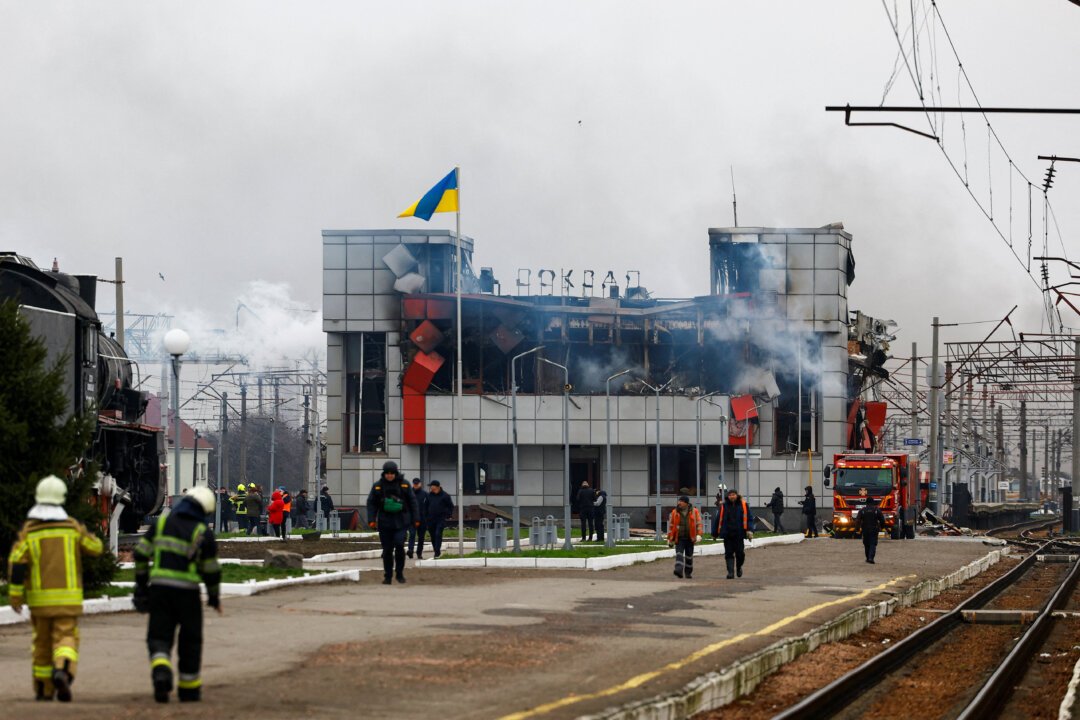
Emergency response teams worked throughout the night and into the morning hours, with crews documented at a damaged railway station in Fastiv, located in the Kyiv region. The attack on transportation infrastructure represents part of Russia’s broader strategy to degrade Ukraine’s ability to move troops, supplies, and civilians across the country.
The massive drone strike represents one of the largest single-day aerial attacks since the conflict began, highlighting Russia’s continued capacity to launch large-scale operations despite nearly three years of international sanctions and military aid flowing to Ukraine from Western allies.
Ukrainian officials have not yet released casualty figures from the overnight attacks, though the targeting of residential areas suggests civilian deaths and injuries are likely. The strikes on energy infrastructure also threaten to exacerbate power shortages as winter temperatures grip the region.
The dual pressure of aerial bombardment and ground advances presents Ukrainian forces with a complex strategic challenge, forcing commanders to allocate resources between defending against missile and drone attacks while simultaneously reinforcing vulnerable front-line positions against Russian territorial advances.