





































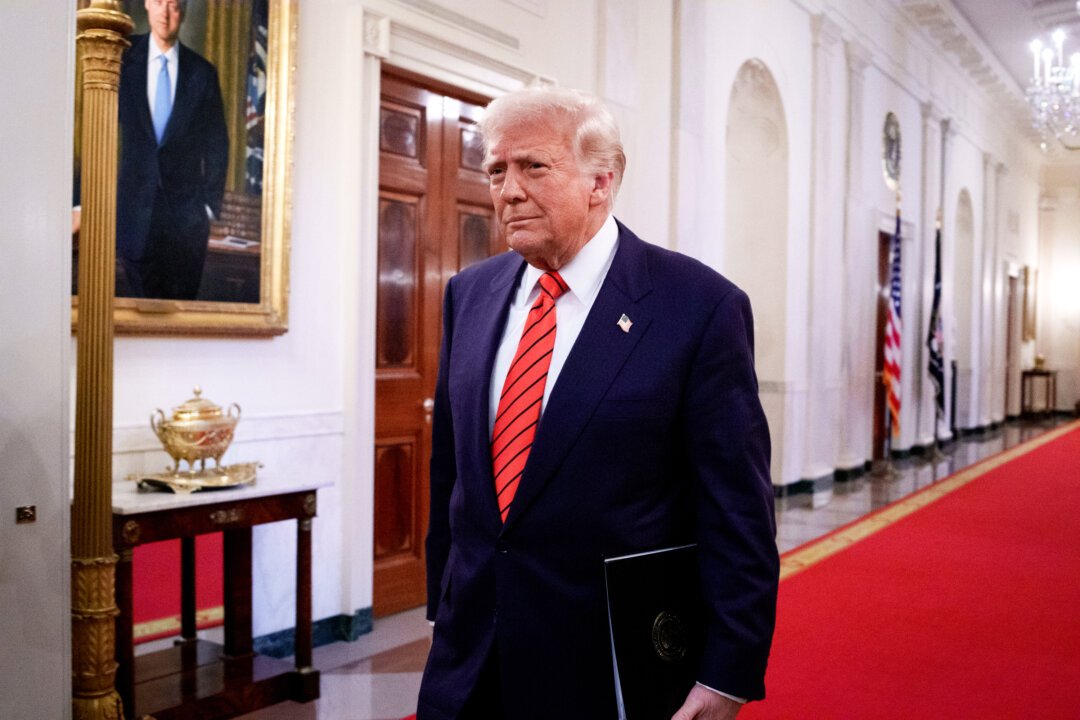
WASHINGTON—One year into his historic return to the Oval Office, President Donald Trump has orchestrated what many consider the most rapid and comprehensive policy overhaul in modern American history. From the moment he took the oath in January 2025, the 47th president has moved with unprecedented speed to fulfill his campaign promises, fundamentally altering both America’s domestic landscape and its role on the world stage.

The scale and pace of change has been breathtaking. Within twelve months, the Trump administration has successfully implemented a multi-pronged agenda that touched virtually every aspect of American governance—from immigration enforcement to economic policy, from international diplomacy to social issues that have divided the nation for years.
Perhaps nowhere has Trump’s impact been more visible than in immigration policy. His administration has orchestrated what officials describe as the largest deportation operation in U.S. history, removing millions of individuals who entered the country illegally. This massive enforcement effort has fundamentally shifted the immigration debate and delivered on one of Trump’s core campaign commitments that energized his base throughout the 2024 election cycle.
On the economic front, the president has moved aggressively to reshape America’s fiscal landscape through comprehensive tax reform measures. These changes, coupled with strategic tariff implementations, represent Trump’s vision of rebalancing trade relationships that he argues have disadvantaged American workers and businesses for decades. The administration contends these policies are already showing results in strengthening domestic manufacturing and reducing trade deficits with key partners.
The international arena has witnessed equally dramatic shifts under Trump’s renewed leadership. His administration has successfully brokered multiple peace agreements, demonstrating what supporters call “peace through strength” diplomacy. These diplomatic victories have occurred alongside a broader foreign policy overhaul that has repositioned America’s relationships with both allies and adversaries across the globe.
In one of his most controversial moves, Trump issued federal directives mandating that government agencies recognize only biological sex—male and female—effectively rolling back policies from previous administrations regarding gender identity. This decision has sparked intense debate nationwide, with supporters praising it as common sense policy while critics argue it undermines the rights of transgender Americans.
The cumulative effect of these changes has been to create what political analysts describe as a “Trump Revolution 2.0″—a second wave of transformative policies that builds upon his first term while addressing new challenges that emerged during his absence from office. Unlike his initial presidency, Trump has benefited from a more experienced team and clearer strategic vision, enabling faster implementation of his agenda.
The ripple effects of these policies extend far beyond Washington, reshaping communities across America and influencing global political dynamics. From border towns seeing dramatic changes in migration patterns to international capitals recalibrating their diplomatic strategies, Trump’s second-term agenda has created waves of change that continue to unfold.
As 2025 draws to a close, the question facing America and the world is not whether Trump has delivered on his promises of transformation, but rather how these sweeping changes will ultimately reshape the nation’s trajectory in the years ahead. What remains clear is that his first year back has established a pace and scope of change that few presidencies in American history can match.