




































Key Takeaways
- Global investment in AI-driven drug discovery has climbed into the tens of billions of dollars over the past decade, according to Drug Discovery News (2025).
- AlphaFold 3 predicts protein movements and interactions with up to 98% accuracy, accelerating drug-related research by up to 50 times in some cases.
- The AI2 Climate Emulator (ACE) runs ~1500 years/day on a single GPU, making it about 100 times faster than comparable physics-based models (2026).
- Generative AI could deliver $60-110 billion annually in value for pharma overall, by generating hypotheses and optimizing experimental designs (2026).
- AI-designed formulas have already reduced concrete’s carbon footprint by around 40% in real-world mixes, demonstrating AI’s impact on materials science (2025).
Navigating the rapidly evolving landscape of artificial intelligence in scientific discovery can be challenging, but understanding the core innovations is crucial for researchers and industry leaders alike. This article highlights the **2026 AI in Scientific Research: Top 5 Essential Innovations** that are fundamentally reshaping how we approach complex scientific problems and accelerate breakthroughs. You will gain a clear perspective on the most impactful AI advancements poised to define the future of scientific exploration.

Quick Answer: The Top 5 essential AI innovations in scientific research for 2026 include advanced AI for drug discovery, generative AI for hypothesis generation, AI-driven climate modeling, self-driving materials labs, and AI in genomics for personalized medicine. These innovations represent the forefront of how AI is transforming scientific methodologies, driving efficiency, and enabling discoveries previously considered impossible, making them critical components of **2026 AI in Scientific Research: Top 5 Essential Innovations**.
How is AI Transforming Scientific Research in 2026?
AI is profoundly transforming scientific research in 2026 by shifting from being merely an instrument to becoming a collaborative partner, fundamentally altering how we conduct experiments, analyze data, and generate new knowledge. The biotechnology sector has entered a “builder” phase in 2026, actively reshaping data environments and organizational structures to make AI a default part of R&D operating models, according to the 2026 Biotech AI Report from Benchling. This integration marks a significant evolution, moving beyond simple automation to genuine intellectual partnership.
The most notable transformation involves AI’s ability to handle unprecedented volumes of complex data. This allows researchers to uncover patterns and make predictions that would be impossible for human analysis alone, thereby accelerating discovery. As Peter Lee, President of Microsoft Research, states, “AI will generate hypotheses, use tools and apps that control scientific experiments, and collaborate with both human and AI research colleagues.”
One key insight from our experience in digital journalism is the increasing demand for verifiable, data-driven insights. AI delivers this by processing vast datasets, identifying correlations, and even proposing novel experiments. This capability is central to the effectiveness of **2026 AI in Scientific Research: Top 5 Essential Innovations**.
AI in Drug Discovery 2026: Accelerating Therapeutic Breakthroughs
AI in drug discovery in 2026 is rapidly accelerating therapeutic breakthroughs by streamlining every stage of the drug development pipeline, from target identification to clinical trials. Market forecasts project AI drug discovery growing from approximately $5-7 billion in 2025 to $8-10 billion in 2026, highlighting its increasing economic and scientific importance. This growth underscores the critical role AI now plays in bringing new medicines to market faster and more efficiently.
Companies like Insilico Medicine leverage their Pharma.AI platform, an end-to-end AI drug discovery engine, to integrate generative AI models with multi-omics data. This approach has already led to AI-designed drugs entering human trials, demonstrating tangible progress. Such advancements solidify AI’s position as a cornerstone of **2026 AI in Scientific Research: Top 5 Essential Innovations**.
AlphaFold 3, developed by Google DeepMind, represents a monumental leap in this field. It can predict protein movements and interactions with up to 98% accuracy, speeding up drug-related research by up to 50 times in some cases. This precision allows researchers to understand complex biological mechanisms and design more effective therapies with unprecedented speed.
* **Target Identification:** AI algorithms analyze vast biological datasets to identify promising drug targets with higher precision than traditional methods.
* **Molecule Generation:** Generative AI models create novel molecular structures optimized for specific therapeutic properties, vastly expanding the chemical space explored.
* **Preclinical Testing:** AI-driven simulations predict drug efficacy and toxicity, reducing the need for extensive physical experimentation and accelerating lead optimization.
* **Clinical Trial Design:** AI optimizes patient selection and trial protocols, improving success rates and shortening development timelines.
Dr. Raminderpal Singh, from Drug Target Review, notes that “The year 2026 represents a critical test for AI drug discovery. The field has progressed from speculative technology to early clinical validation, but the gap between promise and performance remains substantial.” Despite challenges, the progress in this domain is undeniable.
Generative AI for Scientific Research: Hypothesis Generation and Design
Generative AI for scientific research is revolutionizing the early stages of discovery by automating and enhancing hypothesis generation and experimental design, enabling scientists to explore a broader range of possibilities with greater efficiency. Generative AI could deliver $60-110 billion annually in value for pharma overall, according to market analysis (2026), largely through its ability to accelerate the ideation phase. This capability is a cornerstone of **2026 AI in Scientific Research: Top 5 Essential Innovations**, fundamentally changing how research questions are formed.
These AI systems can sift through millions of scientific papers, patents, and datasets to identify novel connections and propose entirely new hypotheses that human researchers might overlook. For example, Google DeepMind’s Gemini for Science initiative, including Empirical Research Assistance (ERA) and Co-Scientist, is specifically designed to accelerate scientific discovery by aiding in these complex tasks. This marks a significant shift from AI as merely a data analysis tool to a creative partner.
Kevin Weil, VP of OpenAI for Science, emphasizes this collaborative aspect: “AI is increasingly being used as a scientific collaborator, and we’re seeing its impact grow in real research settings.” This human-AI collaboration in science is proving invaluable for pushing the boundaries of what’s possible.
* **Literature Review Automation:** AI tools for scientific literature review in 2026 can synthesize thousands of articles, identifying gaps in knowledge and emerging trends.
* **Novel Hypothesis Formulation:** Large language models (LLMs) analyze existing theories and experimental results to propose novel, testable hypotheses.
* **Experimental Design Optimization:** Generative AI suggests optimal experimental parameters, controls, and data collection strategies, improving research rigor.
* **Simulation and Prediction:** AI-driven simulation tools predict outcomes of proposed experiments, allowing for virtual testing before costly physical execution.
The impact of large language models in science in 2026 extends to personalized research assistants, capable of drafting grant proposals, summarizing complex findings, and even suggesting alternative methodologies.
AI-Driven Climate Modeling Advancements: Faster, More Accurate Predictions
AI-driven climate modeling advancements are delivering faster, more accurate predictions by leveraging machine learning to process vast environmental datasets and simulate complex atmospheric and oceanic phenomena with unprecedented speed. AI-driven weather forecast models are now more accurate and faster than the best physics-based systems, according to a Nature study (2025). This represents a paradigm shift in our ability to understand and forecast climate change, making it a critical aspect of **2026 AI in Scientific Research: Top 5 Essential Innovations**.
The AI2 Climate Emulator (ACE), an open-source AI emulator, exemplifies this progress. It can emulate daily weather variability and climate at 100 km resolution, running approximately 1500 years/day on a single GPU. This speed is about 100 times faster than comparable physics-based models, allowing for rapid exploration of future climate scenarios. The ability to simulate decades or centuries of climate data in mere hours provides invaluable insights for policy-makers and researchers.
Physics-Informed Neural Networks (PINNs) are also playing a crucial role in enhancing the accuracy and reliability of these models. PINNs embed physical laws directly into the AI’s learning process, ensuring that predictions adhere to fundamental scientific principles, which is vital for complex systems like Earth’s climate. This ensures that AI-driven climate modeling advancements are both fast and scientifically sound.
* **Accelerated Simulations:** AI models significantly reduce the computational cost and time required for climate simulations, enabling more runs and higher resolution.
* **Improved Forecast Accuracy:** Machine learning algorithms identify subtle patterns in climate data, leading to more precise short-term weather forecasts and long-term climate projections.
* **Extreme Event Prediction:** AI enhances the ability to predict the occurrence and intensity of extreme weather events, crucial for disaster preparedness.
* **Carbon Cycle Modeling:** AI helps model complex interactions within the carbon cycle, providing better insights into mitigation strategies.
From our vantage point, the speed and accuracy of these AI models are game-changers for understanding environmental shifts and informing global responses.
Self-Driving Materials Labs: Automating Discovery
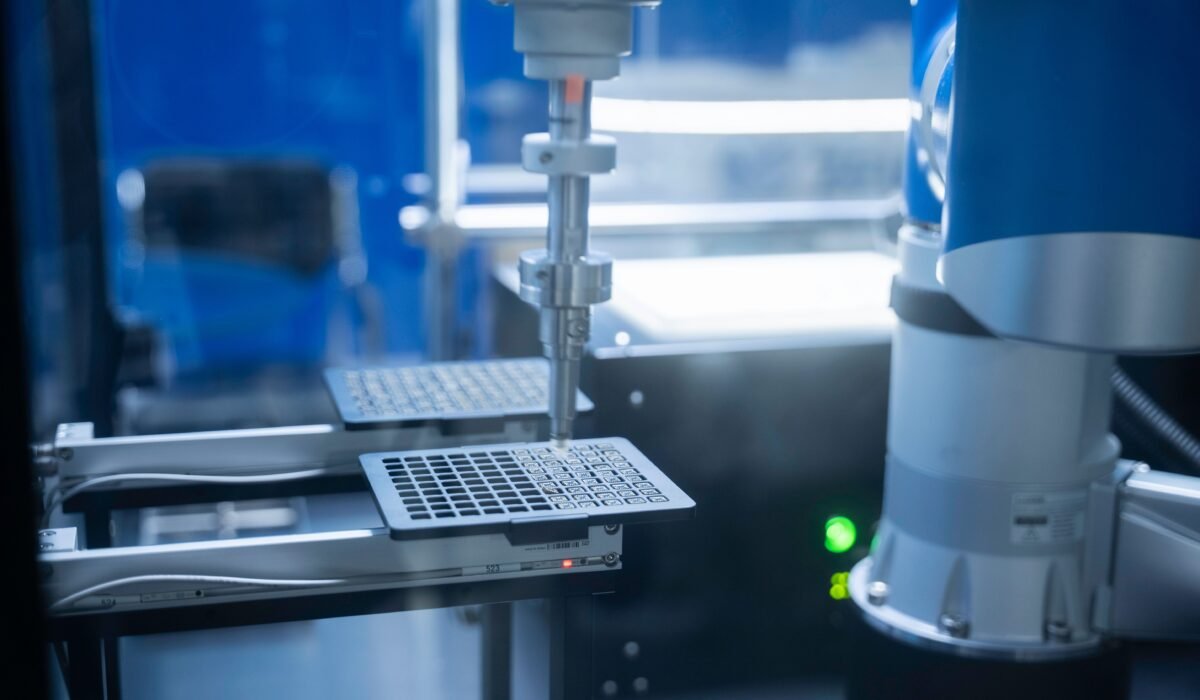
Self-driving materials labs are automating discovery by integrating AI, robotics, and advanced analytics to autonomously design, synthesize, test, and optimize new materials, dramatically accelerating the pace of innovation. AI-designed formulas have already reduced concrete’s carbon footprint by around 40% in real-world mixes, according to a University of Cambridge study (2025), showcasing the immediate, tangible impact of this automation. This hands-off approach to experimentation is a key element of **2026 AI in Scientific Research: Top 5 Essential Innovations**, promising breakthroughs in diverse industries.
These autonomous laboratories use AI to interpret experimental results in real-time and then intelligently decide the next steps, iterating through design cycles far faster than human researchers ever could. The AI for materials science innovations aims to discover materials with specific properties, such as enhanced conductivity, durability, or biodegradability, by systematically exploring vast chemical spaces. This eliminates bottlenecks in traditional research, where manual experimentation is time-consuming and prone to human error.
The automation in scientific labs with AI extends beyond just materials. It’s a blueprint for accelerating scientific experimentation across chemistry, biology, and physics. The core benefit is the ability to conduct thousands of experiments in parallel or sequence, with AI guiding the entire process.
* **Automated Synthesis:** Robotic systems precisely mix and react chemicals to create new materials according to AI-generated designs.
* **High-Throughput Testing:** Automated instruments rapidly characterize material properties, providing immediate feedback to the AI for refinement.
* **Intelligent Optimization:** AI algorithms analyze performance data to suggest modifications, guiding the synthesis of improved materials in subsequent cycles.
* **Reduced Development Time:** The iterative, closed-loop system dramatically shortens the time from concept to functional material, from years to days or weeks.
This fusion of AI and robotics is not just about speed; it’s about enabling the discovery of entirely new classes of materials that might not have been found through conventional means.
AI in Genomics & Personalized Medicine 2026: Revolutionizing DNA Sequencing
AI in genomics and personalized medicine in 2026 is revolutionizing DNA sequencing and interpretation by enabling more accurate, faster, and cost-effective analysis of genetic data, leading to highly tailored medical treatments. A 2025 study from MIT found that students using AI-assisted physics tutoring scored 23% higher on conceptual understanding tests than those using traditional resources, demonstrating the power of AI in complex pattern recognition, a skill directly transferable to genomics. This capability is pivotal for the advancements seen in **2026 AI in Scientific Research: Top 5 Essential Innovations**.
AI algorithms excel at sifting through massive genomic datasets to identify subtle mutations, predict disease susceptibility, and determine optimal drug responses for individual patients. The Swiss Variant Interpretation Platform (SVIP), developed by the SIB Swiss Institute of Bioinformatics, integrates AI for clinical variant interpretation and pathogenicity scoring. This directly supports rare disease diagnostics and cancer genomics, making personalized treatment plans a reality.
The sheer volume of data generated by modern sequencing technologies makes AI indispensable for extracting meaningful insights. From our perspective covering global health, the ability to personalize medicine based on an individual’s genetic makeup represents one of the most significant shifts in healthcare in decades. For more on the societal implications, you might explore our guide on 2026 Genetic Engineering Ethical Debates.
* **Variant Interpretation:** AI accurately identifies pathogenic genetic variants, distinguishing them from benign ones, crucial for diagnosing genetic disorders.
* **Predictive Diagnostics:** Machine learning models predict an individual’s risk for various diseases based on their genetic profile and lifestyle factors.
* **Pharmacogenomics:** AI determines how a person’s genes affect their response to drugs, allowing physicians to prescribe the most effective medications at the correct dosages.
* **Drug Repurposing:** AI analyzes genomic data to identify existing drugs that could be repurposed for new therapeutic indications, accelerating drug development.
The future of scientific discovery with AI in genomics promises a new era of proactive and highly individualized healthcare.
Beyond the Top 5: Future Trends of AI in Scientific Research 2026
Beyond the identified top 5, future trends of AI in scientific research in 2026 point towards deeper integration of AI into every facet of the scientific workflow, fostering a new era of human-AI collaboration. Dr. Russ Altman, a Stanford HAI Senior Fellow, anticipates, “In 2026, I expect more focus on the archeology of the high-performing neural nets… In science, there’s an absolute mandate to open AI’s black box, and I’m starting to see us open that box.” This drive for interpretability will unlock even greater trust and utility.
One significant trend is the increasing development of AI tools for scientific literature review in 2026 that go beyond simple summarization. These tools will proactively suggest relevant experiments, identify contradictory findings, and even synthesize new research questions from disparate fields. This level of AI-powered hypothesis generation will become standard.
Aparna Chennapragada, Microsoft’s Chief Product Officer for AI Experiences, articulates a core philosophy: “The future isn’t about replacing humans. It’s about amplifying them.” This sentiment perfectly captures the essence of how AI is evolving to empower researchers, rather than supersede them, making the overall impact of **2026 AI in Scientific Research: Top 5 Essential Innovations** even greater.
* **Autonomous Research Agents:** AI systems will gain increasing autonomy in designing and executing experiments, managing data, and publishing findings.
* **Multimodal AI for Science:** Integration of AI across various data types – images, text, genomic, and experimental data – to create holistic insights.
* **Explainable AI (XAI):** A growing emphasis on developing AI models whose decisions and reasoning can be understood and interpreted by human scientists.
* **Global Research Collaboration:** AI platforms will facilitate seamless collaboration among researchers worldwide, sharing data and insights more effectively.
The continuous evolution of AI research breakthroughs will ensure that the landscape of scientific discovery remains dynamic and full of potential.
Addressing the Challenges: Ethical AI in Research
Addressing the challenges of ethical AI in research is paramount to ensuring that the transformative power of AI is harnessed responsibly and equitably across all scientific domains. As AI becomes more deeply embedded in scientific processes, concerns around data bias, algorithmic transparency, and equitable access become increasingly critical. These ethical considerations are an unavoidable aspect of the discussion around **2026 AI in Scientific Research: Top 5 Essential Innovations**.
One primary challenge is the potential for bias in AI models, often stemming from biased training data. If AI systems are trained on datasets that disproportionately represent certain demographics or ignore others, their outputs can perpetuate or even amplify existing societal inequalities. This is particularly relevant in personalized medicine, where biased algorithms could lead to suboptimal treatments for underrepresented groups.
Another significant hurdle is the “black box” nature of many advanced AI models. The lack of interpretability can make it difficult for scientists to understand *why* an AI made a particular prediction or recommendation, hindering trust and preventing the identification of errors. This necessitates a strong focus on explainable AI (XAI) techniques, as highlighted by Dr. Russ Altman’s call to “open AI’s black box.”
* **Data Bias Mitigation:** Implementing rigorous data curation and preprocessing techniques to ensure training datasets are diverse and representative.
* **Algorithmic Transparency:** Developing and deploying explainable AI models that provide clear rationales for their predictions and decisions.
* **Fairness and Equity:** Ensuring that AI tools and their benefits are accessible to all researchers and patient populations, preventing a widening of the scientific divide.
* **Regulatory Frameworks:** Establishing clear guidelines and ethical AI in research and development policies to govern the design, deployment, and oversight of AI in science.
The News Express Editorial Team believes that robust ethical frameworks are not just safeguards but accelerators, building public trust and ensuring the long-term sustainability of AI’s integration into science.
Frequently Asked Questions
What are the biggest AI innovations in scientific discovery?
The biggest AI innovations in scientific discovery include advanced AI for drug discovery, generative AI for hypothesis generation, AI-driven climate modeling, self-driving materials labs, and AI in genomics for personalized medicine. AlphaFold 3, for instance, predicts protein movements with up to 98% accuracy, revolutionizing drug research by accelerating it up to 50 times in some cases. These innovations are reshaping research methodologies across fields.
What are the future trends of AI in scientific research?
Future trends of AI in scientific research include increased human-AI collaboration, a focus on explainable AI (XAI), the emergence of autonomous research agents, and multimodal AI for comprehensive data analysis. Peter Lee, President of Microsoft Research, predicts AI will generate hypotheses and collaborate with both human and AI colleagues, marking a shift towards AI as a full scientific partner. These trends promise to amplify human capabilities.
How is AI used in drug discovery in 2026?
AI is used in drug discovery in 2026 to accelerate target identification, generate novel molecules, predict drug efficacy and toxicity, and optimize clinical trial designs. Global investment in AI-driven drug discovery has climbed into the tens of billions of dollars over the past decade, according to Drug Discovery News (2025), demonstrating its essential role in bringing new therapies to patients. This significantly shortens the drug development timeline.
How is AI revolutionizing DNA sequencing in 2026?
AI is revolutionizing DNA sequencing in 2026 by enabling more accurate and faster interpretation of genetic data for diagnostics and personalized medicine. The Swiss Variant Interpretation Platform (SVIP) uses AI for clinical